About a month before the Open, I’d gotten a message on Facebook, out of the blue, from JC Turner, the bass player who’d played on Ghost on the Roam. I’d only met him during a brief rehearsal and then the day when he was laying down his parts, and hadn’t heard from him in the twenty-five years since. He wrote to tell me that playing on the record had been a meaningful experience for him, and he’d started writing songs and gotten his own band together some time after that.
JC had no idea where I was, or if I was even still alive, but wanted to let me know about an upcoming gig he’d be playing in Sunset Beach. It was getting that message that had caused me to start thinking about the record and decide to commemorate its anniversary by playing on the pier. When I saw that JC’s gig was on the second to the last day of the Open, it seemed like the perfect culmination for both events. I’d decided to make it a point to show up and surprise him.
There is something I saw on the internet once that made me laugh because it was so true. It described a musician as someone who puts five thousand dollars-worth of equipment into a five-hundred-dollar car to get to a fifty-dollar gig. In my ten years in Los Angeles, I’d met hundreds of musicians doing their own version of that, quite often just for the vaguest hope of getting some exposure. Often, the audience wasn’t even pretending to listen, instead talking over the music as if it were the soundtrack to a movie that they were the stars of. That hadn’t kept anyone I knew who needed to make music from going out and making it anyway.
Once I got to Sunset Beach, I went to pay my respects to the old Don the Beachcombers, at its peak one of the best live music venues anywhere. It had been a Tiki lover’s paradise back in the day, with three stages, one in the restaurant, one in the bar, and one in a large banquet hall in back that could fit up to three hundred people. Emptied out and converted into an Indian restaurant, it now resembles little more than a depressing slab of cement.
From there, I made my way down PCH, briefly stopping at Mother’s, a motorcycle roadhouse with live bands on the weekends. I knew the band that was playing. The Road Warriors. The first time I’d seen them, a few years back, I figured that the owner was just being charitable to a few of his buddies by giving them some stage time. They could barely make it through a song without stopping to tune up. Apparently, they’d been doing some practicing since then. The bar felt like a boat, rocking on the waves of country rock.
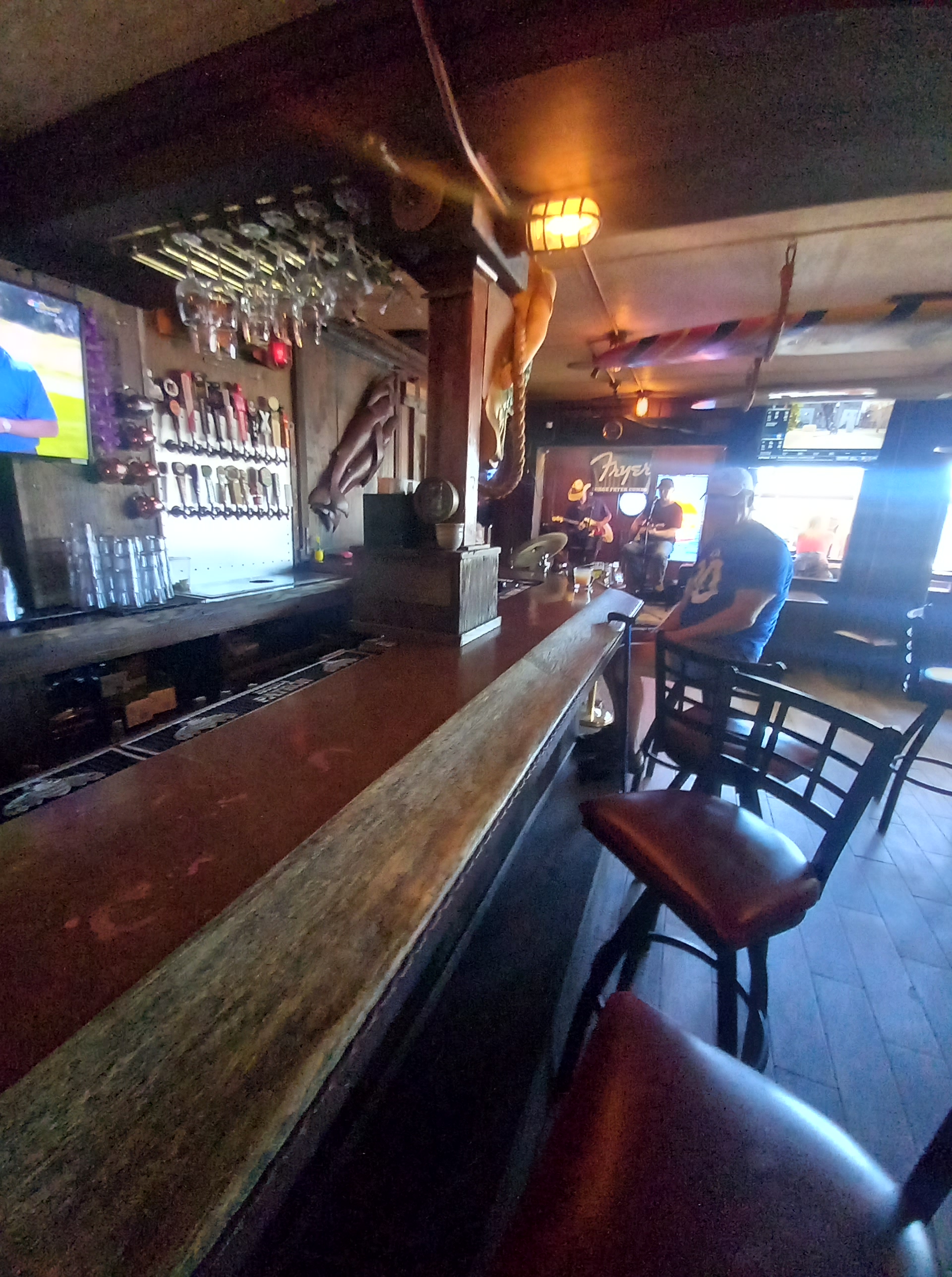
When I got to Abalone, the former Halibut Hal’s, it was dimly lit and largely deserted. Fishing nets and seashells hung from the ceiling. JC and his crew were set up in one corner. I sat at the bar and let them finish their first set before going up to say hi to the band. JC was glad to see me. He introduced me all around, telling the guys all about the great record we’d made together back in the day. That came as a bit of a surprise. It was encouraging to learn that something I’d done had taken root somewhere.
When they started their second set, I went back to the bar and listened to them play. JC had a pedal steel player sitting in with him, an instrument I’d featured on half of my later recordings. I could hear how well it fit in with a shuffle rhythm and the ukelele songs I’d been playing on the pier all week. I started hearing a new sound in my head. Ghost Country Surf. Ghost Country Surf. It was hard to describe, but all the elements were there.
Before leaving, I stopped by the stage to say goodbye and give my regards to the band.
We should make another record, I mentioned to JC.
He told me that he’d love to.
It sounded like a plan.
 Haunted Rock