At 5:45, the pulse of the day was already beginning to press against the thin canvas walls of the camper. A few planes passed overhead. There were none of the usual sounds associated with the morning: the chirping of birds, the random cawing of a few crows, the German neighbor waxing his surfboard in the alley for twenty-five minutes before strapping it to his ten-speed bike. On this morning, no one had locked their dog in the garage and allowed it to bark for the next five hours. All was mostly still.
There’d been a dream involving a colleague from a past job. He’d angered me to the point where I went pushing my way through a desk drawer to get at him, but now I couldn’t remember why. Anxiety pushed me into a sitting position and I cursed. It was like the first few days of the pandemic all over again. I was desperate to escape, but getting away was no longer an option. Huntington Beach had become my haunt. I sat twenty-five yards from my mother’s cottage, next to the plum tree that had been planted over my father’s ashes.
My phone had stopped charging the night before and I hadn’t been able to transfer any photos to my laptop. That was just wonderful. After restarting it six or seven times it started charging again, but the laptop still wasn’t recognizing the phone. I’d have to pick up another cable and hope that did the trick.
On the camper table sat my father’s old ukulele. The pouch on the case was big enough to stuff all my postcards, signs, a notebook, and an Anker Bluetooth speaker that I thought I might broadcast some of my quiet songs over, if the phone didn’t fail to charge and die before I even got the chance. Things were not going particularly well, but when had they? My first record, Ghost on the Roam, had sold zero copies and only led to poverty and disappointment when I’d released it twenty-five years ago, and here I was, getting ready to go out and celebrate that fact.
If there was one bright spot on the already unpromising day, it was that I had a new bike to ride down to the pier, a black cruiser, the Cruiser, if you will, that I’d spotted outside of Huntington Beach Pawn a few days earlier. It was my fourth bike in the past two years and the timing could not have been better. Only a week earlier, a spoke had sprung on the rear tire of the Muley, the Huffy bike which serves to tote my longboard around, and when I went to get it fixed, the cable to the gear shifter snapped, leaving it stuck in seventh gear.
No bike is safe this close to the beach. They all become living monuments to rust. The Cruiser was still spotless and well-oiled, however, the right bike at the right time, about to have its own little moment in history. I couldn’t wait to sail it into the day.
Not many people notice me, but the cashier at 7-Eleven, Hilda, from Guatemala, has been greeting me and calling me teacher for the past two years. I’ve been unemployed for so long she assumes I’m retired. She let me know that the new coffee cups were in and didn’t need sleeves. They were done stocking sleeves.
Outside the store I saw two poltergeists I recognized from the pier, sizing up a bike that was locked to a street sign. Ghost culture is bike culture at the beach. Ghosts deal in bikes like cowboys deal in cattle. They sell them, trade them, steal them, brand them. I’d have to be extra careful with the Cruiser. When the Muley had been brand-new someone had come along and stolen the seat, leaving their destroyed seat next to it, with the gel spilling out all over the sand. At first, I thought it had just been vandalized, yet the seat post no longer fit the bike. That took a long time to figure out.
With my coffee in one hand, I went cruising down Main Street, spotting another poltergeist I knew hiding out in front of Rocking Fig’s, facing the shop window, muttering incantations to himself. During the pandemic they’d allowed some of the restaurants to put tables and doors outside, and now one block of Main Street remains a pedestrian zone, prohibiting bikes and skateboards. I dragged a flip-flop to slow my bike to a crawl.
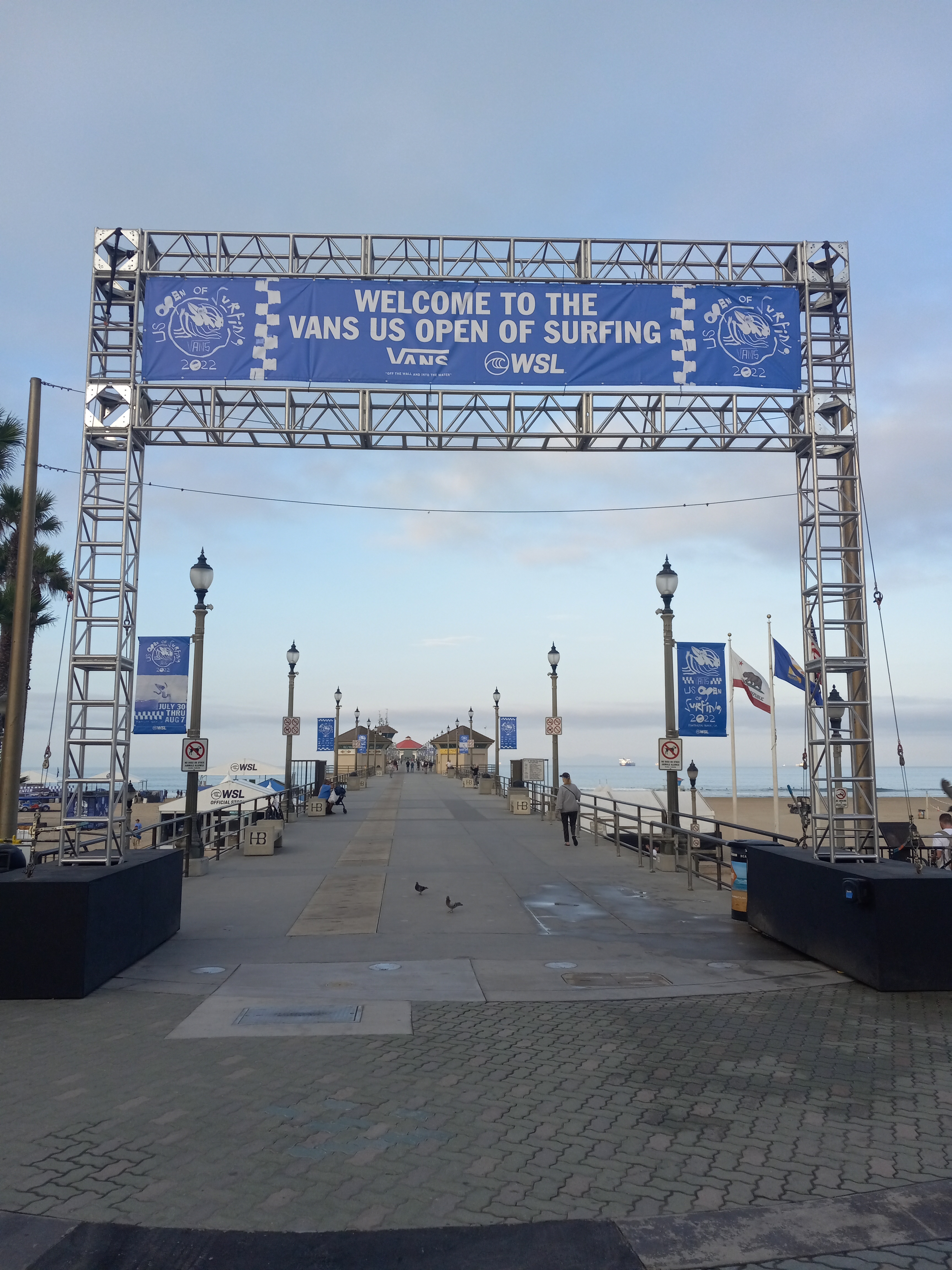
Sitting at the stoplight on PCH, I could see a blue welcome sign at the entrance of the pier. Blue banners were strung up on the light poles, all the way to the end. The sun was just now rising in the east, and outside of a few photographers, bustling to stake out the best positions on the south side of the pier, the morning was quiet and calm. It wouldn’t stay that way for long. It was the first day of the Van’s US Open of Surfing.
My plan was to place myself right in the middle of the action.
 Haunted Rock