All posts by Haunted Rock

These are songs, poems and images from a life on the road. Enjoy your stay and safe travels.

setting the stones 51

When we were finally allowed to exit the plane in Los Angeles, I saw the emergency workers huddled around the guy from the flight, trying to convince him that it was really in his best interest to go with them.  He wasn’t getting out of this one easy.  We were four hours late.  It was after midnight.  I got my bag and headed down to the Uber pickup zone.  After COVID they’d stopped doing shared rides on the Super Shuttle, so it was almost as expensive to book a ride with them as it was a taxi.

An Uber to Huntington Beach was fifty dollars that night.  I could live with it.  The driver, Bill, didn’t want to talk, so that was a double blessing.  The same thoughts go through my head every time I get back to Southern California.  What am I doing here?  Why here, in the most impossible to navigate city on the planet? 

We moved there when I was seventeen.  I never got my footing in life.  But it is still the closest thing to a home that I have.  I guess that’s why.  Eventually, you go where your family is.  If you sometimes think they don’t care about you, wait until you get a load of the rest of humanity.  The last rune stone in my bag was Wyrd, the rune of destiny.  That’s what I was doing back in Los Angeles.  It was my destiny to be there.

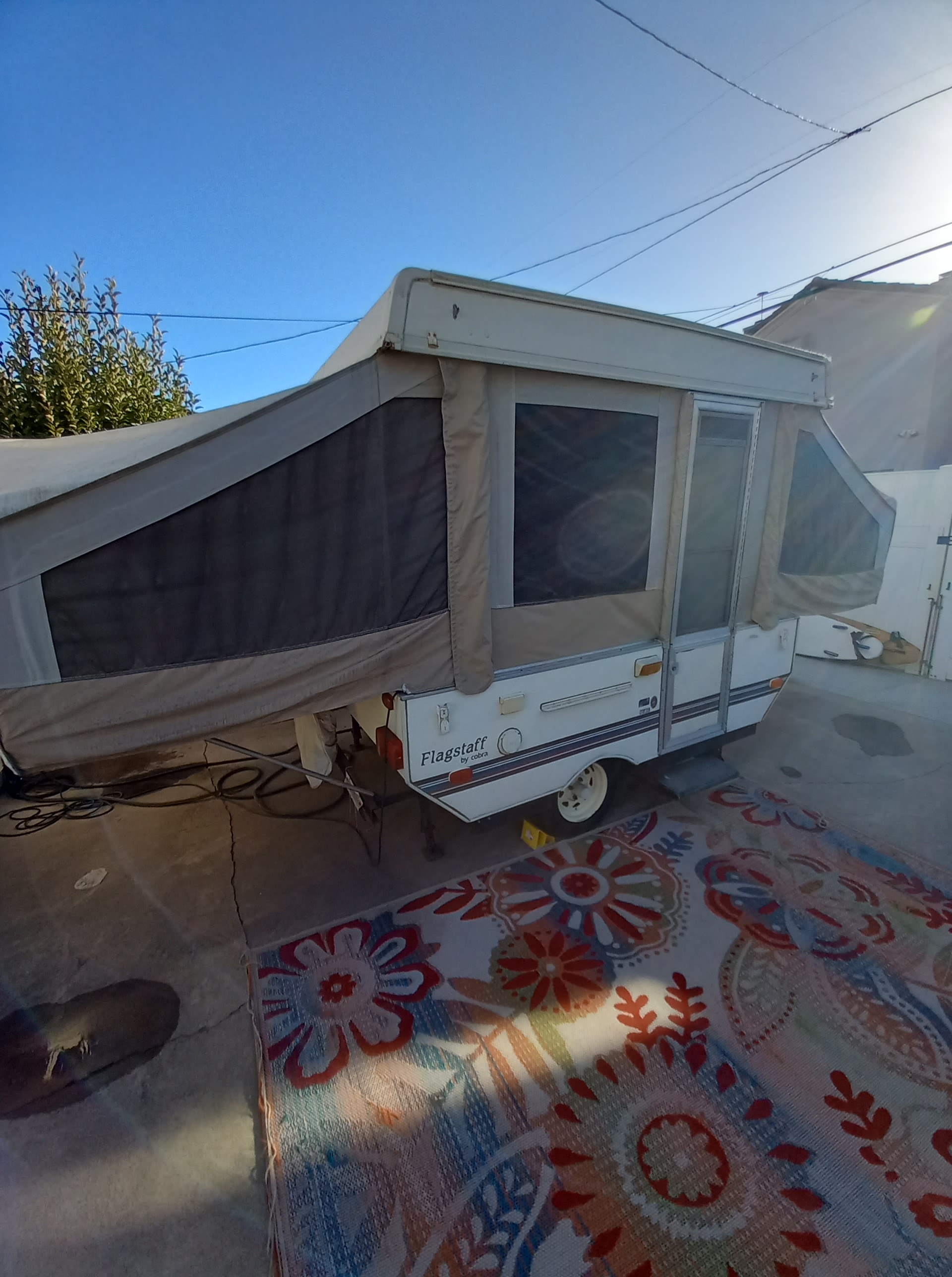
When I got to Huntington Beach it was freezing cold.  I headed straight to the camper in back and climbed under my dusty sleeping bag.  That’s how exhausted I was.  In the morning, I woke up and went into the house to let my mother know I was back.

I was still energized from all that traveling I’d done, so got on my bike and headed out to see what was new.  When you are off on a trip it seems like uncountable days have passed.  When you are stuck in one place, caught up in the same routine, Tuesday is just trash day.  I stopped at 7-Eleven to get a large coffee.  The cashier, Hilda, did a good job pretending to be interested in the fact that I just got back to Mexico.  She was keeping her eye on the homeless guy with the backpack who was loitering around the coolers.

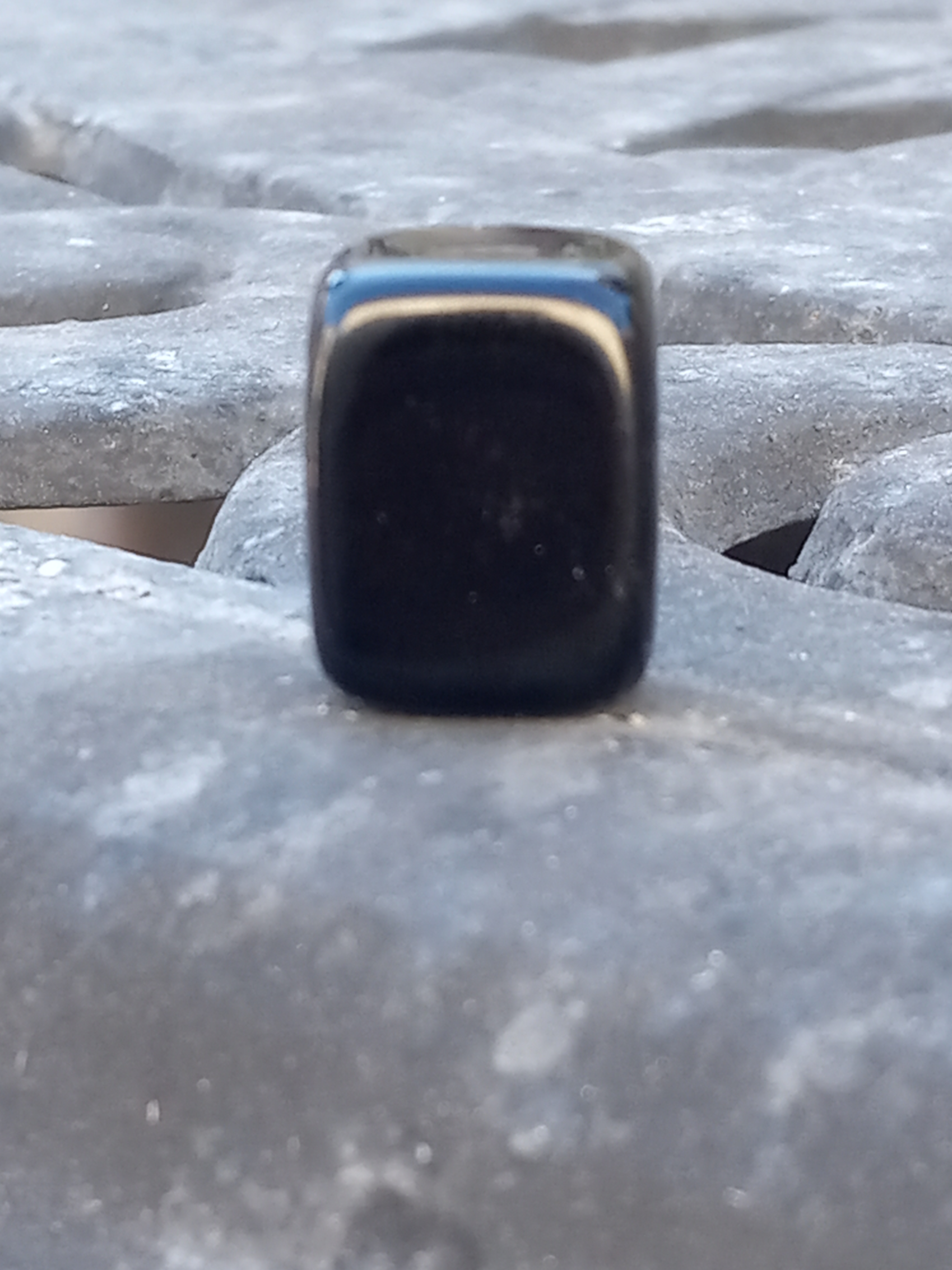
I rode my bike up to the end of Bolsa Chica, then turned around and rode south, wind blowing in my face the entire way.  Once I got back to the house, I took the last rune stone, Wyrd, and set it on the table in front of the plum tree.  That was to be the last picture of the trip.  It was a faceless rune, black like onyx, with a rim of sunlight around it.  One…two…three… That wasn’t so hard.

setting the stones 52

Wyrd is a blank rune, a late addition to the FUTHARK.  It represents fate or destiny and relates to the three Norns in Norse mythology, what was, what is, and what will be.  Uld represents the past.  Verandi represents the present.  Skuld represents the future.  They are very much like the Fates in Greek mythology.  To draw this stone means that one has reached a point in life where things are predestined.  They will play out as they will.  You can’t change the course of what has already been written.

According to the healing interpretation of the runes, Wyrd represents the divine.  Whether one meets the divine in a church or on a mountaintop, whether it comes as a raging thunderclap or a quiet whisper in the night, an experience with the divine has the power to change one’s life forever.  It is what gives the seekers their visions and the prophets their message.  You can do what you want, but the divine will has another plan for you.  At the end of the day, what will be, will be.

A year ago, I’d drawn the Wyrd stone at a Halloween party, and now I’d returned from Mexico with a working knowledge of the stones.  What was my intention with them, if any?  Only to give good advice to those who were seeking it. 

I’d lived long enough by now to know that wisdom doesn’t come from cards, or stones, or tea leaves, rather it lies in the minds and hearts of those who’ve made it their mission to study the human condition.

It would never be my intention to use the stones to tell fortunes or make predictions.  What I could possibly offer is the best approach to take to situations that trouble us all.  Nothing more.  If it was my destiny to do so, then it would happen.  If not, that was fine too.  The future was wide open.

pages fly away 1

At first the plan was to rent a car and hit the road at the beginning of summer, but then I learned that everyone in America had the same idea.  They were calling it revenge travel.  People were determined to make up for the vacations they’d lost to the pandemic and were going to go out there and get theirs, no matter how much it cost or how many other travelers were doing the same thing.  The result ended up being National Parks with the crowds and chaos of amusement parks and car rentals that were four to five times the normal rate.

Knowing how upsetting it would be to get caught in the middle of that hysteria, I put off my trip until after Labor Day.  When I called Avis about renting a car for six weeks, starting the second week in September, it was still expensive, about twice what I’d previously paid, but less than it had been that summer.  I resolved that whatever they charged me for the rental would be the value of the car when I returned it.

The Avis that I go to is just a little office in a strip mall on Beach Boulevard.  When you make a reservation with them someone has to deliver the car to the agency, so there are no options if you don’t like what they have waiting for you.  I remember once piloting a red clown car all over California and Nevada.  Driving a fire engine would have been less conspicuous, not the approach I was looking to take on this trip.

I’d asked my mother for a ride to Avis.  She dropped me off out front and waited for me to give her a thumbs up, letting her know that things were all right and I could take it from there.  After filling out the paperwork, Mendez got the key and we walked around the side of the building together, to where three cars were parked in the shade. 

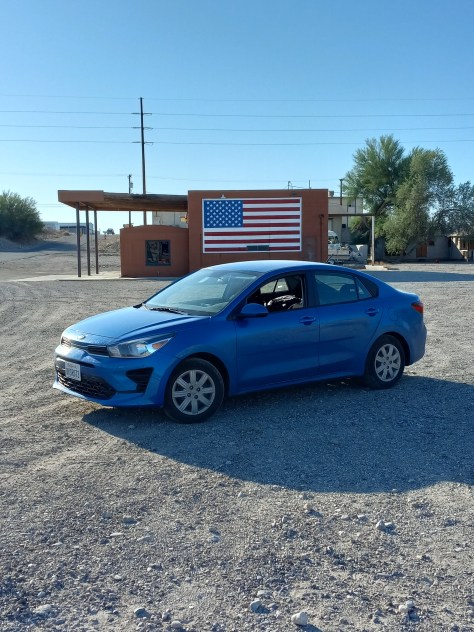
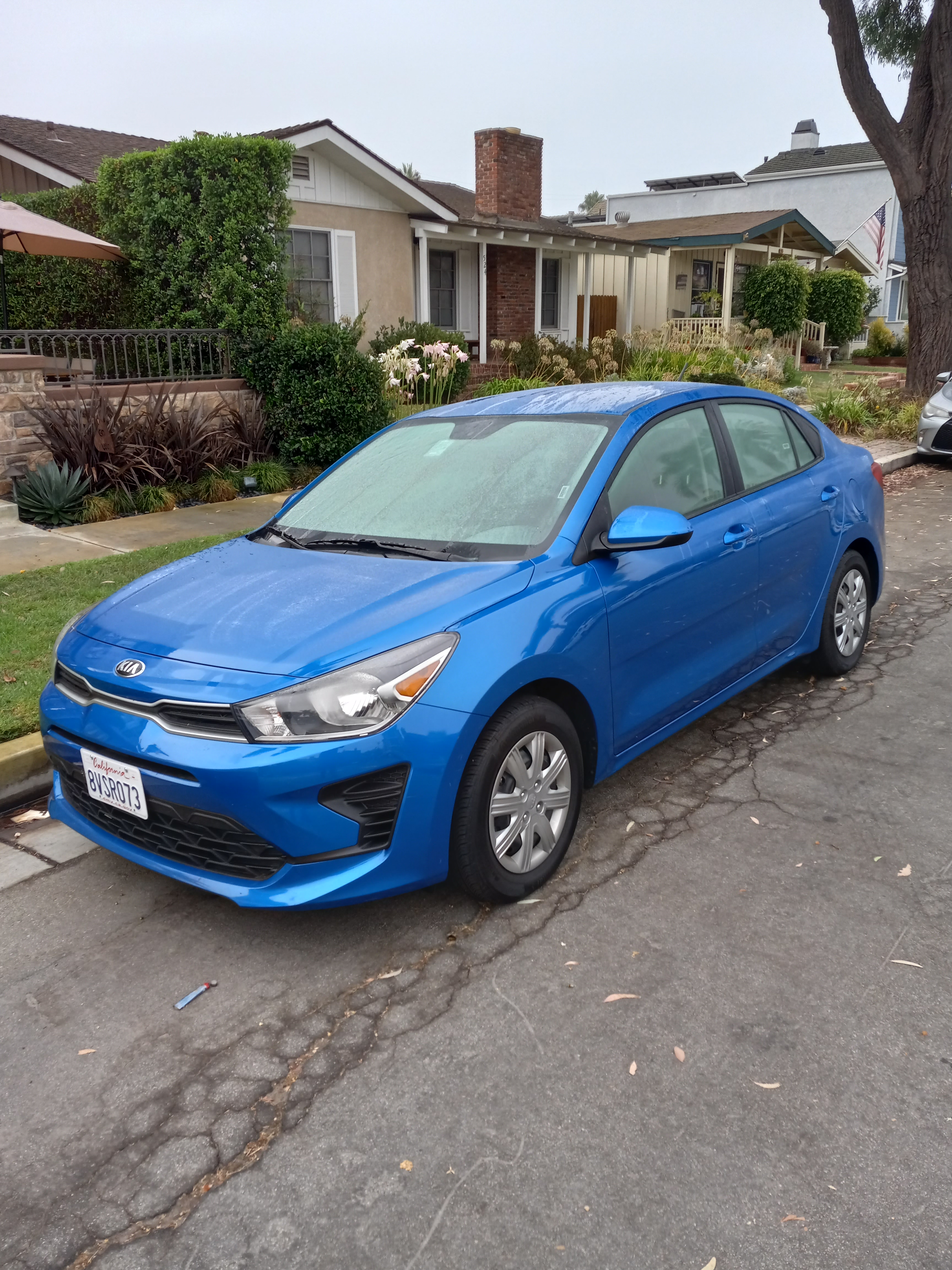
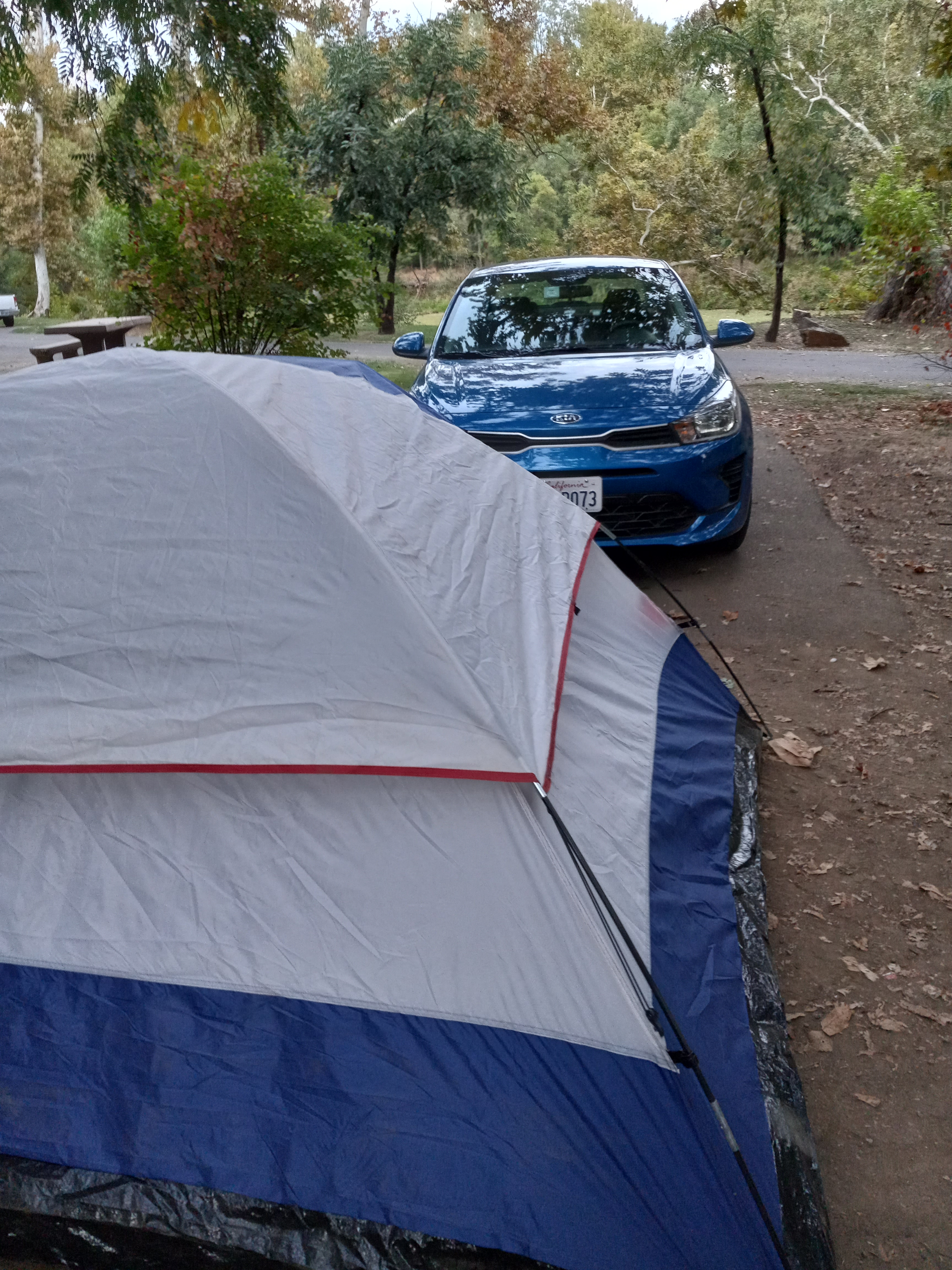
Mendez stopped in front of the middle car and a wave of relief washed over me.  It was a Kia Rio, compact and stylish, but the thing that struck me about it, the thing I liked so much, was that it was just bluer than blue.  It was the bluest car I’d ever seen in my life, blue enough to blind you, if that’s even possible.

I’d been worried about the trip, worried about the kind of money I might spend, worried about the cost of gasoline, which in California was almost five dollars a gallon, worried about not finding camping spots, which my trip would depend on since there was no way I could afford to do hotels, but the minute I laid eyes on that blue Kia I knew everything was going to be fine.  All my worries melted away.

Mendez and I came back around the corner, and I gave my mother a thumbs up, meaning she was free to go run her errands.  I don’t know how I knew this, but my big road trip was going to work out just fine.

pages fly away 2

When you don’t know where you’re going, you leave a lot of room for surprises.  Right until the last minute, I wasn’t even sure what direction I’d be heading on my six-week road trip.  I had a vague idea about driving through as many Indian reservations as I could, but that was it.  There was a powwow in North Dakota happening in a few days, but heading straight there would mean a lot of backtracking at a later date, and I’d still miss the opening ceremonies.

The more logical route was to drive up the West Coast and then cut across the country from there.  Unfortunately, there was a heat wave going on and most of the national forests in Northern California had just been closed on account of wildfires.  Sequoia National Park was still open, so I decided to head there first, which proved to be a fortunate choice since the highway running through it would be shut down only a few days later.

Since I’d been living in a pop-up camper for a year and a half, there wasn’t much I needed to invest in, outside of a tent, which I picked up at Big-5 for forty dollars.  I threw it in the trunk along with a sleeping bag, a few blankets, two pillows, a yoga mat to use as a pad, a small suitcase and my ukelele.  In front, I had an Atlas, a few books about Indian tribes and wildlife, two notebooks, a lantern, a flashlight, and a blue cloth cooler.

The plan was to fly, to hit the road and not stop driving until it was time to return the car.  It was the perfect time of the year to be hitting the road, heatwave, and wildfires aside.  The days were still relatively long and the weather across most of the country would be mild.  Just looking at the blue Kia made me happy.  God could have not designed a better vehicle for my journey.  I could almost see the wings sprouting from its sides.

At around 10:30, assuming by now that the worst of rush hour had passed, I said goodbye to my mother and hopped in the car, racing up to PCH, and then taking it north to Seal Beach Boulevard, passing the beaches and blue waves of Huntington and Bolsa Chica, where I’d spent much of the pandemic surfing. 

There is a story about a Chinese farmer who owns a beautiful horse.  One day the horse runs away.  The neighbors say, oh, how unfortunate, but the farmer refuses to acknowledge any event as being truly good or bad, because no one can know how things will work out in the end.  Later, the horse returns with a dozen wild horses.  Oh, how fortunate.  Then the son of the farmer tries to mount one and breaks his leg.  Oh, how unfortunate.   Lastly, the soldiers of the king come by conscripting all the young men for a war that the son is forced to sit out because of his broken leg.  Again, how fortunate.  Really, in the end who can say what is good and what is bad?

That is a little like how the pandemic played out for me.  I’d gotten a job in Vietnam that I needed to evacuate from.  Then I had a seizure and lost my driver’s license.  I moved into a popup camper behind my mother’s cottage.  There was no chance of finding a job or making money.  I had no option but to start surfing.  After time, however, I got my license back.  Then I started getting unemployment money.  Before too long I’d paid off my debts.  Now I was off on this road trip.  Who can say what is good and bad?  Who can truly say?

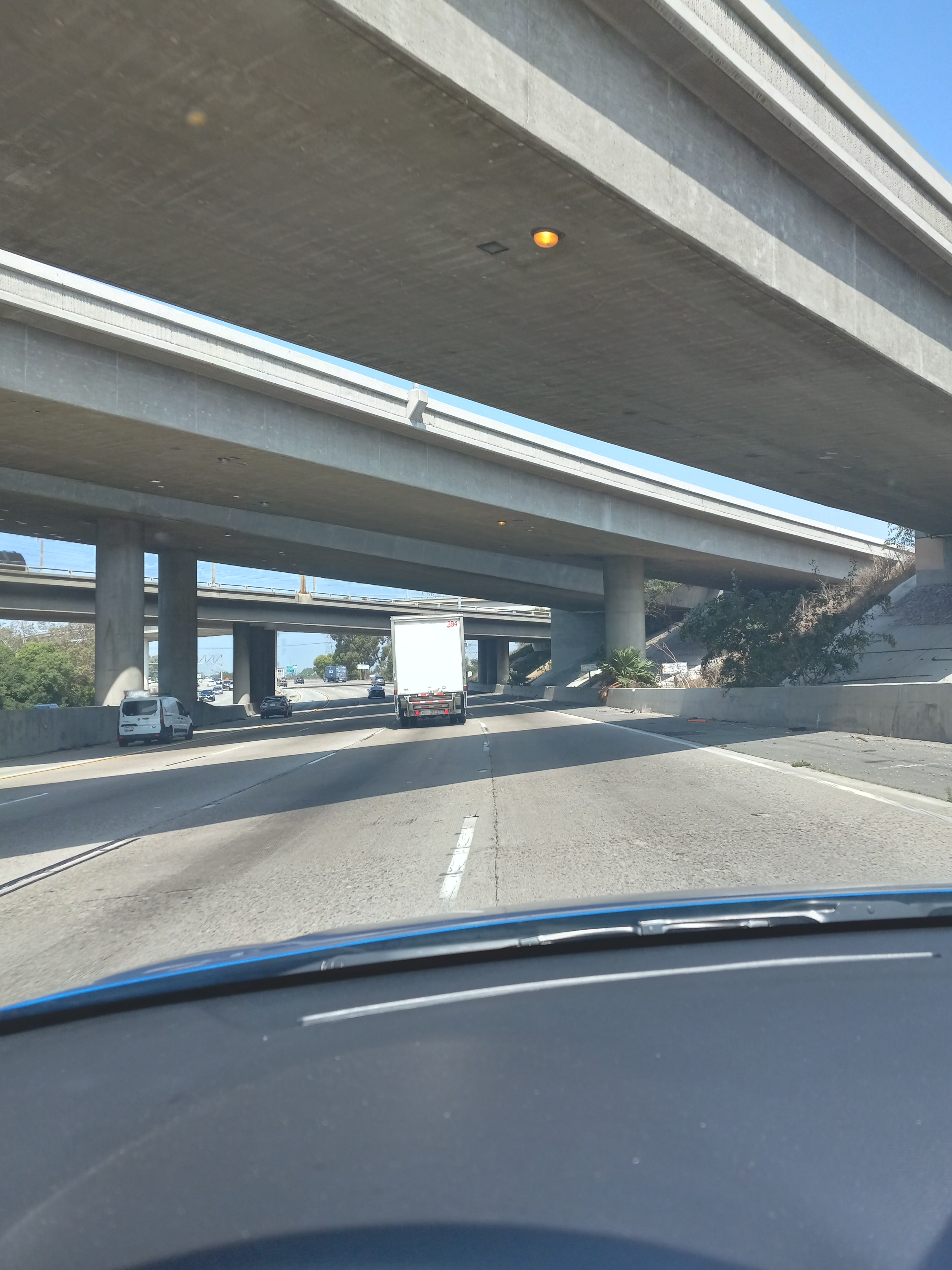
From Seal Beach Boulevard, I got on the 405 heading north, and the traffic was flowing, even up around LAX where it usually jams up regardless of the hour.  I passed Washington and Venice and the apartment where’d I’d lived with my brother for seven years.  Those had been good times.  Someday soon I’d need to stop in at the Cinema Bar and say hello.  In addition to being one of the smallest honky-tonks out west, it’s also one of the best.

I needed to slow down a bit when I got to the 10, but then things sped up again and I flew past the Getty, merging onto the 5 and racing past Santa Clarita and Magic Mountain.  Before long I was climbing up the Grapevine, the yellow hills burnt black as toast by recent wildfires.  Then I was descending down the other side and getting into the far-right lane to take the 99 towards Bakersfield.  What a stretch of road that is; flat, desolate, hazardous, only occasional stretches of fruit trees to break up the monotony.

Bakersfield approached like a blight on the horizon, trapped somewhere between being a small city and a dirty suburb.  There is country music history there.  Buck Owen’s Crystal Palace.  Merle Haggard Way.  Outside of that, not much, until you get up to the Kern River and start heading west towards Lake Isabella.

I’d been diverted to the 65, perhaps preemptively, by signs pointing to Sequoia Park.  That led me through fields of oil derricks, pumping away at the land like black waterbirds.  Those eventually gave way to orchards.  The gas gauge on the Kia was already down to half and had me worried, but when I stopped at a gas station to top it off, found that twenty dollars was more than enough.  Relief.  Relief.  Things could be much worse.  A LOT worse.  I grabbed a sandwich and Monster energy drink and kept driving.

After passing Exeter, I got on the 198, and knew I was getting off the beaten path when I came across a large redwood sculpture of the head of John Muir and another of two Indians and a buffalo, staring out of the same stump.  These were around Lemon Cove, in the vicinity of The Big Orange, which was a fruit stand, selling grapefruit, peaches, honey, olives, and jelly.  I got out and took pictures then continued on to Lake Kaweah, which sat in a low valley, surrounded by parched hills.  Good thing I would soon be setting up my tent beneath a canopy of sequoias, or so I thought.

After passing through Three Rivers, it was just a few miles to the entrance of Sequoia and King’s Canyon National Parks.  There was a young woman working the gate who had two surprises for me.  The first was that due to COVID they no longer accepted cash.  I had to use a credit card for the Park Pass, which was still a good deal for eighty dollars, especially since it cost thirty dollars for each park, and I planned on visiting all of them I could.

The second surprise, which was harder to swallow, was that I had to have a reservation to camp in one of the campgrounds.  I couldn’t just drive in and claim any site that was open, as I’d always done up until now.  A sign claimed that all of the campgrounds were full, which struck me as suspicious, having seen no cars on the road or at the entrance when I arrived.  I’d have to turn around and head back to Lake Kaweah.  There’d been plenty of open spots there.

The campground at Lake Kaweah looked like a construction site, with the hot sun perched up on the hills, still casting a blinding light.  There was no one else there.  The best spot I could find was beneath a leafless tree on hard-packed mud.  It wasn’t until I got my tent set up and took a long walk that the sun began to set and the day cooled off.

One tool I’d used to survive the pandemic was meditation, or my own version of it.  I’d never been able to rid my mind of thoughts but had created a regimented breathing pattern that I added some relevant prayers to.  If I could make it through those, I could sit still.  Without any structure, my eyes would pop open, and I’d just jump up and start doing something else.  One goal of the trip was to find new settings to sit and be still in.  If I couldn’t stop my thoughts, I’d at least try to tune it to what was happening in the moment.

The first evening then, after setting up camp and walking off the last of my restless energy, I sat down on the picnic table by my tent and began to breathe.  Who was I?  Where was I?  Birds chirped all around.  A beating of wings came rushing by.  From a distance, I could hear a car approaching.  It pulled into the campground.  Gravel crunched beneath its tires.  It had seen enough.   It was backing up.  A crow began to caw.  Some bird was drumming on a branch.  Insects were whirring all around my face.  They were trying to mess with my plan, fly up my nose.  I sat rigid and resisted. 

Around the time I was ready to wrap things up, a bird began screeching over my left shoulder.  I opened my eyes and turned in time to get a glimpse of it, a blue upper body, grey below, a black beak and bands around its eyes.  I’d brought an Audubon guide to the flora and fauna of California, so turned to the section on birds and identified my new friend as a scrub jay. 

On the same page was another bird, bluer than the first, that I immediately took a liking to.  The mountain bluebird.  It was as blue as my blue Kia.  The Kia needed a road name.  It became the Mountain Bluebird.  I saw us flying over the mountain ranges and plains of America together.  We would fly like a storm cloud, like a bolt of lightning, all around the country, faster than the wind.

After the sun went down, the stars came down from the sky and hovered over the dark landscape like clusters of celestial grapes.  I’d done some amateur stargazing during the pandemic, but now could hardly pick out a reference star.  The sky was too thick with them.  I was laying on my back, looking up into the heavens, when I heard some heavy boots approaching on the pavement.  It was a ranger, wondering if I’d paid my fee for the night.  At Lake Kaweah there were no reservations required.  He saw the pay stub fastened to the site post and wished me a goodnight.

Before he left, I asked if he could direct me to the Big Dipper.  He strained his eyes upward for a good long while, but eventually had to admit defeat.  That was OK.  I was just asking, not testing him.
pages fly away 3

At the first light of dawn, I jumped up and began to take down the tent.  It’s a wonder I’d managed to get it set up in the first place.  It was its first time out of the box.  The design was pretty simple.  Two crossing poles provided the frame.  The tent clipped onto those. Putting the tent stakes in was like trying to pound nails into concrete, however.  Then the cord for the rain cover had gotten so knotted I’d almost pitched a fit. 

In the light of day, I took a few breaths and managed to get it unsnarled.  The tent was never going to fit back in the little bag it had come in.  I just folded it up like a sheet and laid it in on top of everything else in the trunk.

Passing through Three Rivers, on my way back to the park, I took a picture of a totem pole and drove up to a museum.  There was a redwood sculpture of Paul Bunyan, America’s legendary lumberjack, as well as a timeline that gave his birthdate as 1511 and had him moving to Porterville and opening a restaurant in 1962.  Other, less notable, dates on it included the first Punic War, the fall of Rome, the discovery of California, the Civil War, and World War 1.

Back at the park entrance, there was a young guy on duty.  He inspected the park pass I’d bought the previous day and had me sign the back of it.  I asked him about the reservation system for the campsites.  He gave me a website I’d need to reserve sites on if I wanted to camp at any National Park in the future.  What was left of the land of the free when even camping was becoming a Ticketmaster event?

It took a bit of driving to reach the Giant Forest.  When I did and had the road to myself it was like traveling back to a prehistoric age.  Sequoia Trees live up to three thousand years and are some of the oldest organisms on earth.  They can reach three hundred feet tall and almost a hundred feet around.  Some of them were breaching the crest of the forest as I approached the visitor center and parked beside the Three Sisters.  Sunlight was streaming down through the branches.  The damp air smelled like pine needles.

A large sequoia known as the Sentinel was standing watch out front of the visitor center.  Here, I discovered that the museum was closed, due to COVID, yet the gift shop was open, one of those paradoxes surrounding the pandemic that has yet to be explained.  The implication seems to be that safety always comes first, unless there are large amounts of money involved.  Even then, it can no longer be cash money.  We have reached the living end.

What I really wanted was to get to the General Sherman Tree, the largest tree in the world, not by height or even circumference, but by volume.  I had been to the park before.  I’d seen it more than once.  Still, I needed to visit it again.  It’s a celebrity among trees.  Your trip to the park is not complete unless you make it to the General Sherman and get your picture taken in front of it.  I continued up the Generals Highway until I reached the parking lot for the tree.  Here there were more visitors, certainly not enough to fill all the campgrounds, but the greatest concentration of them, by far.  I got out, already impatient, and made my way down the trail.

My mind was racing, leaping, and skipping down the road ahead of me, thinking of all I wanted to see on the trip, wandering how far I could drive that day.  Once I reached the General Sherman I decided to try to slow down and sit and meditate in front of it.  If my goal was to be in the moment, I was far from reaching it.  My inclination was to run around the tree, run back up to the car, and just keep driving.  No one else seemed to be of the same persuasion.  They were taking their time, reading every sign, leisurely strolling, stopping for pictures.

The General Sherman is a big tree all right.  There were a few benches in front of it.  I sat down and tried to compose myself, drawing a few deep breaths.  Then I shut my eyes.  There was a group of senior citizens with a guide gathered around the sign in front of the tree.  The guide was offering to take pictures.  He knew everything about the history of the park.  Did they know a socialist group of loggers called the Kaweah Colony had lived there in the 1890s and named the tree after Karl Marx?  It was the Buffalo soldiers who came after them, employed by the park service, that renamed the most prominent trees for Civil War generals.  My eyes fluttered open to put a face to this loud lecturer.  Then I clamped them shut again.

A bug started buzzing in my ear.  Loud wings flapped overhead.  Some shoes came scuffling down the trail.  Then there was the sound of wheels on a stroller – a couple telling their baby all about the big tree in front of them.  The bug called for reinforcements.  They began to dive bomb me in an attempt to shatter my serenity.  My eyes cracked open again.  A Chinese tour group was about to replace the first one.  The senior citizens came shuffling past me.  One man with a cane nodded and boomed out a greeting.  Couldn’t he see that I was in my zone?

The General Sherman is the biggest tree on the planet, but bigger trees have come before.  Perhaps, bigger trees will come after.  In the grand scheme of things, three thousand years is not that long, but it’s still a small eternity compared to the life span of a human.  Who was I sitting beneath the tree, growing older by the second?  Where was my consciousness coming from?  I couldn’t pin it down.

After completing my breath cycle, I jumped up and hurried back towards the car.  On the way, I passed the senior citizens.  They were pacing themselves, stopping to rest on benches along the way.  The man with the cane recognized me and warned that the trail was all uphill from there.  When I responded that it was just like life then, he laughed and agreed that there was a lot of truth to that.

pages fly away 4

All I wanted to do was drive around the country as fast as I could.  After leaving the General Sherman tree, I jumped in the Mountain Bluebird and began speeding down the highway towards the General Grant Grove.  When I reached it, however, I couldn’t focus and began jogging down the trail that the General Grant tree was on, only wanting to lay eyes on it so I could hit the road again.  There it was.  The second largest tree in the world.  Duly noted.  I hurried back to the car, ducking down to hurry through a hollow log that served as a tunnel.

My goal was to make it to Yuba City that day.  It didn’t look far on the map.  I got onto the 180, heading towards Fresno, and rapidly began to descend from primeval forest to the same yellow, baked hills that I’d been driving through the day before.  In Squaw Valley I pulled over to take a picture of a signboard advertising an upcoming event, a rodeo with broncs, bulls, and wild horse races, followed by a dance. 

Back in my truck driving days I’d been all over the San Joaquin Valley and had taken some runs down to Fresno.  When I reached the 99 freeway and stopped to fill up with gas at an Arco, the group of guys loitering there on the corner didn’t surprise me.  One shirtless, with black shorts, a headband, wrist bands, and a pit bull on a leash, another one skinny, with no front teeth, drinking from a jug of milk, the third, a Mexican with a backwards baseball hat, on a bike, clamping a boombox to the handlebars with his fingers.  They all set off together in the direction of some dive hotel.

Back on the 99, I realized what a hell of a highway it had always been, two narrow lanes in both directions, cars and trucks five feet apart, going seventy miles an hour, hot as blazes, ugly as anything.  There was a freight train to the right of the road, at least a hundred cars long.  I thought I’d zoom right up to Yuba City, but it was taking forever and rattling my nerves.  I passed through Merced, Modesto, Stockton, landlocked rural cities, like Fresno, lately plagued by meth and opioid addiction, shattering the last bastions of sanity left in the country, those of small farm towns and simple country folk.  Now it was hillbilly hell all over.

When I got to Sacramento there was some mix-up on the freeway.  Instead of continuing north on the 99, I got rerouted onto the 80E and by the time I got turned around, the sun was beginning to sink fast.  I thought to look for a campsite at Discovery Park, along the American River, but it wasn’t that kind of park.  Pulling out I passed a gangster with a red bandana and face tattoos, pedaling a big tricycle.  He nodded his head in acknowledgement.

By now, there was no time to waste if I hoped to make it to Yuba City by nightfall.  The muscles in my back were strained with tension.  The traffic just got thicker once I was back on the 99.  There were a lot stops and starts, not at all how I remembered it from back in the day when I’d be out on a midnight run and have the whole road to myself. 

On the outskirts of Yuba City there seemed to be at least twenty new stoplights, all turning red, red, red, one after another.  I still didn’t know where I was going to sleep that night.  I seemed to remember a camp spot beneath the bridge separating Yuba City from Marysville, on the banks of the Feather River, but that had been many years ago.

Even though I’d been based out of Yuba City for three years as a truck driver, I’d never seen much of it during the day, as I’d always driven night shift.  Now, I recognized the fast-food restaurants, but that was about it.  There were even more of them, if that was at all possible.  Highway 20 had become just another corporate avenue, indistinguishable from any other main drag in America.  I was so exhausted, I considered getting a hotel.  What a cosmic collapse that would’ve been, my second day on the road.

Up until a month ago, I’d never used Google Maps, but I’d been at a wedding a month earlier where two of my nieces had coached me on how to access voice navigation on my phone.  Up until then I was always looking up places and then writing down directions on a scrap of paper.  It wasn’t until I crossed the Feather River, looking down to see that what I thought might’ve been camp spots had become soccer fields, that I remembered that was even an option. 

I pulled over at a Jack in the Box next to Ellis Lake and typed in campgrounds around me.  What came up was a campground called Sycamore Ranch, thirteen miles east.  I asked for directions and pressed start.  The robotic voice of a woman filled the car, insisting that I turn left on 8th Street.  I didn’t know where she was taking me.  I just did what she said.  Soon we were making our way out of town.

Highway 20 was one that I knew well, particularly in the direction I was taking it.  The Gold Rush towns in the Sierra Madres had been favorite hideouts back in those truck driving days.  Only forty minutes from the valley, they were easily accessible on a day off and a world away, all mountains, pine forests, meadows, rivers, and streams.  If I found a place to camp, I’d hit them up in the morning before making my way over to the Redwoods.

There was a road crew doing construction, right where the turn off for the camp was supposed to be.  I took a left into a trampled lot, but then looked back over the highway and saw the sign, almost hidden from sight.  Thank God.  My hands were trembling.  I crossed the road and pulled up at the entrance booth.  A sign said to use the kiosk, but someone had left that disabled.  I drove in and found a spot along a slough, choked with algae.  A nearby sign warned off swimmers.

No sooner had I thrown up the tent up, then it began to rain, which seemed highly improbable since it had been a cloudless day.  Yet, there it was, big, gray drops of rain, and a distant rumble of thunder and small flicker of lightning. 

It had been another lucky day, right at the brink of throwing down for a hotel, now dry inside my small tent, beating the odds, sitting cross-legged on a blanket, trying to slow my breathing.  No.  No.  It was almost impossible.  I still wanted to run.  I still wanted to fly.  The rain was making me happy.  The world was making me happy.  My body was ready to collapse, but my mind and spirt were still racing down the road.  The Mountain Bluebird sat glistening in the rain.