All posts by Haunted Rock

These are songs, poems and images from a life on the road. Enjoy your stay and safe travels.

art is a war 14

These days it’s not really worth taking a night bus if it can be avoided.  True, you don’t need to pay for a room for that night, but you also miss out on all the scenery, and unless you are a local or suffer from narcolepsy, probably won’t sleep more than a few hours, and will arrive at your destination a wretched wreck.  That was certainly the case when I traveled from Bogota to Cartagena.

It was pouring rain when I arrived at the station and I got wet just dashing from the terminal to the bus.  Then a woman in front of me leaned both seats all the way back to make a bed for her children, and another mother sat down beside me with a new infant on her lap.  I was boxed in.  We’d just left the station when I felt something hitting me in the side and saw that the baby, with a full head of black hair, was kicking me.  This went on for a while and seemed very purposeful.  Every time the mother looked down the baby would stop.  When she looked away, it would start kicking again.

After a few hours we stopped at a restaurant and at that point the mother took her baby and moved to a seat in the back.  Only a few minutes later, however, a teenager approached me and took the open seat.  I’d heard him and his buddies horsing around since we left Medellin, and couldn’t understand why he was coming to me now.  As soon as the bus started moving, he went limp and collapsed into me, his bristly hair poking through my shirt.  I tried to use my shoulder to jar him awake, but it was like he’d been drugged. 

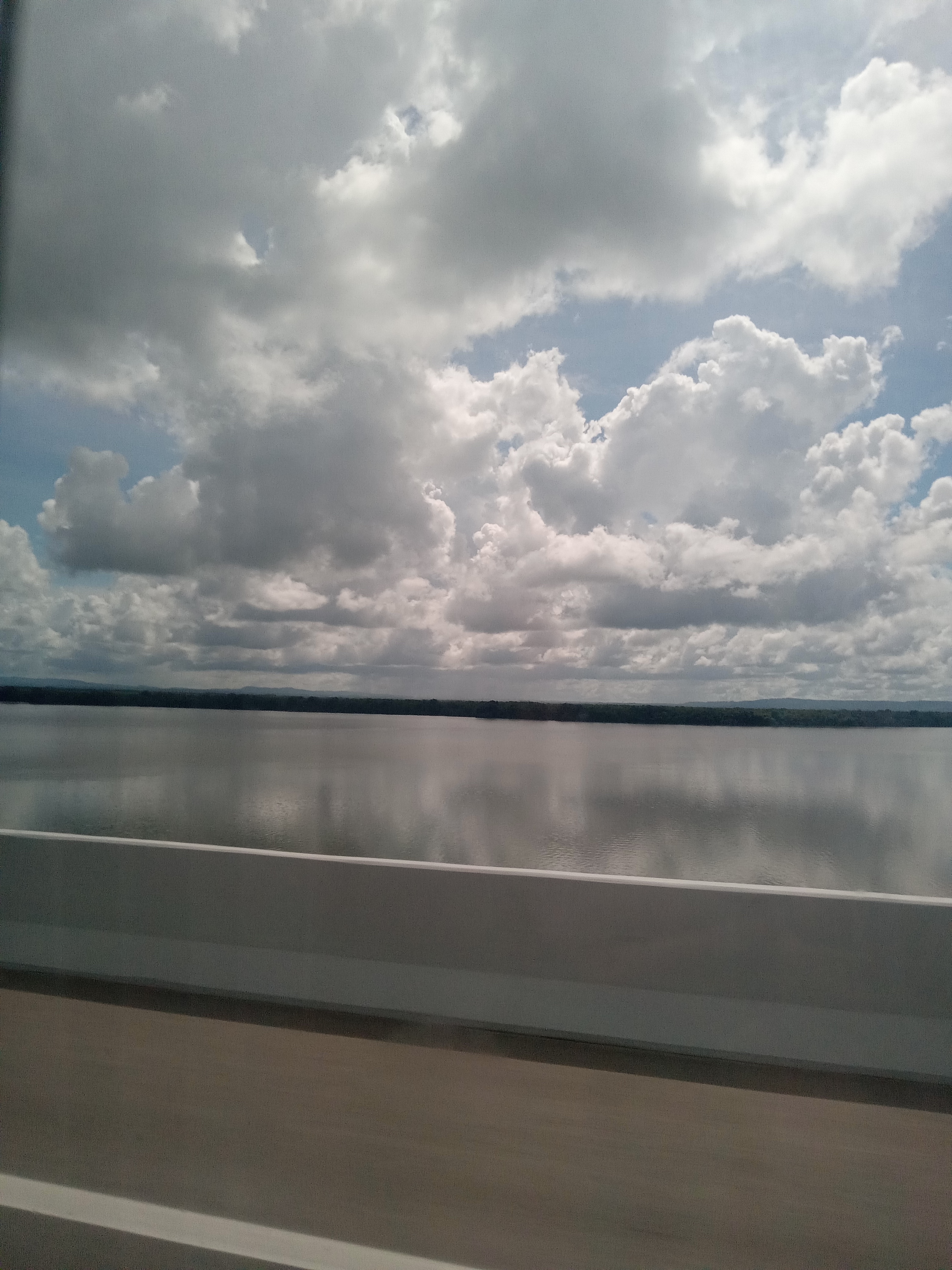
Sometime around dawn, I collapsed as well, and now couldn’t stay awake, even though I was missing everything that passed outside the window; the green grasslands, the brahman cows, the blue mountains in the distance.  At one point I went to rearrange myself and noticed that the teenager was gone.  It was too late to get comfortable.  My tailbone, which had recently been diagnosed as fractured, was on fire.

I’d just slipped into a coma once again when the bus stopped and some policemen got on, searching for drugs – marijuana and heroin – as they announced.  There was nothing in my backpack but broken dreams, but I was still anxious.  After we got back on the road, I was overwhelmed by dread, with no idea where my next paycheck would come from.  I’d gotten some unemployment during the pandemic, but hadn’t worked going on four years now.  In the past I’d always been able to find the right job, right in the nick of time.  Now I’d only gotten a few interview requests, for jobs I was unsure I was capable of faking the enthusiasm for.

The bus station in Cartagena turned out to be miles away from the city center.  Stepping off the bus, the heat and humidity were overpowering.  I needed to find an ATM machine before I could do anything, as I didn’t have enough pesos to even pay for a taxi.  A driver tried to intercept me before I was ready to speak to him.  When I’d found a machine and gotten some money he reappeared, his smile winning me over even though his ride looked less than official.  He knew the area where I was staying.  The traffic was terrible.  He tried every shortcut he could think of, probably putting on more miles going sideways than he did going forward. 

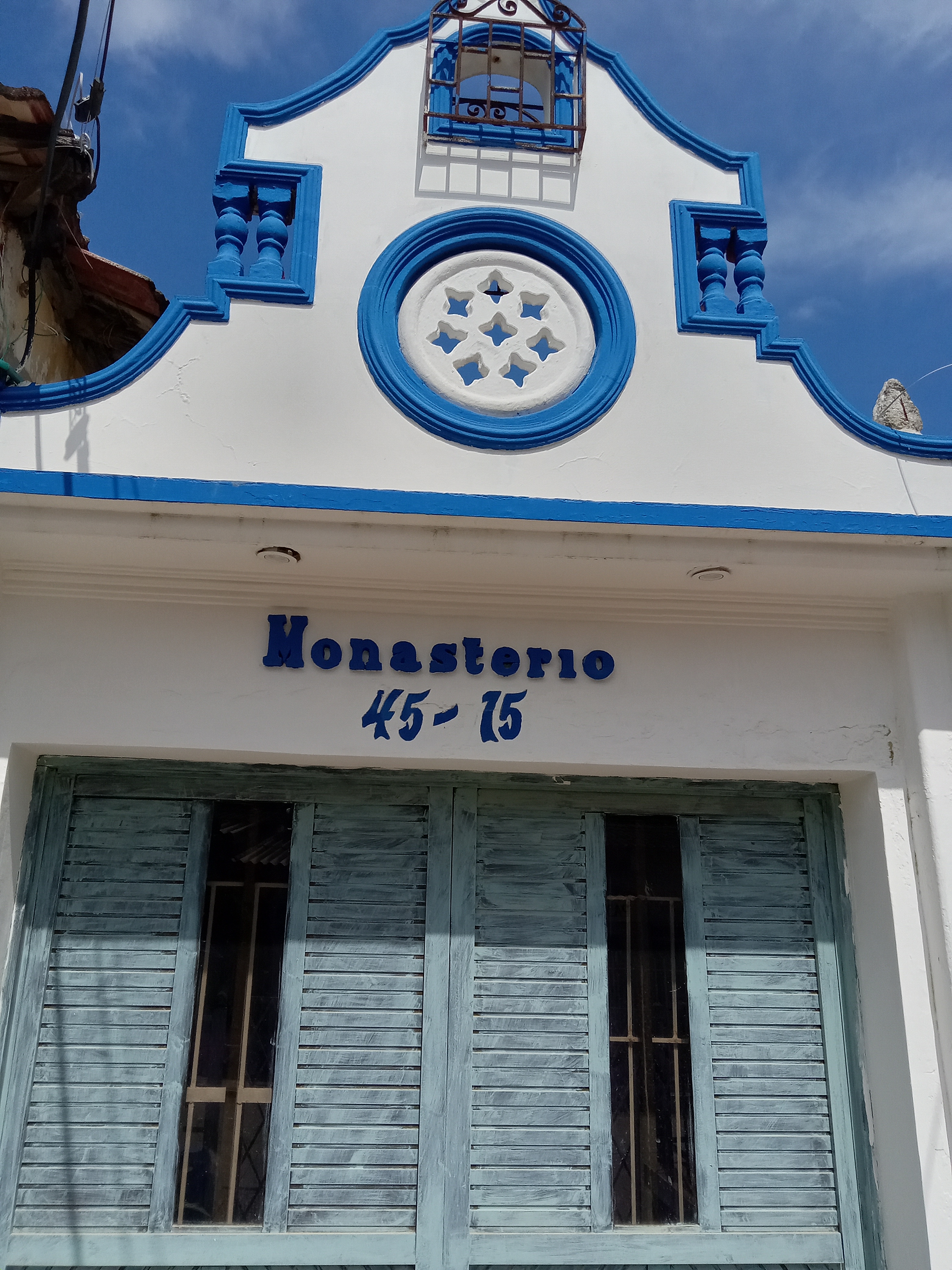
When we got to the hostel, I thought he must’ve decided to drop by his house.  We were in the middle of a ghetto, with nothing resembling a hostel anywhere on the block.  No, the driver insisted.  This was it.  He pointed to a blue and white chapel with a gate around it.  It used to be a monastery.  Now it was a hostel.  He shouted though the gate and a few men came out to observe me.  They didn’t look like travelers.  It appeared I’d booked a room at a mission.  All the other guests were rootless locals, charity cases.

They finally tracked down the manager, who came out tattooed and surly.  I was praying he’d misplaced my reservation.  No.  He tracked it down.  I’d made it for a week. 

Is that right?  A week?  I think it was just two nights.  I don’t remember. 

No, my friend.  Right here.  It says seven nights.

What could I do then but step up and pay the man?
art is a war 15

Of all the anti-social hostels I’ve stayed at, the Monastery Hostel might be at the top of the list.  When I saw my room at least had air-conditioning, I resigned myself to sticking it out, since I’d already paid for it.  The window had been painted over, but even if it hadn’t been there was nothing to look at outside of a courtyard in disarray.  For the first two days I was desperately sick.  I didn’t even leave the room, surviving on two pieces of cake and a quarter bottle of water that were in my backpack.

Mixed into the sickness, which was mainly a crushing headache, was one of the deepest depressions I’d ever descended to.  All I could think about were my shortcomings and failures, and the deep, deep financial trouble I was in.  I tossed from side to side, holding my head in my hands, sometimes so frightened I shouted aloud.  St. John of the Cross wrote about a dark night of the soul.  Had he been to Cartagena?  Could he hear the salsa music right outside his door twenty-four hours a day?  It started sounding like the drums from hell.  I prayed for the relief that nightmares would bring, but sleep wouldn’t come.

When I finally emerged, I was weakened and grim, but still managed to make the manager, Carlos, laugh when I commented on how many monks must be living in the monastery.  It seemed like I was the only tourist they’d ever had at the hostel.  The rest of the men, the residents, sat around the courtyard all day and took turns opening the door when the doorbell rang. 

The last time I’d been in Cartagena I hadn’t been staying in a ghetto.  I’d been closer to the historic core.  When I looked it up on Google maps, I found it was about two and a half miles to get to the walled city.  Even though I was dizzy, and feverish with depression, I decided to try and walk there.  All I had were some directions that I’d scribbled down on a scrap of paper.  It didn’t seem like a good neighborhood to get lost in.

Every time I came to a dead-end, I tried to follow my intuition.  At last, I reached a street that seemed to be a thoroughfare.  It ran along a wetland that had become a dump.  Mountains of garbage sat soaking in a bog, and a small army of homeless men were out rifling through it with sacks.  When I reached the end of the street, a taxi driver sitting at a stop light admonished me not to go into the area I’d just come out of, saying it was very dangerous.  That was good to know.  My headache, compounded now by the heat and humidity, was reaching hallucinatory proportions.

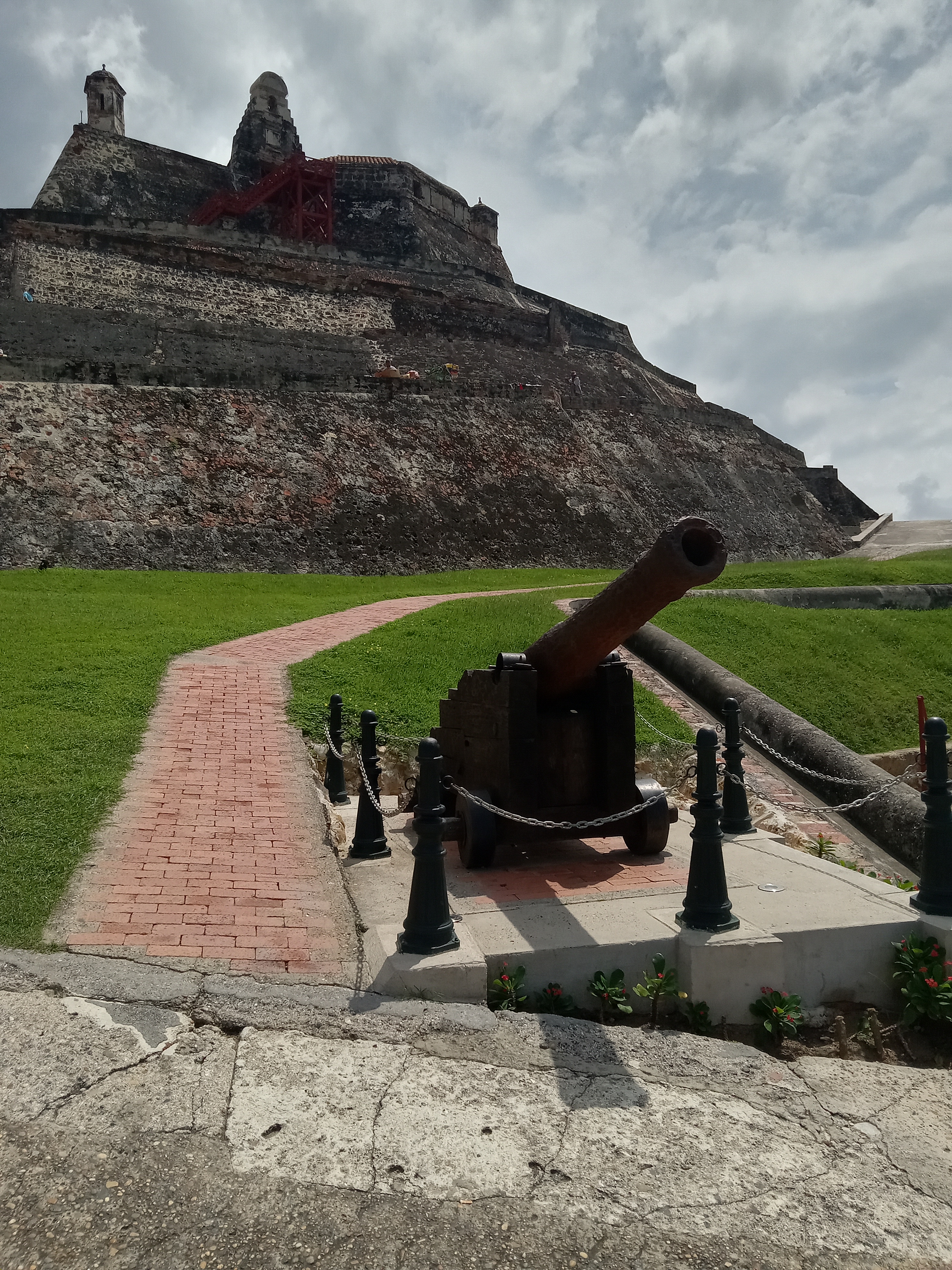
On the other side of the street, I could see a fort.  It was the Castille San Felipe de Barajas, built by the Spanish in 1536.  It rose like an anthill and seemed like a good place to size up the city from.  Out front, vendors with souvenirs and drinks competed for attention.  One man had at least thirty straw hats stacked on his head.

Right when I walked in, a man in a colonial costume, complete with tri corner hat, appeared on one of the top walls and began blowing a trumpet.  It seemed like it would make a good picture, but by the time I got up to him, he’d set the trumpet aside and was playing with his phone.  It must have been one of his ancestors on watch when the fort was lost to the French pirate, Baron de Pointis, during the Nine Years War.

From the top of the fort, I could see the layout of the city, and now knew what road to take to get to the walled city.  There were a few tour groups following their guides around, posing for pictures in front of a giant flag that was flapping in the hot breeze.  I took a few pictures of the cannons and watchtowers, but didn’t care for a history lesson.  Whatever I needed to know, I could look up later. 

The walk to the historic district may well have been saved for another day, but I plundered on.  As soon as I hit the gritty streets, the sense of direction I’d achieved at the top of the fort vanished.  Crossing a bridge, I came to the neighborhood of Getsemani, which was just a maze.  It was full of exotic murals, balconied houses, and colorful characters, but I got lost a dozen times, and kept ending up back at Trinity Square instead of ever reaching the gateway and clock tower that I remembered from my last visit.  A rapper and his sidekick targeted me and followed me for two blocks, before I caved in and gave them a few pesos just to leave me alone.

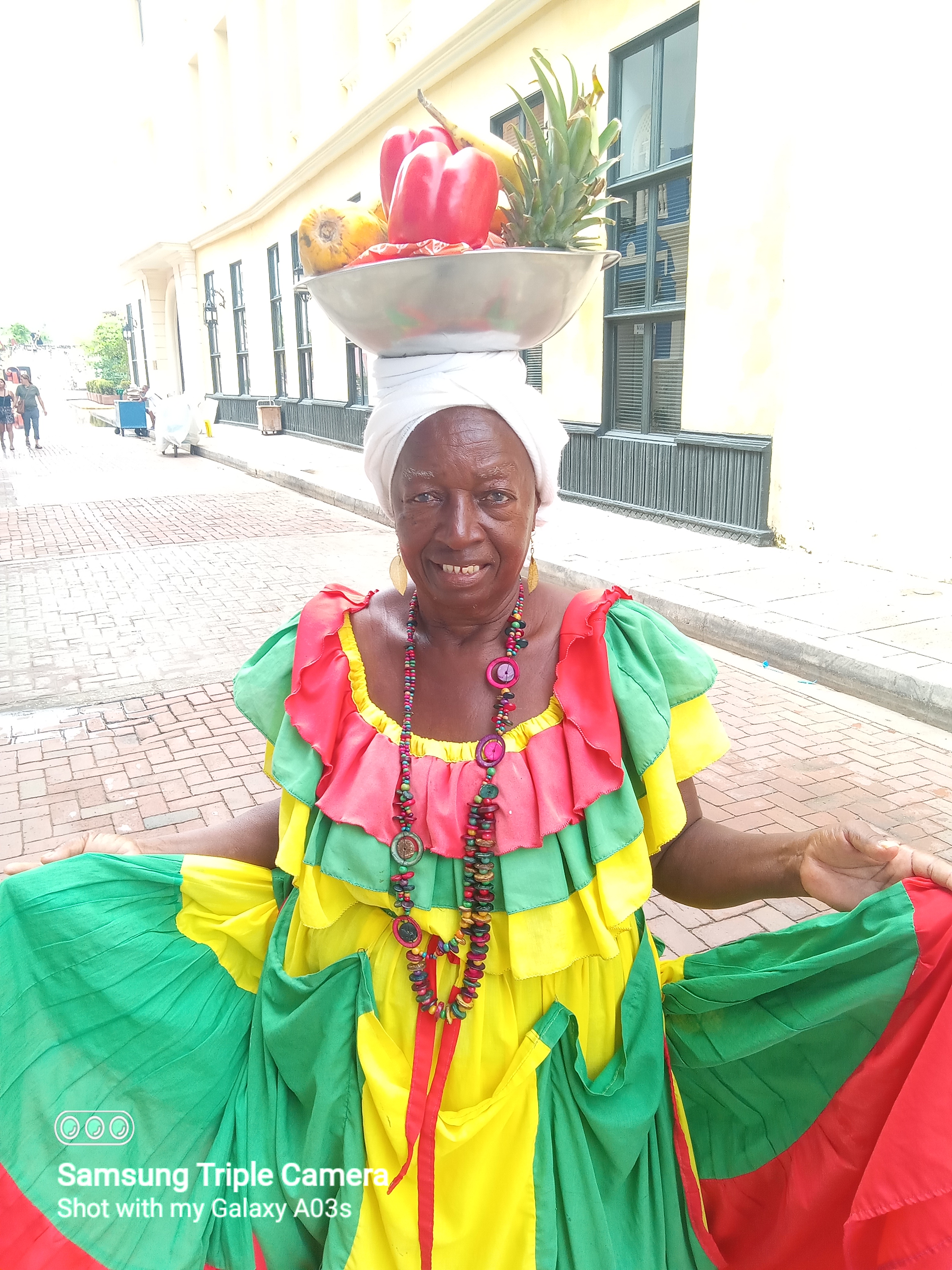
By the time I finally did reach the Monumento Torre del Reloj, I was spent.  In a courtyard on the other side of the gateway a group of Palenqueras, the iconic women in African dresses with the fruit bowls on their heads, were posing for pictures.  I took a picture of three of them walking in the opposite direction from about thirty yards away, and they must have had eyes in the back of their heads, because they all turned and started chiding me, like the witches in Macbeth.  I ended up giving them five thousand pesos to pose for a picture that didn’t turn out because I was too flustered to focus. 

When I got back to the monastery, the manager, Carlos, came to open the gate.  He asked how things were going.  I told him I had nothing to live for.  He threw his arm around me and laughed like it was the funniest thing he’d ever heard.

art is a war 16

These days anyone with even a budget phone can take decent pictures.  The phone does most of the work.  Before phones were a thing, all I had were the cheapest cameras, one of them so bad it made pictures from a trip to Borneo look like they’d been shot with a pinhole camera.  When phones did come along, I finally got one, just for the camera and video function.  Since that time, I’ve taken thousands of pictures, way too many pictures.  My only strategy is to get in front of the action and press the button.

Now I was in Colombia, trying to find pictures to accompany five hundred song lyrics and poems that I’d designated to be my life’s work.  There were probably more in the tank, but by this point the flow had become a trickle and the price it had taken to live the life I had was soaring out of control. 

Just like a child needs to run and show their mother every drawing they do, most artists have a secret hope that there is some source of approval out there once they’ve completed their work.  By now, most of my creations had just gone into folders and storage units, and I was used to it, but it didn’t feel good, especially when other artists were out there being lionized for doing the same thing.  What was worse was to share them on Facebook and then not get any likes, the living definition of insult to injury.

After picking up some medicine at a pharmacy, my headache began to lessen and I was able to eat.  The street that ran parallel to the hostel had a number of outdoor restaurants.  At one I ordered a chuleta, or pork chop, that came with rice, beans, and platanos, the large, starchy bananas they sometimes use as a substitute for potatoes in Latin America.  It was the first time I’d eaten in a long time, and a great deal for a dollar and a half.  In America, I’m not sure that even would’ve paid for a big bite at 7-Eleven.

The sickness seemed to return in the morning.  I dreamed about my father, who’d passed away seven years earlier, expressing his grave disappointment in me.  There was also music that sounded like it was coming from a video game being played in the next room.  It kept playing over and over, like monkeys in a circus hopping over each other, and was absolutely maddening.  A few days later, I discovered it was coming from a Catholic school across the street.  They’d play it to announce the arrival of every child.  Fortunately, I hadn’t kicked in my neighbor’s door yet, but it had come close.

In the evening, I stepped out of the hostel once more, just to get some air.  It was a poor neighborhood, but a social one.  Salsa music played continuously, like it or not.  People broke out into spontaneous dance and sang along to their favorite songs.  In a park across the street, parents were out with their children, making use of every piece of equipment. 

My childhood had been a lonely one, moving from place to place, never having a community or stable group of friends.  By now it was ten times worse if I was back in the States.  People stayed indoors all day long, only emerging to run errands or pick up food.  There was no music or celebration on the streets.  If there was, it had to be sanctioned.  It was no wonder I’d longed to escape.  Outside of the few family members that remained, there was nothing to return to, only failure, isolation, and financial ruin.

At the hostel, Carlos was waiting for me at the door.  What had I been up to, he wondered.  Drinking?  Dancing?  Making love to a beautiful woman?   No.  No.  I needed to remind him once again that I had no life.  No money, no honey.  Tears of laughter poured from his eyes, and he clasped my hand, refusing to let it go.

art is a war 17

Santa Marta was going to be my next stop and though I’d been there fourteen years earlier, could remember nothing about the place.  I wasn’t even sure why I wanted to go there, but had to go somewhere.  I saw on Google that there was a small bus station that serviced Santa Marta, not far from the hostel, so decided to walk over and check on prices and times.

It had rained hard the night before.  The big thunderstorms only added to the excitement of being in Colombia.  Almost every afternoon dark clouds would roll in and the thunder would begin to rumble.  Lightning would sometimes flash, and when that happened the thunder would just explode, shaking the earth to its core and almost causing my heart to stop.  That’s what I needed, electro-shock therapy with none of the cost or complications.  As long as it was storming, I was fine.  When it stopped, however, the thoughts would begin to creep back into my head, and that was never good.

Some of the streets were flooded, with trash floating on the brown water, as I made my way to Calle 47, and crossed a bridge to get to the station.  The boy working security guard told me that there were buses leaving to Santa Marta every twenty minutes, and that it would be no problem to show up and buy a ticket.  Continuing north from there, it was just a few blocks to the Caribbean Sea.  There was a barrier of rocks between the street and the beach, and the ocean was flat, with waves not more than a few inches high.  On one section there were some red and yellow umbrellas and tables set up.

It was possible to follow the coastline back to the historic center.  I reached the walls, which surround and define the old city, and entered at the rear.  The walls, commissioned in the 17th century, and designed to keep pirates out, seemed to be an extension of the fort, with the same tunnels and sentry boxes.  A group of teenage girls practiced a dance routine on one of the walls, as a man, perhaps their coach, shouted out directions.

I visited the Santuario de San Pedro Claver, the patron saint of slaves, and then made my way back to the Catedral de Santa Catalina de Alejandra, where I’d left off my exploring two days earlier.  I made it a point to avoid the women in the African dresses, now knowing how sensitive they were to cameras being aimed in their direction.  An old one got my attention with her good-natured persistence, however, so I agreed to pay for a picture of her, in her red, green, and yellow dress, a silver bowl with bananas, mangos, and pineapples, balanced on her head. 

When I went to review the picture, I found the camera had added a time stamp, not only on that picture, but on all the pictures I’d taken that morning.  What was the reason for that?  I certainly hadn’t asked it to.  I managed to find the time stamp option in the settings and turn it off, but it was clear now that the phone was wigging out.  It was trying to complete an update, but with no internet service, could only spin and spin.  A page for the weather channel kept popping up with the current forecast for Manila.  All the pictures I’d taken up to that point were ruined.

When I got back to the hostel, it was like the bug had now jumped to my laptop.  The thumbnails for every picture in the pictures folder had crashed, leaving only row after row of the windows photo icon.  That meant I now had to go through every picture individually in the photo viewer to see what they were.  It was beyond a hassle, considering the whole purpose of the trip was to match pictures to words.  Welcome to the life of an independent artist.

As an independent artist, you never have the resources or support to compete with what the top commercial artists are putting out there.  All the money you manage to raise for a project is what they might spend for an hour in the studio, just tuning up their instruments.  If something breaks down, there is no one to turn to.  You bear all of the burden.  Anything that can go wrong will go wrong.  Then, when it finally comes time to share your finished work with others, you arrive at another level of letdown.  The CD doesn’t play.  The link to your website doesn’t go through.  Or maybe they do work, but now the recording sounds nothing like it did when it was cranking out of the studio monitors.  There are a million ways to fail.

There was never a time in my life that I dreamed about selling out arenas or winning awards for what I do, but when things are always breaking down and no one cares about what you do, it’s easy to feel cursed.  I spent the rest of the day researching ways to restore the thumbnails to the picture folder, and never found a solution, so started going through them, one by one, and realized that most of them were terrible. 

At that point, it was time to turn off the light.  Maybe things would be better in the morning, but to keep pushing now, would only make them worse.

art is a war 18

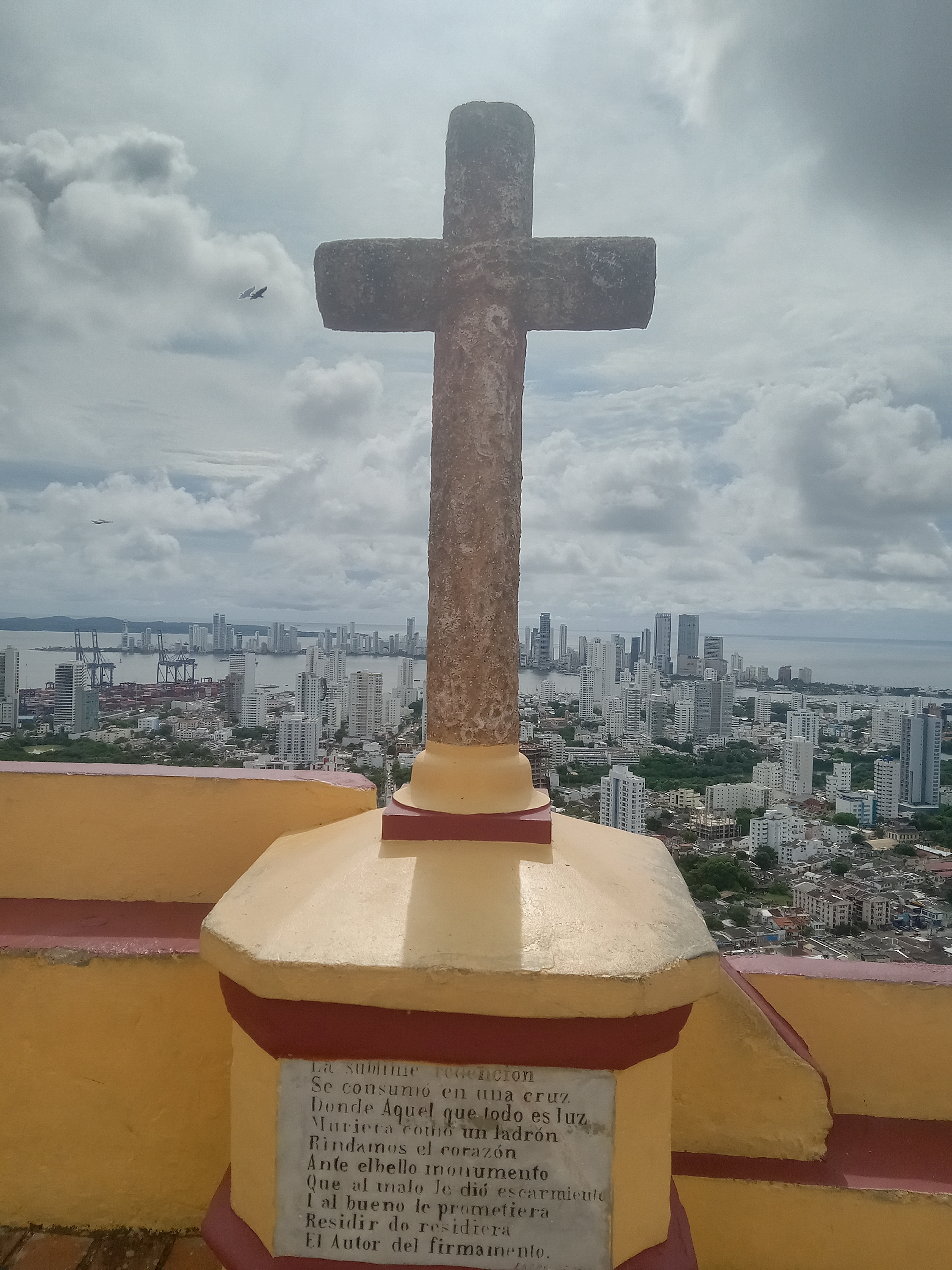
There is a church on top of the highest hill in Cartagena that you can see from all over the city.  The Convento de la Papa was built in 1607 by Augustine monks.  Since I hadn’t been there and had a day to kill, I thought I’d try to make my way there on foot, although I’d read something about thieves who lie in wait beside the road.  When I told Carlos my plan, he had no response.

The convent looked like it might only be a mile and a half from where I was staying, and I just started walking in the general direction of it.  Streets turned into dead ends and dirt paths, however, and I began to sense that maybe I would’ve been better off taking a taxi. I was dripping with sweat and the screen of my phone was steamed over and smudged with grease.   I backtracked to the hostel, and then made my way to the fort, from where I’d seen signs pointing to the convent earlier.  The neighborhood I passed through was full of auto repair shops and men working on motorcycles.  Finally, I came to a sign that pointed uphill, and began to climb the road.

A man started shouting to me from the front of a store, but I just ignored him.  Then another approached me, but it was just to warn me.  I couldn’t walk to the convent.  It was too dangerous.  I should take a moto if I wanted to visit it.  Just then the man from the storefront came zooming up on a motorcycle.  He wanted to charge me for a ride to the top and back.  Now I didn’t know who to trust.  What if he was a thief?  I asked him if he was and he just shook his head and laughed, so I climbed on the back of his bike with some grave misgivings, unable to just overlook the jagged scar that ran down his cheek.

As we began to climb the hill on the small motorbike, I realized that it was a lot longer to the top than it had appeared.  I was glad to be getting the ride if only to avoid suffering a heat-stroke.  We went around a number of curves.  It didn’t seem to be a dangerous neighborhood, but I couldn’t see through the bushes.

At the top, I paid the small entrance fee, and went up a flight of stairs past a crowned King Jesus, extending his blessing to all who passed.  The first door to the convent was locked, so I went over to the overlook where a Colombian flag was flying.  You could see every quarter of the city.  Once again, it made sense from on high, but when you were on the ground trying to navigate your way through the streets, the city was nothing but a labyrinth. 

Finding an open door, I entered into the convent.  There was sacred artwork on the walls and artifacts in glass cases, but an urgent stomach cramp made it difficult to concentrate.  Although the worst of my sickness had passed, it still felt like I was walking through a lucid nightmare.  When I finally found a toilet, back by the stairs, I sat drenched in sweat.

The driver was waiting for me when I came out, and with his helmet off I could see he was a large teen, not as imposing as when he’d been shouting to me from the storefront.  He offered to take my picture in front of a large cross in the parking lot.  The ride back down only took a few minutes and I paid him twenty thousand pesos, or four dollars for the trip.

I had a joke ready for Carlos when I got back to the monastery.  He asked me about the thieves and I told him there’d been one for sure, meaning the boy who’d talked me into paying him for the ride.  I looked it up later on the internet, however, and read about a guy who’d been recently robbed at gunpoint walking down from the convent, while cars, taxis, and even a tour bus passed him by.  He claimed the thieves had held a gun to his head and waved a knife in his face. 

The loss of the wallet and the phone he could live with, but it was the camera with 32 gigabytes full of pictures and memories from his trip that was really causing him anguish.  He was wondering if someone from the tour bus had happened to witness the robbery and taken any pictures that might help him get his things back.  It was a shot in the dark, but I could understand his desperation.  Someone in the comments section had tried to console him, saying forget about the things.  At least now he had the best party story ever.  Perhaps, but if it had happened to me, it would’ve taken a long time to look at it that way.

art is a war 19

If you ever want to feel like you have a lot of friends, just move all the time.  Often it is only when you are leaving a place that people come forward with their affection.  A false nostalgia sweeps over everyone.  You remember good times that never even happened.  So, it was leaving the Monastery Hostel.  It had been a rough stay and I’d suffered through one of the worst depressions of my life, yet the manager, Carlos, who’d come to regard me as a comic genius, was sorry to see me go, and the sad, long-term residents, the monks, all came out to see me off as I passed through the bars of the front gate one last time.

Walking to the bus station, I passed the school that had been playing the maniacal welcome song every morning.  The nuns had the children standing outside in lines.  They all wore matching blue and white uniforms, and just stood there looking angelic.  Where was all that mad music and screaming now?  It was the first time the school had been silent in a week.  That’s how it goes when you finally leave a place.

At the station for Berlinastur, I got a ticket for the next shuttle, which was leaving in twenty minutes, and bought an empanada and coffee from the snack stand.  There were only four of us aboard once the bus got underway.  We cruised up the coast, along the sea, blasting salsa music, and there was little interruption until we reached Barranquilla, and ran into the attendant traffic of that sprawling city.

From Barranquilla it was two and a half hours to Santa Marta.  Arriving in Santa Marta, the bus pulled over to the side of the street in front of a mall, and that was it.  We were there.  It was ten thousand pesos, two dollars, to take a taxi to the hostel I’d booked.  On this trip, I had to go back and forth between getting enough privacy and dealing with the fact that everything was going on a credit card.  I’d nearly drowned in my privacy in Cartagena, so thought I’d save some money by doing a dorm. 

It seemed like a decent place.  There was a lower bunk open with a curtain.  Out back was a pool and a few lounge chairs.  The girl who showed me around was friendly.  I saw that they did laundry, which was necessary.  If I wanted to take a tour, which I didn’t, I could do that through them, as well.

As soon as I’d put my stuff away, I headed out for a walk.  It was another rough neighborhood, but I was told that the center was only five blocks away.  I’d gone about ten blocks before I came across any sign of it, the Catedral Basilica of Santa Marta, a place of historic significance because the remains of the Liberator, Simon Bolivar, who’d died in Santa Marta, had been stored there for twelve years, before being returned to his home town of Caracas. 

Soon after, I reached the pedestrian street, Calle 19, that runs into the Parque de los Novios, and is lined with shops and agencies, advertising the various tours available.  Among the options was a hike to the top of Cerro Kennedy, a visit to the Rio Don Diego, the Kogui Indigenous Village, the Mina Nature Walk, and the famous four-day trek to the Lost City.  I was three hundred dollars shy of the Lost City tour, but had recently been in Los Angeles, so would have to content myself with that for the time being.  The rest of the trips, forget about it.  This was no vacation.  It was exile.

When I got back to the hostel, there was some action taking place in my room.  An old lizard who’d been hanging around the common area in only a pair of shorts, was loudly complaining, claiming that my bed was his, as if I’d invaded a private room he was staying in at the Ritz-Carlton. The girl who’d assigned me the bed was frantically apologetic and asked if I’d mind taking the top bunk for just one night.  Ordinarily, no.  To have to give it up to that old lounging lizard was another matter.

Later that night, my water bottle slipped off the high bed and fell to the floor with a crash. The small croak of alarm it elicited was my only consolation.

art is a war 20

By now I’d managed to match pictures to 160 songs and 212 poems for the galleries that I was building for my website.  What was the point?  I’d previously posted the words, along with links to the recordings on my YouTube channel, and there’d been no takers, I mean, none at all.  I guess I was hoping that someone might look past my rough voice and crude low-fi videos, and see the jewel that’s been shining in my heart all these years.

I decided to go to my Haunted Rock website and start it from scratch, to delete everything I’d posted so far.  If you want to know what it’s like to die on a dead-end street, all alone in the darkness of night, get a WordPress blog.  It is like the parable in the Bible about the rich man who plans an extravagant wedding for his son, only to have none of the invited guests show up.  At the end he’s trying to round up enough beggars off the street to fill his banquet hall.  Even beggars off the street will never visit your website, however, or comment on your latest masterpiece.  You’ll have to pay someone to do that.

When I went to sign into my WordPress site, it suddenly wasn’t recognizing my password.  I went through the whole process of changing it, then went back and tried again.  Rejected once more.  I changed it again.  It didn’t work.  The next time I’d exceeded my sign in attempts limit.  I’d have to wait for a half hour before trying again.  Was there a phone number I could call for assistance?  No.  Was there any way to get help?  No.  My attempts to get through on live chat just kept directing me to the same general information page.  This couldn’t be happening.  Not now.  Putting up these galleries was the only thing keeping me alive.

Eventually, I did a Google search to see if anyone else had ever had the same problem.  What I discovered was simply unbelievable.  There is a wordpress.com and a wordpress.org which are owned by the same company but respond to different passwords.  Once I made sure it was wordpress.com in the address bar, I was able to sign in right away, but what if I’d never found that out?  The welcome screens looked identical.

My last great burst of inspiration had been at the beginning of the pandemic.  I’d used all the time on my hands to redesign my site, and had wanted to add a PayPal button so had been forced to upgrade to their small business plan, which cost three hundred dollars a year.  Previously, I’d been using the free site.  The downside of that is that they litter it with advertisements, so suddenly, between your posts, may be a picture of arthritic feet or a brain tumor, some physical deformity disturbing enough to get you to cough up the money for the premium version.  That’s where I was at now.  Two years of the small business plan had cost me six hundred dollars and I’d gained no followers or gotten any donations, so I’d downgraded to the premium plan, paying just enough to keep the freak show pictures off my site.

It didn’t pain me to delete all my posts.  They’d been like dogs that are born in the pound and die in the pound.   What was my hope for this new crop?  I thought that I might take a more extroverted approach, perhaps start handing out my business cards to other travelers, maybe even break out my ukulele by the pool.  Where to even start?  I figured I’d start with all the songs I had matches for.  Just hang a travel picture on the site, like you would on a gallery wall, and then place the lyrics right beneath it.  Right away I didn’t like the fact that all the songs had been automatically alphabetized in the folder I’d put them in.  I wasn’t sure posting the songs in that order was the best way to go forward.

But then I came to a problem that rendered that objection obsolete.  The pictures stopped uploading from my laptop to the media library.  I hadn’t posted more than twenty-five songs, when the image I was uploading failed to materialize.  There was a ghost of an image, but the image itself was unable to break through.  The wheel that marked the progress of the upload just kept spinning and spinning.  I searched the internet for an hour but could find no solution. Despair fell down hard and heavy.

There was a girl I’d met named Jen, a young girl, out on her first hippie trek.  I liked her because she was friendly and straight-forward with people.  She came out just then and found me there at the desk I’d taken over, like an uncle who’s just discovered that the stock market has crashed and he’s ruined.  What could I tell her about art and life?  This is what happens.  This is the reality of it.  If you have to do it, then you have to do it.  If you can get out of it somehow, run and don’t look back.