All posts by Haunted Rock

These are songs, poems and images from a life on the road. Enjoy your stay and safe travels.

art is a war 28

The bus to Bogota left at noon and was supposed to arrive around five in the morning.  There was a motorcycle rickshaw that I took to get to the station.  My seat was right up front, but wasn’t the window seat I’d requested.  Since no one was next to me, I took the window for the time being.  The countryside was flooded.  I watched fishermen bringing their boats right up alongside the road to unload their catches into cars.  Brahmin cattle looked marooned on tiny islands.  Hundreds of white cranes stood watch in the fields.

At the first station we came to, a woman stood over me to claim her seat.  Before I could slide over, she took a different one near the back.  Later, a girl with a teddy bear ended up in the seat.  She hugged the bear to her chest and looked out the window as the sun went down and the sky grew dark.

I’d asked if we were going to stop for dinner and was told yes, sometime around eight.  By eleven o’clock we still hadn’t stopped, and I was sorry now not to have invested in more snacks.  There was a new guy sitting next to me with his arms propped up on both arm rests.  I wanted to give him a little nudge.

Sometime after midnight, we stopped outside a small row of restaurants for ten minutes.  One of them had papas, the deep-fried mashed potato balls I’d gotten addicted to.  These ones tasted strange, however, as if they’d been stuffed with hairy leftovers. 

We arrived on the outskirts of Bogota sometime around five, and the guy next to me got off.  It was only then that I fell asleep, nodding in and out for the next two hours as we navigated our way through the worst traffic in the world.  Bogota is tied with Rio de Janeiro for having that distinction.  Since we’d be arriving at the bus station the same time as rush hour, I assumed that the conditions would be the same once I got a taxi, and was not disappointed.  The driver quoted me an astronomical sum for Colombia, but once we got underway, I saw that he was only making a few cents an hour as there were some long stretches where we didn’t move one inch.

The hostel I’d booked was in the Candelario, close to the historic district and universities.  When the driver got to the address I’d given him, the hostel was gone.  He shouted to a man across the street and then drove to a different location and dropped me off out front.  A man came out and said the hostel had moved again.  He told me to go two blocks and take a left.  I did and there was no hostel.  I asked a man in a bicycle rental shop if he knew the place.  He said to continue one more block.  It would be on my left.  Thank God, it was.

The hostel was cold when I walked in.  The woman at reception was sitting there in a winter coat and wool hat.  She showed me to my room.  I’d reserved a private for a week, so I could work on my galleries, but now, with the lack of storage on my website, I wasn’t sure how much work there was to do.  There were still about one hundred and fifty pieces of writing that I needed to find matching images for, and out of the matches I had made, about a third of them weren’t very strong.  We’d passed a lot of street art coming from the station to the hostel, and from what I’d seen of the neighborhood, it looked like a hotbed of it.  I figured I’d use the time to gather some new images and take stock of what I had.

The room I’d been assigned had three beds in it.  One of the walls was a window, with no curtain, that looked out on a stairway that ran upstairs.  The only electric outlet was next to the bed beside the window, so if I wanted to work, I had to do it there, almost in the open.  People coming down the stairs could gaze into my room, as if it were an exhibit at a zoo.  You’d see few animals demonstrating such strange behavior.  At the end of my rope, and with no resources left but a credit card, I was determined to keep working on my art.  A more logical response would’ve been to bang my head against the glass.
art is a war 29

One thing I’d wanted to do for a long time was attend an ayahuasca ceremony in the Amazon.  That had been my plan in 2019 when I’d traveled all the way up the Amazon River, from the mouth of it at Belem, Brazil, to Iquitos, Peru, which is the go-to place for such things.  Just getting up the river, on four separate boats, had taken so long that I’d arrived in Iquitos at the exact time my plane was supposed to be taking off, however, and had only made the flight because it had been delayed five hours.  It was disappointing, but I’d had to let it go.  One thing they say about ayahuasca is that it calls to you, so if it doesn’t happen, it wasn’t meant to be.

Ayahuasca had been the furthest thing from my mind when I’d spontaneously booked a flight from Miami to Colombia three weeks earlier, but I’d happened across an ad on the internet for a retreat that was taking place just outside of Medellin, and had looked into it.  It was twelve hundred dollars, so that automatically meant no, but had gotten me researching once more. 

I thought that I might have to fly to Leticia in the far corner of the country to find it.  I’d just been to the neighboring city of Tabatinga, in Brazil, on my Amazon trip, and didn’t feel like going all the way back, and had also heard from someone that I may need to have a yellow fever vaccination to be allowed on any flight to that region.  It seemed like a big hassle, but I still mentioned it to the manager of the hostel, and she’d promised to look into it for me.

My anxiety and depression had been at torturous levels for some time, and that was the main reason I was interested in ayahuasca, hearing that some people had been healed of these afflictions after attending a ceremony.  I’d tried everything, changing my diet, exercise, yoga, meditation, prayer, even taking antidepressants, which kept me awake for five days and raised my blood pressure to fatal heights, but nothing had stuck.  My feeling was always that if my situation wasn’t so bad, I’d probably feel better.  Undoubtedly, I would, but if there was a magic cure out there, I was ready to take a chance on it.

The hostel was not far from Monserrate, a mountain with a famous shrine on top of it, that of The Fallen Lord, that can be reached by both cable car and funicular, which is something like an uphill train.  I’d been there years earlier and thought it would be a good place to get oriented.  Just as I’d gotten sick traveling from the heights of Medellin down to Cartagena, now I was sick in reverse after traveling from Mompox to Bogota.  It was almost impossible to separate the headache from the depression.  My room was perpetually flooded with light, thanks to the large curtainless window that faced the stairs, so there was no way of resting during the day.  I decided to hike up to the base of the mountain.

There was so much street art lining Carrera 3 and surrounding Parque Germania, it felt like swimming through a dream.  I’d spotted many beautiful pieces from the back of the taxi and had hoped to return to them, but now I could see that the city was full of art.  I’d have my work cut out for me just keeping track of what was in front of me.  Following the signs and continuing uphill, I came to the ticket office for the Teleferico, or cable car.  There weren’t many visitors in line, as the sky was threatening rain.  I cursed myself for not bringing my umbrella, as I’d gotten in the habit of bringing it everywhere I went.  Rain can appear out of nowhere during the rainy season in Colombia.

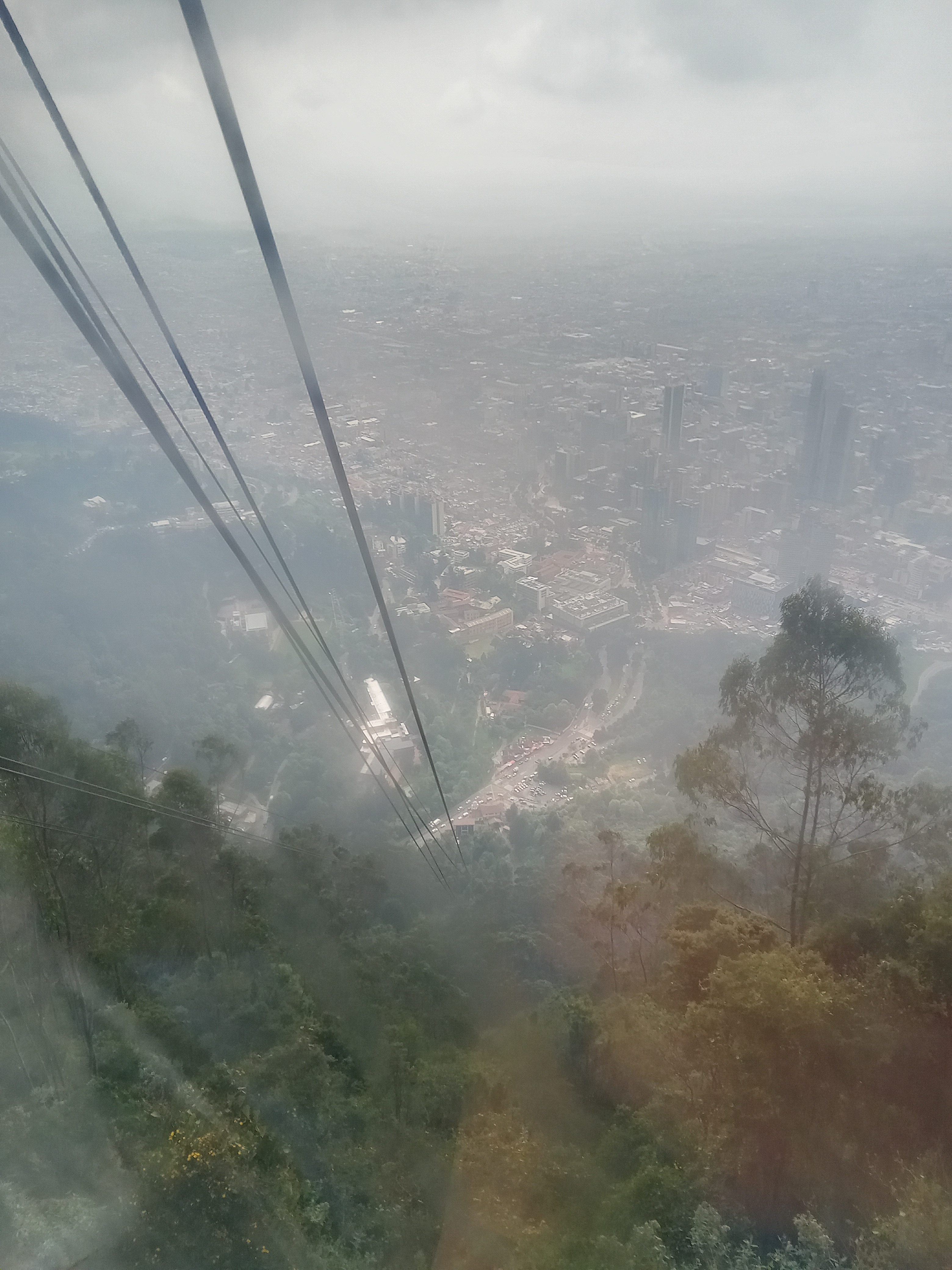
When the cable car arrived, I got crammed against the back wall of it, looking down through blurry glass at the station we were leaving behind.  As soon as we got to the top, black clouds came over the mountain and it started to rain, not a warm, tropical shower, but giant cold drops of it, that hit you like hailstones, and left you drenched.  I had to dash to get to the church before it really cut loose. 

Passing though the side door of the church, I reached an outdoor market where the rain continued to pound on the tin roof like rifle shots.  Lightning flashed across the sky and the roar of the thunder was like that of an erupting volcano.  I was sorry not to have an umbrella, but not sorry to be up there in the middle of the storm.  The whole mountain shook.

Where were all my troubles now?  What had happened to my splitting headache?  For those few moments I was free.  You don’t need a church to have a religious experience, but in this case, having the Basilica of the Fallen Lord there, amidst the tempest, with its shrine to the battered and bloody Jesus, certainly didn’t hurt.  The suffering of all mankind was illuminated between the great rolling ocean waves of thunder.  Everyone suffers.  That was the message.  If I didn’t like what I was going though, I certainly wasn’t alone.

art is a war 30

There are both benefits and challenges to living an unscripted life.  While the challenges are too numerous to name, one of the benefits is the occasional rare surprise, that moment when you find yourself in a situation you’d never dreamed of.   Two days before flying to Colombia, I didn’t even know I’d be going there, and now I was in Bogota, trying to decide what to do about a return, since I’d given up my flight to Miami a few days ago.  Colombia is an inexpensive country.  If I stayed in a dorm, I could get by on ten dollars a day, in a private, maybe fifteen to twenty.

I looked into it and found it wasn’t much to fly directly to Los Angeles.  I figured I’d give myself another month and then fly back for Christmas.  What I really hoped was to die before then, but couldn’t count on it, so needed to buy a ticket while they were still affordable.  It was then that fate kicked in, as I happened to come across an article about Putumayo, a region of the Upper Amazon, between Colombia and Ecuador, where ayahuasca is found, along with many of the top taitas, or medicine folk, who oversee the ceremonies. 

It had already been my plan to visit San Agustin, which is just a few hours from Putumayo.  If I made it that far I’d be right on the border of Ecuador, so I looked into flights to Los Angeles from Quito, and found that they were the same price as those from Bogota.  Boom.  Just like that, I had an itinerary.  Bogota, Cali, Popoyan, San Agustin, and then Mocoa, the capital of Putumayo.  There was an ayahuasca retreat I’d seen advertised on the outskirts of Bogota, but my plan now was just to show up at the source and see what happened.  If I was being called, then the right doors would open.  If not, then I’d have to let it go.

I’d already gone through my entire library of travel pictures once, and had come up with over four hundred images I wanted to use for my song and poem galleries.  While in Bogota, I planned on looking for new images, as there were some pieces of writing I’d been unable to find a match for.  At some point I’d probably need to go through the entire library once more, but needed some time away from it.  Considering it was my entire life’s work, it didn’t seem like I’d produced much of value.

I’d also sent out another bunch of job inquiries, but had only heard back from two recruiters.  One wrote just to inform me that I was too old for a teaching position in Brunei.  Another one from China wanted to line up an interview, and asked if I’d be able to use the Voov platform, which I was unfamiliar with.  I went ahead and downloaded it, and then let her know I was available to do a test run.  She had a principal in Beijing she wanted to introduce me to, but wanted to make sure there weren’t any problems before scheduling an interview.

By now it had been four years since I’d last worked.  After a year and a half at an Air Force base in Saudi Arabia, I’d earned enough to travel for that long.  Right when I’d really needed to work again, I’d gotten an offer in Vietnam, but COVID had forced me back to the States, and nearly caused a mental breakdown.  I’d stayed in a pop-up camper in my mother’s backyard for the duration of the pandemic, but had been stripped of my identity in the process.  Now I was out on a desperate run, needing to find something fast, yet at the same time feeling that I’d already reached the end of the road.  It was a terrible place to be.

The hostel had a bar where all the other travelers sat drinking and sharing stories every night.  I was unable to join them, needing all of my resources just to survive.  One night they got a karaoke machine out and sang until three in the morning.  That used to be my specialty, sitting in bars, singing all night long.  Now I lay in bed with a pillow wrapped around my head, trying not to hate them.  The last thing I was going to do was go down to the bar and complain.  That would be the final nail in my coffin.  I punched the mattress and cursed the walls, but didn’t go down to the bar.

art is a war 31

The hostel I was staying at in Bogota was in a pretty convenient location.  It was just five blocks from the Plaza de Bolivar and surrounded by historic buildings and museums.  One day I attempted to see as many of them as I could.  My focus during the trip had been street art.  The experience so far had been immersive and full of discovery, but I was also interested in checking out some of the art that fits in buildings and frames.

The Plaza de Bolivar is where the National Capitol, Catedral Primada, and Palace of Justice are located.  One of the most infamous incidents in the war between the government and leftist rebels occurred in 1985 when M-19 guerillas invaded the Palace of Justice, taking 300 people hostage and eventually killing 12 of the Supreme Court Justices.  In total, almost a hundred people died, including five of the rebel leaders, and the building was left in flames.

Walking towards the Plaza on Calle 11, my first stop was at the MAMU, or Museo de Arte Miguel Urrutia, which adjoins the Botero Museum.  The first building I entered was given over to interactive exhibits, that combined physical objects, sculpture, and projected images and videos.  The theme, which had come up over and over again on my trip, was the country trying to come to grips with its violent history and the people and communities that have been uprooted over the years. 

The first room documented various massacres that had been committed during festival occasions, the centerpiece, being a large whip on a mechanical tripod.  Another room showed desolate images of a neighborhood that had been abandoned and then later deconstructed.  A third exhibit traced the madness of a minerologist who’d been sent to New Granada during the colonial era to oversee the extraction of gold from the land.  The last room I entered showed scenes from a movie, wrestlers in drag battling women from the Amazon.  I’m not quite sure what the point of the last exhibit was, but it was entertaining, to say the least.

The MAMU also has a permanent collection that I walked through next.  The images that once again got my attention were those featuring violence; an abstract of a disemboweled corpse, a fist clenching a dagger, a torso, like a mountain, with a river of blood running down it.  There were also black and white photos from the conflict.  Armed rebels looking down on Bogota from a hilltop.  Peasants waving sticks, their faces covered by bandanas.  A caravan of fighters on donkeys, making their way through the jungle.

The Botero Museum, itself, comes from the private collection of Fernando Botero, whose paintings and sculptures of oversized subjects can be found around the world.  I’d seen much of his work in the Botero Plaza of Medellin, and recognized similar pieces here.  In addition to his own work, the museum also houses works by other famous artists, such as Picasso, Dali, Chagall, Monet, Matisse, and Miro.  Artists have always been my heroes, but what I loved, more than the art they produced, is the way they lived.  Some of them, like Picasso, had great success in life, and I found hard to relate to.  The mad ones who suffered for their art and often went unheralded were my role models.  Van Gogh.  Gaugin.  All the Romantic Poets.  Syd Barret.  Nick Drake.  It seemed to me that they had made a religion out of their art, and fought, like the early Egyptian desert fathers, in their barren crawl-holes, for a firsthand encounter with the divine.

There were many museums to visit.  The Military Museum had a collection of guns, swords, and different period uniforms, as well as a courtyard with a helicopter, fighter plane, rocket launchers, a boat with mounted machine guns, a few missiles, and a statue of a soldier, crouched low to the ground, detonating an explosive. 

At the Colonial Museum there were traditional oil painting on the first floor, but the second featured some conceptual pieces, a man with a white Clorox jug for a face, a large peso with the front-piece being a child in a gas mask amidst an industrial wasteland, a third showing a tribesman, trapped in a burning jungle. 

By the time I made it to the Museum of Independence, I was beginning to suffer from museum burnout.  After appreciating a statue of two gentlemen in Victorian dress engaged in a fistfight, I could no longer pay attention. It was time to get back to the streets.

Carrera 7 is the main pedestrian thoroughfare that runs through Bogota.  It was Sunday, so it was crowded and there were many street performers lining the way.  One man had a large speaker behind his bike and was blaring salsa music, with a few old homeless men doing most of the dancing.  Another wiry shirtless man was walking on a pile of broken bottles while smoking a cigarette.  A boy with no hands was playing the piano with his feet.  A group of costumed characters were paying to pose for pictures.  Spiderman saw me aiming my camera in his direction and admonished me from a distance, waving his finger, no, no, no.

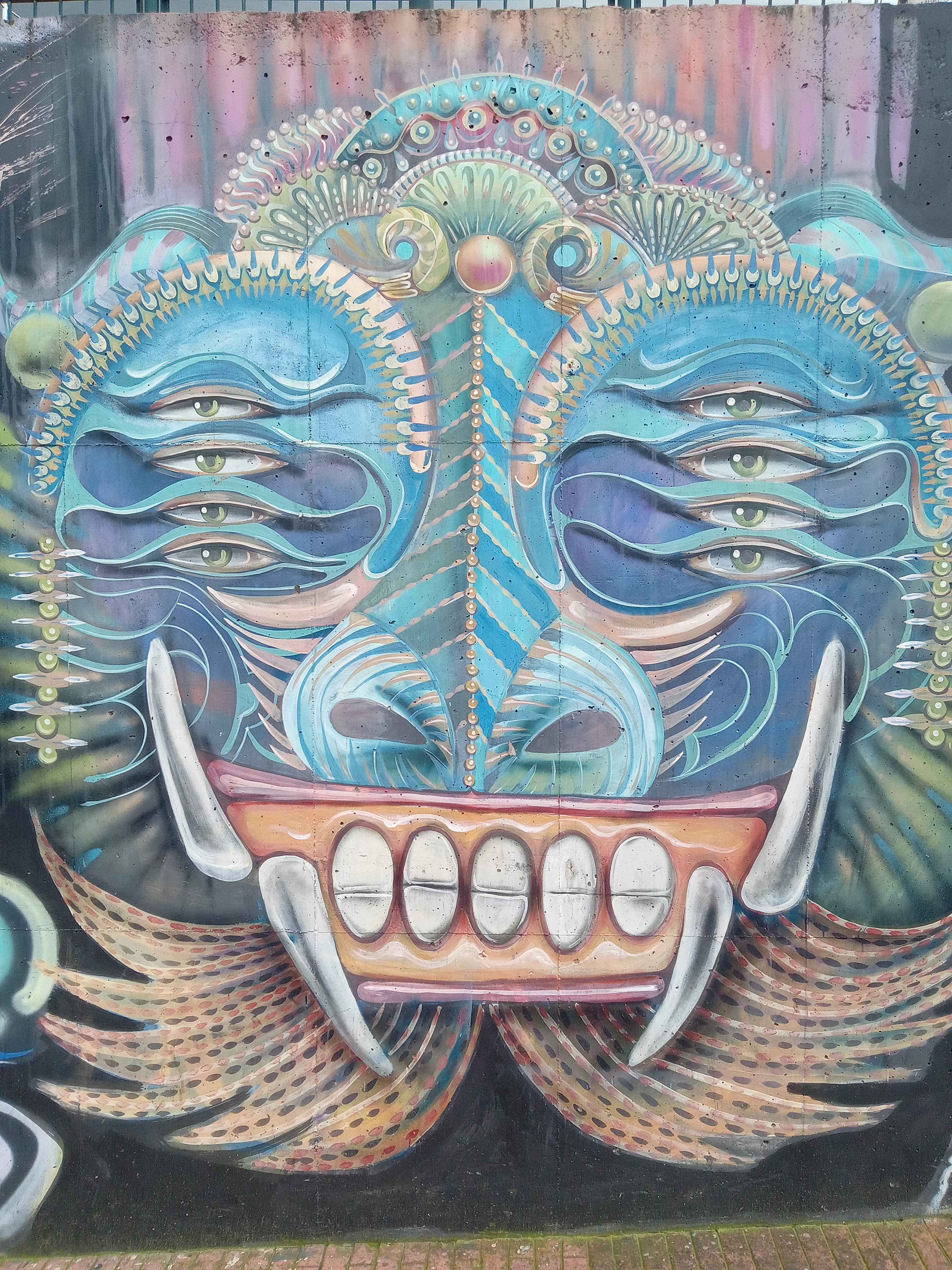
Later, I ended up in a popular student neighborhood where every building was adorned with murals.  There I witnessed a woman growing from vines, an elder made happy by a bowl of chicha, an Indigenous child, holding his heart in his hand, a gap-toothed rapper, smiling from beneath a baseball hat with a hornet on it, two nude women, swimming through a golden sea, parrots, hummingbirds, superheroes, meteor showers, and next to a basketball court, a series of fantastical beings that could only have been summoned from a psychedelic trip.  This was just a very small sample of the street art I encountered in Bogota, block after long block of it.

My conclusion?  I love art in all its manifold forms, but the most interesting art I’d seen on this trip, and in many of the trips I’d taken preceding it, had all been street art, done by anonymous artists, in most cases driven by a passion for creating alone.  Going to a museum can still be something of a chore.  You’ve paid to get in, so feel you have a duty to pay attention.  You can only keep it up so long.  At one point you find yourself walking faster and faster, almost groaning out loud when you find there’s a whole wing or floor left that you didn’t know about.  Street art is nothing like that.  It picks you up and carries you with it.  Seeing more of it only drives you on.  I can walk through streets that are covered with art all day, and never get bored.

art is a war 32

Now that I’d come up with some kind of itinerary for my trip, and was excited about visiting Putumayo, I went ahead and booked a flight back to Los Angeles from Quito on December 15th, just in time for Christmas.  Even though the challenges waiting for me were greater than ever, it would make my mother happy if the whole family could get together, and I figured I’d just do what I had to when I got there.  When I was at my depressed worst, my wish was to escape by somehow dying before then, but I realized it wasn’t going to happen just by pushing a button.  If I had to take matters into my own hands, it probably wasn’t going to happen at all.  Either I was a coward, or all I really wanted was to get out from under the pain.

The next stop then would be Cali, the capital of salsa music in Colombia.  I was told I could just buy a ticket when I got to the station, which was good to hear since the station was far away and the traffic unimaginably bad.  When I looked at my options it only made sense to take another night bus if I wanted to arrive in Cali during the middle of the day, as opposed to the middle of the night.

The next day then, I stayed in my room until checkout time, and then asked to store my bags with them until that evening.  The guy at the front desk, Chico, was a good guy, an aspiring hippie from Leticia in the Amazon.  If I hadn’t found out about Putumayo, Leticia might have been my next destination, but I’d never had a good feeling about it.  It would’ve been too much money and too much hassle.  I was happy with the lineup I’d stumbled across.  All my projected stops were in the right order and seemed to make sense.

There was one last museum I wanted to visit, the Museo Nacional, and I had all afternoon to get there.  Walking past the Plaza de Bolivar I saw that they were setting up a concert stage for some kind of political rally.  I started walking in the opposite direction of the museum, just to kill time, through a very rough neighborhood, lined with graffiti scrawl and human excrement.  Carrera 10 was a big commercial street with a large market on one side of it.  I did see a mural of Gabriel Garcia Marquez on a high building, above the name of his fictional town of Macondo.

I arrived at the museum already short on attention, ready to be on the road again.  It was once a prison, and that’s almost how I felt, trapped inside, trying to focus on artifacts beneath glass cases.  They do have a great collection, and in a different frame of mind I could’ve spent a few hours there, but needed to walk more than anything and found myself just hurrying through.

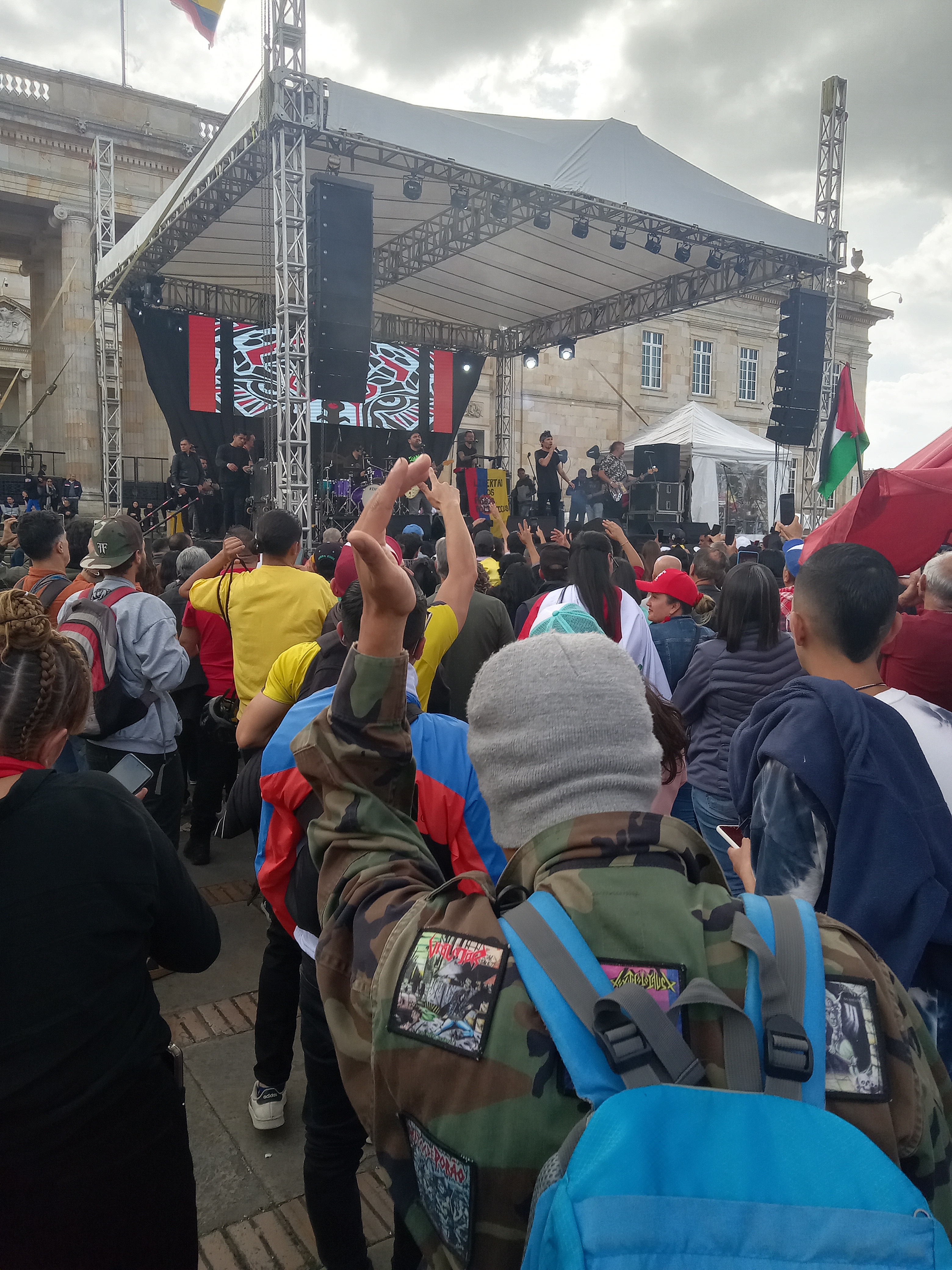
When I got back to the Plaza de Bolivar the concert had started.  That was more in line with my restless mood, but I really just wanted to go.  The rally seemed to be in support of their president, Gustavo Petro, as a big-headed replica of him was making the rounds, giving hugs, and posing for pictures.  I never found out the name of the band, but they must’ve been successful on some level, as everyone in the crowd seemed to know the words to all their songs.  One old man behind me began clanging on a cowbell so enthusiastically I nearly went deaf.

When I got back to the hostel there were still a few more hours before it made sense to head to the station.  I asked about the traffic and Chico told me it was always bad, night and day.  I sat and talked to him while I waited.  His dream was to own his own hostel one day, and build it from bamboo.  There was an architect he admired in Bali who specialized in bamboo constructions, and he hoped to travel there and learn from her. 

Around six, the girl at the desk called a taxi for me and when it arrived, the staff all came out to see me off.  Even the owner emerged from her office, in her winter coat and wool cap, to give me a hug.  She wondered if I’d gotten any information about the yellow fever vaccination for the Amazon.  I told her I was now going to Putumayo, so it didn’t matter.

I got in the taxi, and we just sat there in traffic for over an hour.  When we got to the station, I was worried about how much the fare would be, but it only came to five dollars.  There was a bus leaving in a half hour and in the meantime, I ordered a chicken dinner for just three. 

If I could live like that in America, I’d still travel as often as I could, but wouldn’t worry about returning.  As it turned out, my greatest fear was being in my own country without enough money.  Everyone there would rush to assure me that, yes, it was all my fault, seeing no value whatsoever in the experiences and writing I’d been accumulating my whole life.  That had always been the case and would never change.  Not unless I got very lucky.

art is a war 33

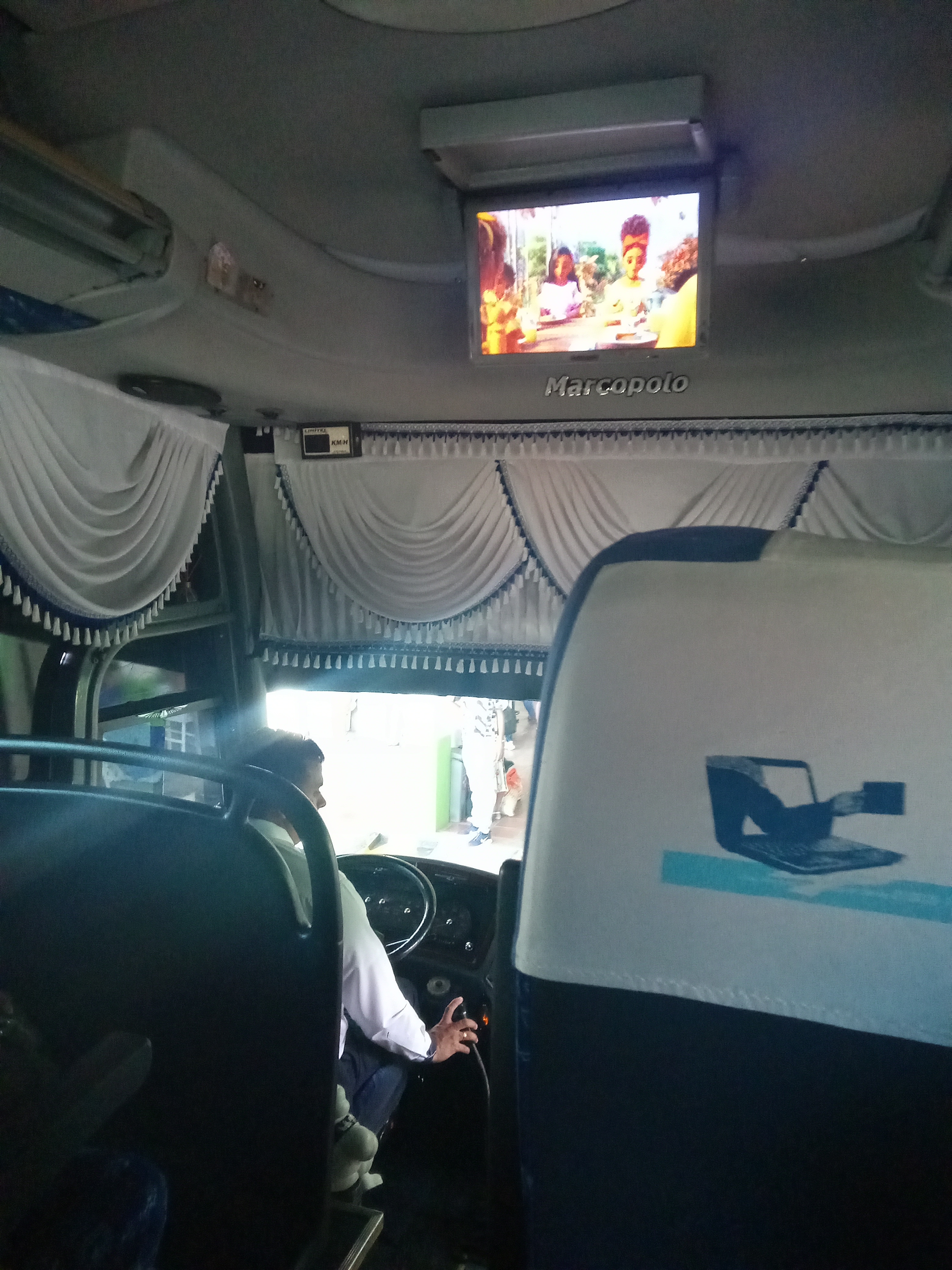
It was raining when the bus left Bogota, and it took two or three hours to get out of town because of all the traffic.  The bus was only half-full.  There was no one next to me, so at one point I tried to lie down, facing the seat with my knees tucked up in a little ball.  Before long, we started downhill at such a steep descent that I was literally hanging from the armrest to keep from falling to the floor.  It took all the strength in my arms just to hold on, and as the bus swerved left and right, was almost like swinging on a jungle gym.  It was a strange way to travel, for sure.

After a while, my arms got too tired and I had to sit up, but now it was like I was standing on a ledge.  By the time we reached the outskirts of Cali, I was cooked.  I’d written down directions for the hostel I’d booked a room at, and it had looked fairly straight-forward.  When I got out of the bus station, however, it was a rough looking neighborhood, and I got wildly lost, lucky to even find my way back.  I asked directions from three people sitting on a curb and they insisted that I take a taxi.  It was that dangerous.

The taxi went the opposite way I’d been walking, and seemed to travel at least two miles before arriving at the hostel.  To think I would’ve found it by following my intuition was just deranged.

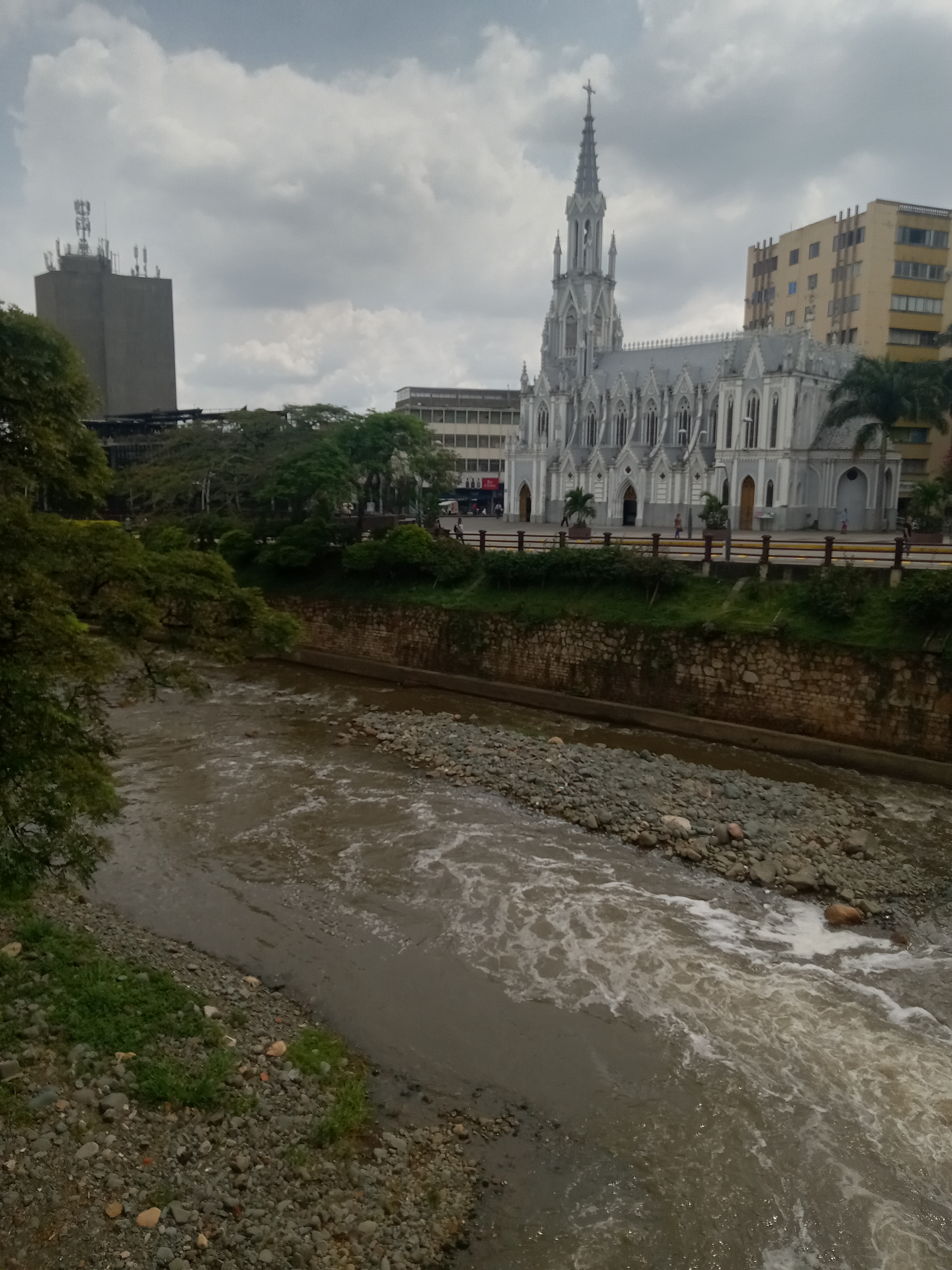
It was way too early to check in, and I knew it.  I sat down on a couch and started dozing off.  That wasn’t going to work.  I’d been in Cali years earlier, and my only memory of the place was women playing folk songs on acoustic guitars beneath some kind of monument.  I went out walking in the direction of the river and found nothing that I recognized.  There was a bridge with a church on the other side of it.  I crossed over and followed the riverwalk, passing a series of cat sculptures.  Then I came to a park with boulders stacked on top of each other.  Someone had tagged them, like a preschooler using crayons on a wall. 

I was too exhausted to function, so returned to the hostel and started sleeping in a hammock, until someone tapped me and let me know my room was ready.  I was splurging on a private with a shared bathroom.  It wasn’t much larger than a closet, but came with a high-power fan.  As soon as I lay down, I was fast asleep.

Cali is the capital of salsa music.  That’s what I was hoping to learn about while I was there.  All I knew about salsa came from a video I’d watched on YouTube about the early days of salsa in New York City and the Fania All Stars, a group that had featured legends like Celia Cruz, Willie Colon, and Hector Laboe.  The guy working at the front desk, Ace, was a dance instructor.  He told me he’d been practicing dance his entire life, but when he performed, people were so cheap, cheap, cheap, he had to supplement his income by working at the hostel.  I’d found a man after my own heart.  I asked him about places to check out salsa.  He said there were clubs all over the city.  I asked about the women who played folk guitar.  Where could I find them?  He told me to head to Bolivar Park, the same place I’d been that morning. 

When I returned to the park, I found no women playing guitar.  For some reason I was obsessed with that memory.  I saw two tourists on a bench eating shaved-ice and asked them what they knew about the city.  They’d just arrived as well.  The shaved-ice, what they call a raspado, looked so good I ordered one.  While the man was making it, mixing real fruit into it, I asked him if he knew about the women guitar players.  He told me to go to Loma de Cruz, adding that it was too far to walk.  I figured I’d look it up when I got back to the hostel.

In 2008 I’d taken a trip to Ecuador and Colombia, where I’d been to many of the places I was visiting now.  I hadn’t been to Medellin, and hadn’t heard of Putumayo then, but had started in Quito and traveled all the way to Cartagena and back.  It had been the final straw.  I couldn’t afford to make records that no one supported anymore and had worked at the same inner-city school so long it was threatening to become my only story.  Once the school year began, I was sitting on a hotel at the Mexican border.  The engine had just seized up in my truck and a front tooth had fallen out of my head.  I only returned to Los Angeles to quit my job, and had been living out of a suitcase ever since. 

A move like that might be a daring one to make in a movie, but has real consequences.  Still, faced with the same options, I’d do it again.  Not knowing what will happen next can cause a lot of anxiety, but leaves room for surprises.  If you know what’s going to happen next, and it’s not what you want, sometimes you need to just jump.  You might end up in an equally bad situation, but at least it will be a different one.

art is a war 34

Salsa music came out of New York City in the 1970s and is based on Cuban music, particularly the son montuno style innovated by Arsenio Rodriguez, which added a horn section to the typical three drum arrangement and call and response choruses.  With additional elements of Puerto Rican vocal stylings and jazz, salsa became a hot ticket, something of a catch-all phrase for Latin music in general.  The Fania label was created to cater to this niche, and in 1971, the Fania All Stars, a supergroup made up of the best-known artists on the label, managed to sell out Yankee Stadium.  Salsa had arrived.

Since that time, the music has developed into a number of subgenres, such as salsa romantica and pop salsa, and has spread to other countries.  Venezuela, Peru, Mexico, Panama, and Colombia all have their own salsa bands and traditions.  I’d heard that Cali is the capital of Salsa, and since I was there, hoped to learn more about it.  A Google search revealed a salsa museum that I wanted to check out.  When I asked Ace about it, his only comment was that it was in a very bad section of town.  I asked about the women folk guitarists I remembered from my last visit, and he confirmed that Loma de Cruz was probably the place to find them.

Since I didn’t have phone service, I scribbled down all the directions I thought I might need and headed out in search of Loma de Cruz, which was a park about two miles away.  Heading in that general direction, I got caught in a labyrinth of street art that eventually deposited me about five blocks south of it.  I’m not sure what I was expecting, but Loma de Cruz, with rows of small huts for artisans and vendors, was largely deserted.  There was a pretty good overlook of the city, but no musicians.

Finding the salsa museum required a lot more determination.  I first had to get through the most congested part of the city, often unsure if I was heading north or south.  Not all of the street signs were posted.  When I thought I was close, I went into a small shop to ask if they knew the museum.  Not only didn’t they know it, they also repeated Ace’s warning that it was in a very dangerous neighborhood.  If I really needed to go there, I should take a taxi.

I ignored their warning and kept going, eventually reaching a section of the city where the streets and parks were full of homeless people.  I kept to the busiest street and as I kept walking, decoded the system they use for addresses.  The first number is the cross street and the second is the house number.  When I reached the right cross street, I headed over a few blocks and found the museum, looking no different than any of the surrounding houses, beyond a small sign above the door.

An old man was standing outside the door, and called to his son to come out and speak to me.  Yes.  They were happy to have me as a guest.  There was a small fee for a tour.  The guide would be a young man, Ramone, who gave dance lessons, but also conducted tours when need be.  I was the only visitor. 

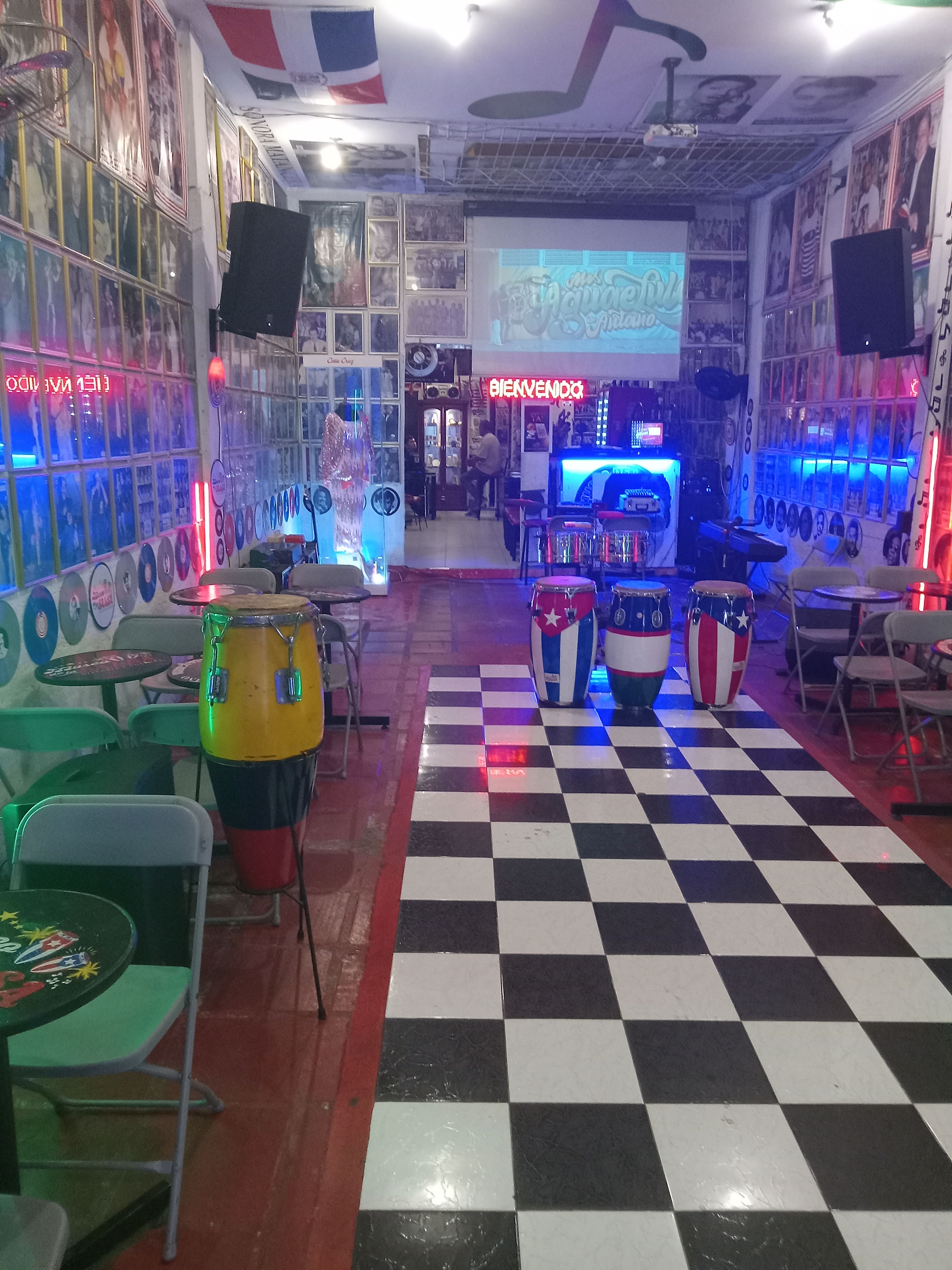
Right away I started to take pictures of all the famous musicians on the wall.  The old man called to Ramone and appeared to be upset, pointing in my direction, and shaking his head.  It turned out he was the owner and had personally taken all of the photos in the museum.  He was concerned about copyright issues.  I was told I could take pictures of everything but the photos.  That was OK, although outside of the photos there wasn’t much to take pictures of, a set of drums, a dress that Celia Cruz had once worn, a few records in glass cases.

Ramone only knew a little bit of English.  My Spanish is just OK.  The way he gave the tour was to speak into his phone and then have me read the translation.  It was a bit like the Cone of Silence on the TV show Get Smart, where to protect secret information two cones come down and cover the speakers’ heads, making it so they have to shout.  It was a tedious way to communicate, especially since I understood about seventy percent of what he was saying.

One bit of history that I may have misunderstood, but prefer to remember that way, involves the reason for Cali’s salsa being so much faster than anyone else’s.  Colombia was very isolated for many years because of the perpetual conflict going on.  When records were imported, the players they had access to spun them at an accelerated speed.  They didn’t know any better, so danced accordingly.  When the outside world finally caught up with them, they were regarded as innovators.  That’s the way it goes with art.  Something is imitated so poorly that it becomes a new style.

When the tour was over, I met all three men at the door and took some of their business cards, promising to leave them at the hostel for other travelers.  The museum is one of those best kept secrets that can languish into eternity.

It had been nearly cloudless when I walked into the museum, but now the sky was dark and threatening.  Lightning flashed and the low growl of thunder filled the air.  I had my umbrella tucked in the waistband of my shorts, thinking when I left the hostel, I probably wouldn’t need it.  In a few minutes it wouldn’t be enough.  Lightning and thunder started crashing all around, like mortars striking the earth.  I hurried to get beneath an awning and reached it right when it started to pour.  It was like standing behind a waterfall and didn’t let up. 

I got tired of standing there and dashed to another awning, soaking my shoes in the process.  Now I was in front of a bar, with a few old men and hookers, looking out apathetically at the rain.  The intersection of the street I was on had become a river, at least two feet deep in places.  Cars risked getting stranded by crossing it.  Motorcyclists were knee deep, trying to push their motorcycles through.  When the rain finally let up, I backtracked and headed to a higher neighborhood, eventually making my way back to the hostel, as wet as could be. I never did find the women with the guitars.