Category Archives: Travels

pages fly away 37

I’d given almost no notice before just showing up in Minneapolis, so I was lucky I got to stay with Jaimey and see anybody at all.  Kirstin Johnson and I went down to check out my old buddy, Nathan Coleridge’s, record store before I left.  Things seemed to be going pretty well for most of them.  I know things can always change in a moment, but for the time, I was happy to be out on this rental car odyssey, breathing new life into dreams that had fallen beside the road years earlier.

One of my classmates, Dean Shockley, had gone on to become a pastor and had a church in Marshall, Minnesota.  I’d known him as a musician in college.  By now, as a pastor, he had a congregation, a paycheck, a wife, kids, a house, and a farm.  I had a ukelele and suitcase in my trunk and that was about it.  Since my next destination was Pipestone, only forty-five minutes from Marshall, I decided to drop in for a Sunday service on my way past.

Sitting in the back pew, I felt a fleeting moment of jealousy, watching Dean up there surrounded by a community of family and friends.  It was what I’d claimed to have been looking for my entire life.  I couldn’t know the reality of how each person there thought and felt, however.  Perhaps what I’d been looking for was the fantasy of a home and community, one where love is reliable, full of stock-characters, only friendly people with good intentions.  So far it had been easier to go on searching than to stay.  Movement exhilarated me.  The freedom to just pack it up and go at a moment’s notice isn’t easily bartered away. 

Before I left, I got to meet Dean’s family in his office.  He presented me with a record he’d made that included one of my songs.  Now that was a true compliment.

It was another hour to get to Pipestone.  I took the 23 south, through fields of corn and wheat.  The Pipestone National Monument is a quarry, where pipestone used to make ceremonial pipes by the Native Americans was found.  The area is sacred to them.  At the entrance there is a pond where the Song of Hiawatha Pageant, based on the epic poem by Henry Wadsworth Longfellow, was performed for many years.  The last time I’d visited, there’s been tipis around the pond.  Now they were notably absent.

Inside the visitor center, I read about the rituals behind the pipes and the prayers.  What makes the pipestone sacred is that it’s exclusive to the area.  I read about the spirits of the rock and the history of the medicine wheel. Then I set out on a mile long walking trail.

The path ran through a meadow, past prayer flags tied to the branches of a tree.  I came to the red quartzite cliffs, then approached a sign announcing The Oracle.  It was eleven steps to reach it.  A sign on the oracle said, Look Through Here, and pointed to a hole.  Gazing through it, I could see the profile of a Native American, a natural formation of the stone.  Walking further, I came to a waterfall, then climbed stone stairs at the side of it to reach the top.  It was hot, only slightly lesser so in the shade.  It was a walking meditation I was on, at least that was the idea behind it.  I was finding it hard to sit still these days. 

Heading back down the steps I encountered a family, two little boys, both with blonde cowlicks.  Their mother was trying to get them together for a group picture, almost needing to bribe them in order to do so.  I got ahead of them on the trail and reached the Leaping Rock.  It is a pillar that warriors once leapt to from a cliff and tried to land on, planting their arrows in the cracks if they’d been successful.  Beyond that there was a sign warning of poison ivy and snakes.  Then a tunnel of red sumac trees.  Passing through that I came to more prayer flags, waving in the wind.

When I left the monument, I stopped at Fort Pipestone, a replica of a fort that was constructed in 1863.  There was a sentry box in the corner of the logged-in yard, and a wagon wheel leaned against the trading post.  I went in, not thinking to buy anything, but came out with a small bag of polished stones and a few fake arrowheads.  If my memories ever failed me, I’d still have something to reach for.
pages fly away 38

Our family is almost a hundred percent Scandinavian.  Although my mother is primarily Norwegian, my father’s side is one hundred percent Danish.  Both sides of the family came over to homestead South Dakota, around the time that the Indian Wars were winding down in the late 19th century.  My goal that day was to visit the Danish town of Viborg, where my father’s relatives had settled, and on the way, I drove through Sioux Falls, where my father had been born.

Sioux Falls is the largest city in South Dakota and named for the waterfalls that run through the middle of it.  I drove to Falls Park and found a place to park beside the Big Sioux River.  From an overlook, I could see the way that it cascaded over quartzite bluffs and collected in pools.  A walking trail led to an observation tower and an old sawmill.  It being Sunday afternoon, many families were out picnicking and sightseeing.  Upon leaving the park, I drove through downtown, which struck me as being quite artistic, with a lot of sculptures and cafes.

Viborg was only fifty miles away.  I got gas and an ice cream treat on my way out of town.  Gas had only gotten cheaper since leaving California.  The Mountain Bluebird was running like a dream, giving me the wings for this great quest, flying effortlessly across mountain ranges and endless plains.

When I got to Viborg, most of the Main Street was closed off due to construction.  It had risen up because of its proximity to the railroad and been incorporated in 1903.  At one point my great-grandmother had run the only switchboard in town, until Ma Bell came through, consolidating all the telephone lines.  My great-grandmother agreed to sell on the condition that her twin boys, one being my grandfather, get jobs with the company.  My grandfather went from being a lineman to an executive in Lincoln.

I’d been to Viborg a handful of times as a child.  My great-grandfather was a farmer, but by the time I knew him they’d moved into town.  He was a big man with big hands, soft-spoken and perpetually clad in overalls.  My great-grandmother went on to outlive him by a dozen years.  Her ritual was to wake up every morning and pray for every member of the family.  I had memories of Viborg, but no address for the house they’d once lived in.   It would’ve been impossible to find it.  There were no living relatives left.

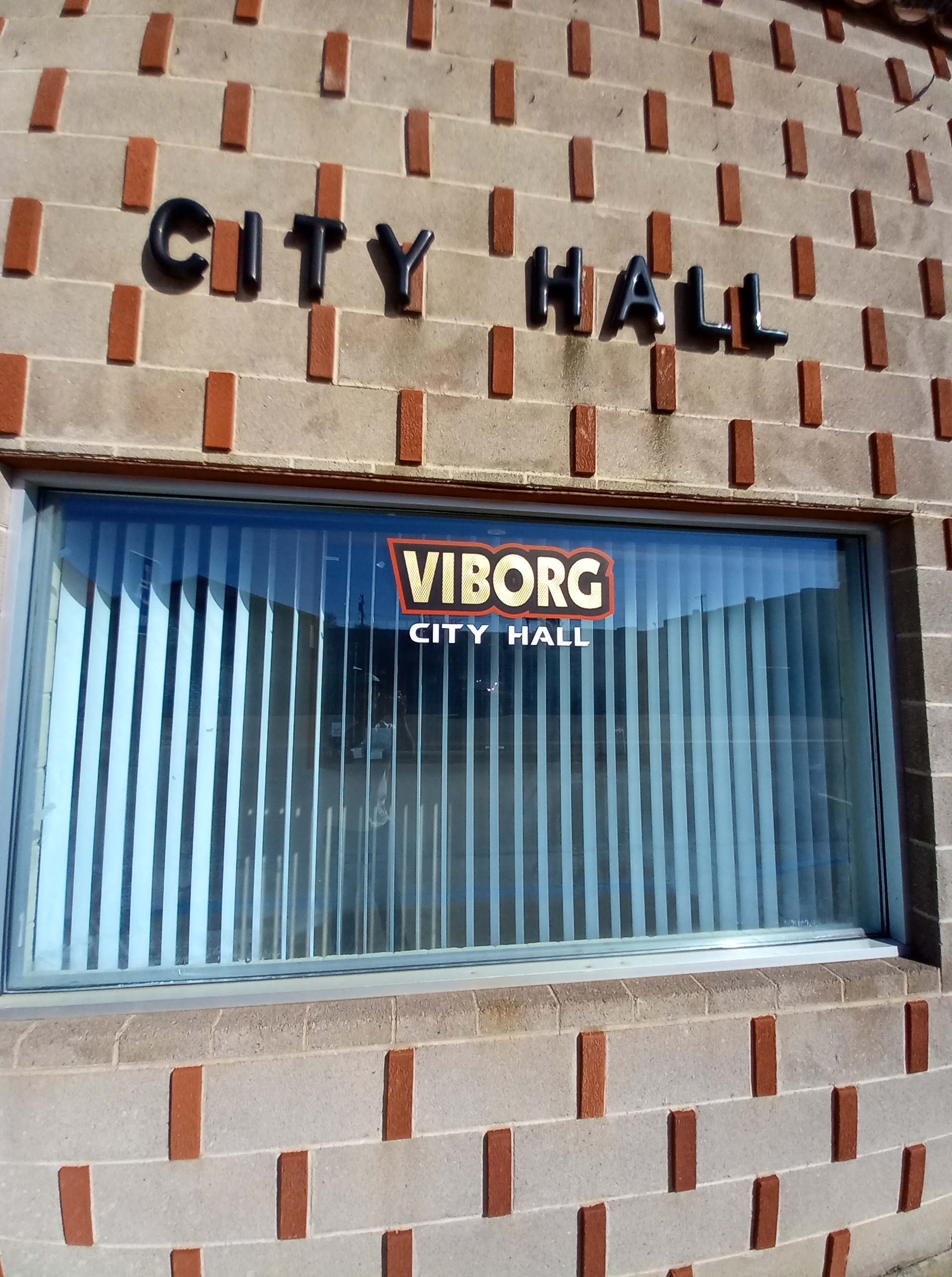
I parked the car and walked down Main Street.  A banner on a power line welcomed visitors to Danish Days, obviously still to come.  The street was deserted.  There was the city hall and the office of the newspaper, Star Advertiser.  A sign in the window informed that What Stays Local, Grows Local.  I walked past the Daneville Inn, Danish and American flags entwined, and past the Pub Viking, a ship with a dragon masthead worked into their logo.  There was the post office where my great-uncle had worked his entire life.  What I did not see was anyone I knew or much that I really remembered.

The direction from my trip so far had come solely from impulses.  I rarely knew where I was going a day or two before I headed there.  Sometimes it was just sitting there working it out on the spot.  The Yankton Reservation was only seventy miles away but would involve heading back west again.  I thought about it for about five seconds and charged towards it, taking the 81 south to the 46.  Karen, from Google Maps, was doing all the navigating.  I was just spinning the wheel.

The Yankton Indian Reservation is about six hundred and fifty square miles and borders the Missouri River.  From a distance I could see the tall water tower bearing the name of the tribe.  A sign at the travel plaza where I filled up with gas described them as being the Ihanktonwan Oyate of the Seven Council Fires.  Across the road was the Fort Randall Hotel and Casino.

Continuing west, I came to the Fort Randall Dam, where a sign at a visitor center discussed the importance of the tipi, the iconic mobile home of the Plains Indians, able to house more than seven people and up to three generations.  The shape of the base of the was inspired by the circle of life, which represents the Earth and the cycle of seasons.  Beyond that was Fort Randall itself.

The Fort Randall Military Post was established in 1856, mainly to protect settlers and keep the Indians confined to their reservations.  There wasn’t much left of it, just an old church.  By now it was getting late in the day, and I started thinking about finding a camp site.  I went south on the 281 and then east on the 12, the Scenic Outlaw Highway.  The first campground I came to was just barely adequate, right beside the road in the middle of a small town. 

I went looking for a place to buy groceries before setting up camp and never found any place, so kept on driving, all the way to the Niobrara State Park, along the Missouri River.  That was more like it.  I drove over the bridge and got a sandwich and some water, then returned to claim a site.  Deer skittered out of the road upon my return.  I got out of the car and cicadas were chirping like the buzzing of a high voltage electrical line.  There were mosquitoes to ward off as well, but this was the place. I got busy setting up the tent.

pages fly away 39

We know we live in the Milky Way, a spiral galaxy consisting of stars, gas, and dust, and will admit that we are only a very small part of it, but it is difficult to picture unless you get far enough away from the city lights to actually see a white band of it overhead, very much like a celestial river or highway, lined with glistening jewels. 

That was the situation.  I was walking up the driveway of the Niobrara State Park, trying to get a cell phone signal, when I happened to look up and see the Milky Way.  It was a revelation.  Is there life out there?  A better question would be this — where is there not life?

My mind was jumping, through space and down the road, and I barely slept.  By now my pillow was as flat as a dollar bill.  There was a reservation only twenty minutes away, the Santee Sioux Reservation.  Before daylight I was up, breaking down camp.  To get to the town of Santee, I took the 540 north until I reached the river.

The Santee Sioux Reservation was created in 1863 and has a population of nearly 900.  At one point in its history, the land was allotted to individual members of the tribe, with some of it reserved for agencies, schools, and a mission.  I parked by a boat landing when I got to Santee and set out on a path that ran through the recreation park, signs along the way telling tales from the tribe’s history. 

My idea was to make a walking meditation out of it.  I’d gotten pretty loose with my practice, now counting breaths as quicky as one does when they’re trying to hold their breath.  The greater point was to stay aware, which isn’t that hard when traveling, everything is new and interesting, seen through eyes that are open wider than usual.

One sign showed members of the tribe ice-fishing with bows and arrows, strings attached to the arrows.  There were pictures of the school building, Davis Hall, one of a dining room, another of the students, their hair cut to regulation length, dressed in western clothes.  There were tall trees on both sides of the path and a tyranny of insect sounds.  Dragon flies hovered in mid-air before zipping off at light speed.  Now, there in front of me, was the frame for a sweat lodge, a place for purification ceremonies. 

A white dog with a red collar came bounding up, but then got spooked and ran in the other direction.  A few steps later and there was a white dandelion, ready to scatter a thousand seeds like paratroopers.  I walked and looked intently at everything that crossed my path. 

Here came the white dog again.  It stood on the top of a crest and looked intently at me.  What was it seeing?

Returning to highway 12, I passed the Ohiya Casino and Resort.  There was the skeleton of a large tipi out front and paintings on the side and back of Indians hunting buffalo on horseback.  I stayed on the 12, passing Sioux City from a distance, and then arriving at the Winnebago Reservation.  Also known as the Ho-Chunk people, the land was ceded to the Winnebago by the Omaha Nation, when it became clear that the land that they’d been placed on earlier was not fit to sustain them.

I was pleasantly surprised to happen across the Ho-Chunk Sculpture Garden when I rolled into town, with twelve sculptures in a circle, meant to represent the twelve clans of the tribe; those who are above, the thunder, warrior, eagle, pigeon, and those who are below, the bear, buffalo, deer, wolf, elk, fish, water spirit, and snake.  Each clan was entrusted with a duty that was vital to the survival of the tribe.  A thirteenth statue stood nearby, that of a holy man, lifting a pipe to the sky, beneath the wings of an eagle.

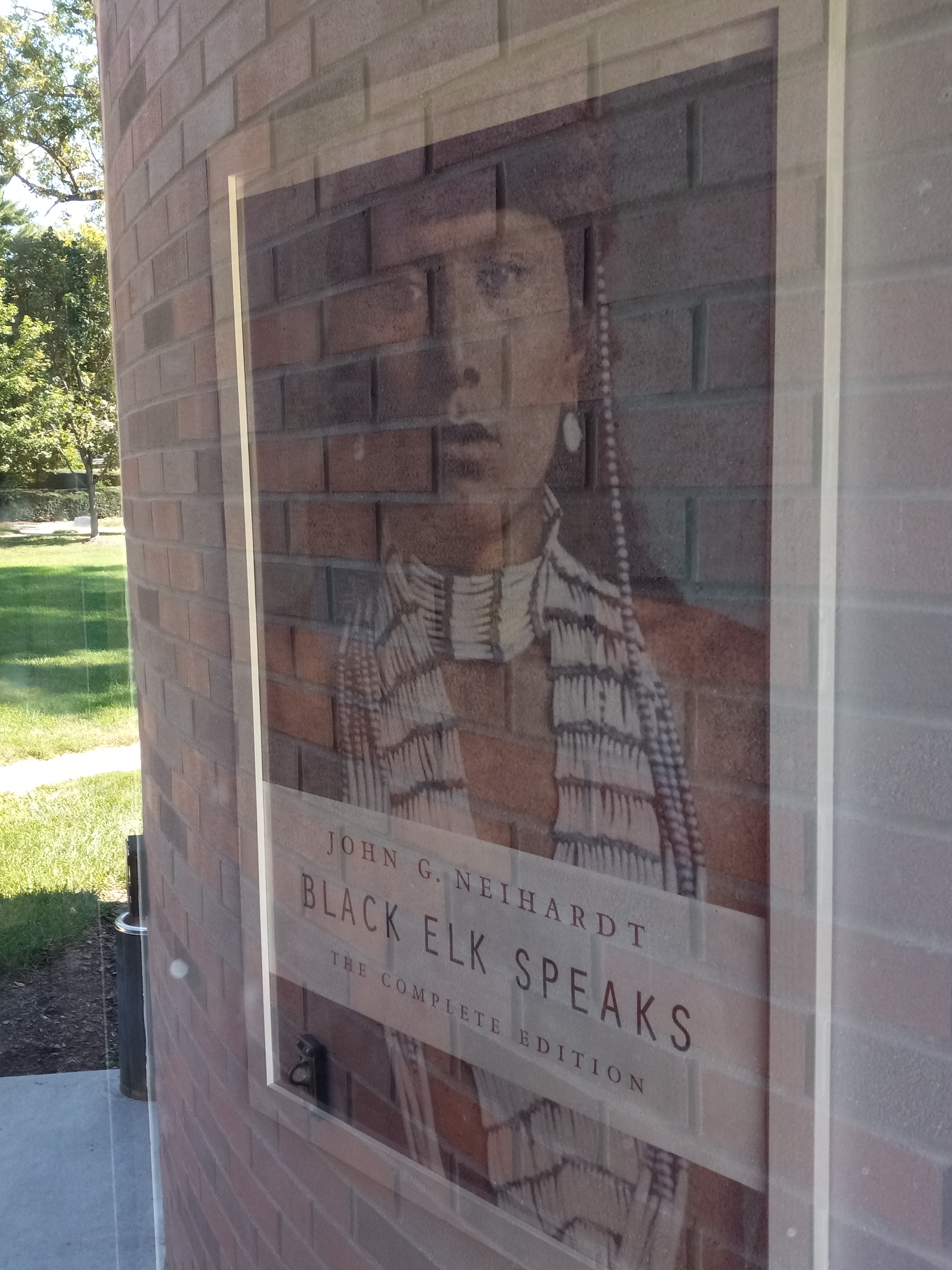
When my father was in college, he got interested in poetry and wrote a poem that won him a prize and the opportunity to spend an afternoon with the Poet Laureat of Nebraska at the time, John G. Neidhardt.  This is the same Neihardt who collaborated with the Sioux medicine man, Black Elk, a cousin of Crazy Horse, on the book Black Elk Speaks

This book describes a vision that Black Elk had as a youth.  The vision includes elements that are foundational to the Native’s beliefs about the spiritual world; twelve horses, three for each direction, six grandfathers, each imparting a magical gift, a tree of life, two roads that cross, the red one being the good one, the black one meaning death and destruction.  The vision is detailed to the point where some critics have questioned where Black Elk’s account ends, and Neidhart’s poetic fancy begins.

From the Winnebago Reservation, I saw that I was only a half-hour from the John G. Neihardt State Historic Site, so I drove there, following the 9 south until it became the 16.  The Neihardt Center is in Bancroft, Nebraska, at the place where he once lived and worked.  I was dismayed that it was closed, due to COVID.  That had been a risk the whole trip so far, but it hadn’t impacted me as badly as it might have.  So far, I’d driven through over twenty reservations and visited a number of parks and tourist attractions.  A year earlier, the whole world had been locked down for everyone.

Since I couldn’t get into the visitor center or study, I walked around in the yard out back.  There were statues of Neihardt sitting on a rock, and Black Elk next to him, with his hands raised to the sky.  A circular garden recreates the intersection of the red road and the black road in life.  Where they meet is sacred ground.  I stood on it and looked up into the sky.  A lot of things had changed since their time, but not the sun.  It was still up there, a bright ring of fire, casting its rays in every direction.

pages fly away 40

The place were my parents met in college, and also where my grandparents on my father’s side are buried is Blair, Nebraska.  From the Neihardt Center to Blair was an hour away.  I took the 51 east to the 75 south. 

The college where my parents met was called Dana.  My father was a year older than my mother.  She was one of a set of twins.  My father came schmoozing around with his guitar and book of poems.  Later his grades fell, and he dropped out of school.  After taking a year off to work, he got into Peru State College, where my mother eventually joined him.  

Now Dana College was closed down.  The campus was still being kept up, but there were no students there.  I walked around the grounds, past Pioneer Memorial Hall, and the Hunt Student Center.  Trinity Chapel was empty.  There were circles of stained glass at the top of both windows, one with a dove in it, the other with a cross.  It was a different time when my parents met and went to school.  The girls had not been allowed to wear pants or smoke.  Half of the guys had crewcuts and horn-rimmed glasses.

Uphill from the campus, is the Black Elk Nature Trail, the centerpiece of it being the Tower of the Four Winds.  I’d been there before, with my father and brother, after graduating from college, and found it interesting that fate had brought me back again.  Near the end of his life, Black Elk converted to Christianity, without finding it necessary to refute his earlier experiences and beliefs.  The world is always as inclusive as we allow it to be.  The Tower of the Four Winds then, depicts a cross that can also be seen as a Tree of Life.  It is quartered like a medicine wheel, the red road intersecting with the black.

The four directions of the medicine wheel are interpreted as such.  The east is the source of the day and the home of the morning star.  From the light comes wisdom and peace.  The symbols are the peace pipe and the morning star.  The color is red.  The south is the summer and the power to grow.  The color is yellow, and the symbol is the flowering stick.  The west is the home of the thunder beings.  The colors are blue and black.  The symbols are the rain and the bow and arrow.  Lastly, the north is the abode of the Great White Giant.  It is the source of cold winds and cleansing snows.  The color is white.  The symbols are the wind of the goose and the stem bearing four blossoms.

There were family members living in Blair at one time, not any that I would know or think to look up if they remained.  All there was left to see was the grave of my grandparents.  My grandmother outlived my grandfather by eighteen years.  I remember his funeral.  I remember being at the cemetery.  When I tracked it down, however, I wondered if I was at the right place.  It had grown significantly.  There were headstones all over the place.  My remembrance of their headstone was of it being in an isolated corner.  Now they were surrounded by neighbors.  It was almost a fluke I found their grave at all.

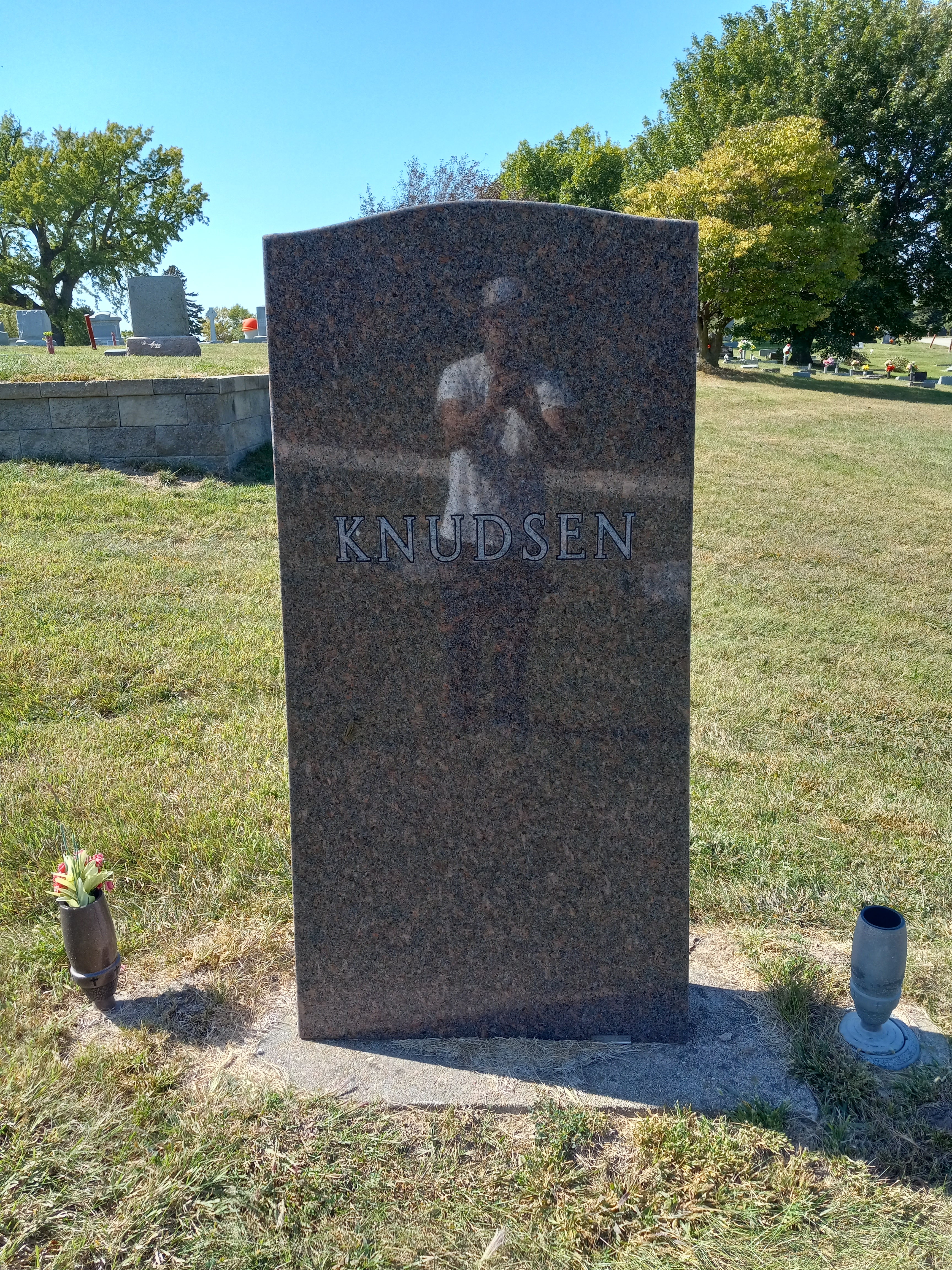
I parked the car and went up to it.  The headstone states our family name, then theirs and the dates of their births and deaths beneath it.  My grandmother is buried on the left.  My grandfather is on the right.  Beneath their names is a scripture from the Bible.  It says, Thanks be to God, who gives us the victory through our Lord Jesus Christ

Standing over their graves, it was hard to believe their remains were in two coffins beneath my feet.  I remembered them talking and sitting in the dining room at their house in Lincoln.  I remembered Grandpa taking us out in the lake with his fishing boat.  I remembered Grandma, bringing in tomatoes from her garden.  Now they were mingled with the grass beneath my feet. 

Going around to the opposite side of the headstone, there is just our family surname.  Looking at it, I saw that my reflection was captured in it, reminding me that just like my grandparents, my time was surely coming.  Then where would I be?  Beneath the ground?  Ashes in the breeze?  Off on another adventure?  A stone skipping across the sea?  I could look behind, and could look in front, but I couldn’t look beyond.  Off in the distance were the graves of more ancestors.  The trees overlooking the valley started dancing in the wind.

pages fly away 41

We didn’t have much money when I was growing up, but never considered ourselves poor.  Both sets of my grandparents came from small farms and grew up during the Great Depression.  My grandfathers became businessmen in Midwest cities and my grandmothers worked as teachers for a spell.   My father’s parents owned a home in Lincoln and my mother’s parents owned one in Denver.  Given my family’s semi-nomadic existence, these would always be the two cornerstones of my life, the red house in Lincoln and the green house in Denver.

If my immediate family didn’t have much money, it was because my father was a free-lance preacher during my early childhood in Hawaii.  Then, when he started working in the Lutheran church again, it was for a modest salary, with four kids.  My mother didn’t start working as a special ed teacher until I’d already left home.  We were taken care of, but never spoiled. 

Back then it was a huge treat to go to the movies or eat fast food.  If we got to go to Dairy Queen, it was like we’d won the lottery.  We’d scrape together any change we could find, behind couch cushions and under car seats, to try to bump up our order, from a simple cone to a chocolate dip, from a buster bar to a peanut buster parfait.  I doubt I ate a banana spilt more than a dozen times before getting out of high school.

Nowadays, we could watch movies any time we wanted, and although eating fast food wasn’t a daily routine, it wasn’t a special occurrence either.  I knew about a Dairy Queen in Blair though, that was still a treat to revisit.  After visiting my grandparents grave, I made it a point to swing by and pick up a vanilla milkshake.

The next stop was Lincoln, to track down the red house.  I took the 133 south to the 80, continuing on through Omaha and Council Bluffs, without an address, thinking I’d just pull into Lincoln and recognize the neighborhood.  In addition to visiting regularly throughout my life, I’d also spent four months with my grandma during a lost period in my early twenties.  I should’ve had some sense of the town.  Instead, as soon as I pulled into it, I was totally lost, driving through ethnic neighborhoods I’d had no idea even existed.

I managed to make my way downtown and find the capital building, remembering The Sower on top of it, and then found the Children’s Zoo.  Now I was making some progress, but still drove around another half hour, feeling like I was close but not recognizing anything.  In desperation I turned to Google Maps, searching for bowling alleys, as I knew there was one in the vicinity of where they’d lived.  Parkway Lanes!  That was it.  As soon I located it, I could put things together.  No wonder I’d gotten lost.  The street had been taken over by corporate chains and fast-food restaurants.

Prairie Road.  That was their street.  About halfway down the block I came to the red house and parked in front of it.  It looked the same, except now the big yard in back had been fenced off.  The neighborhood didn’t look that different, the house remained, but the people that I’d known inside it all were gone.  It was someone else’s cornerstone now.  All that was left were the memories.

After dropping out of Dana College and taking some time off to find himself, my father had regrouped and enlisted at Peru State College.  After getting married, my mother had joined him there for their senior year.  That’s where the recruiter from a Hawaii had found them, looking for English teachers.  It would be my next destination.

Peru is seventy miles east of Lincoln.  I took the 2 to the 75 to the 67.  It is a tiny town, with less than a thousand residents, but the Teachers College looked like it had grown and was doing well.  It was established in 1867 and most of the buildings, like many of those in Lincoln, are made of red brick.  I walked around the campus, stopping in front of a statue of a bobcat, and then a famous footballer, and then drove through town, thinking it might be a good time to look for a campsite.

Karen, from Google Maps, led me to a boat landing far from town on the Missouri River.  There were no facilities.  I returned to town and filled up on gas and got a few pieces of pizza at Casey’s.  Then I tried Google Maps again and came up with the Duck Creek Campground.  The way Karen took me there, down backroads, across an open field in one case, almost led me to believe she was conspiring against me.  Were the agents of my doom out there lying there in wait, like the Butch Cavendish gang?

Incredibly, I arrived at the campground, on a road so ribbed that the whole car was vibrating, and it turned out to be just fine.  No one else was staying there.  The fee was only five dollars.  I threw up the tent just as the sun setting.  A short time later, either wolves or coyotes started kicking up a big ruckus all around.  One lonesome cow stood mooing in a field.  All the crickets chimed in.  I’d lived to see another day.

pages fly away 42

After my family had returned from Hawaii in 1976, and my father had been accepted back on the Lutheran clergy roster, he’d gotten a job at a Bible camp outside of Story City, Iowa.  We were only there three years before he was asked to step down, but it had been a fun place to be a kid, right on the cusp of adolescence. 

There were campers all summer long.  The counselors were mostly college kids.  There was a swimming pool and rec center, with foosball, air hockey, and pool tables, a snack stand that I worked at, a river, a pond, a lagoon, canoes, kayaks, paddle boats, air rifles, bow and arrows, even a horse stable.  We were neither in town, nor were we on a farm.  We’d always lived in a world of our own.

The plan was to head straight to Riverside Bible Camp first thing in the morning.  I broke camp before sunrise and got on the road, taking the 29 to the 80 east.  It took three and a half hours to get there. 

The first thing I saw pulling into Story City was the grain elevator that I’d climbed to the top of with some friends in junior high.  Beyond that was the water tower.  It was another town so small that many of the stores on Main Street had gone out of business, outflanked by larger retailers and online shopping.   I passed the high school and swimming pool, then tracked down the elementary school where John and I had been enrolled.  Our brother Luke had still been too young for school, and sister, Grace, wouldn’t be born until the next year.

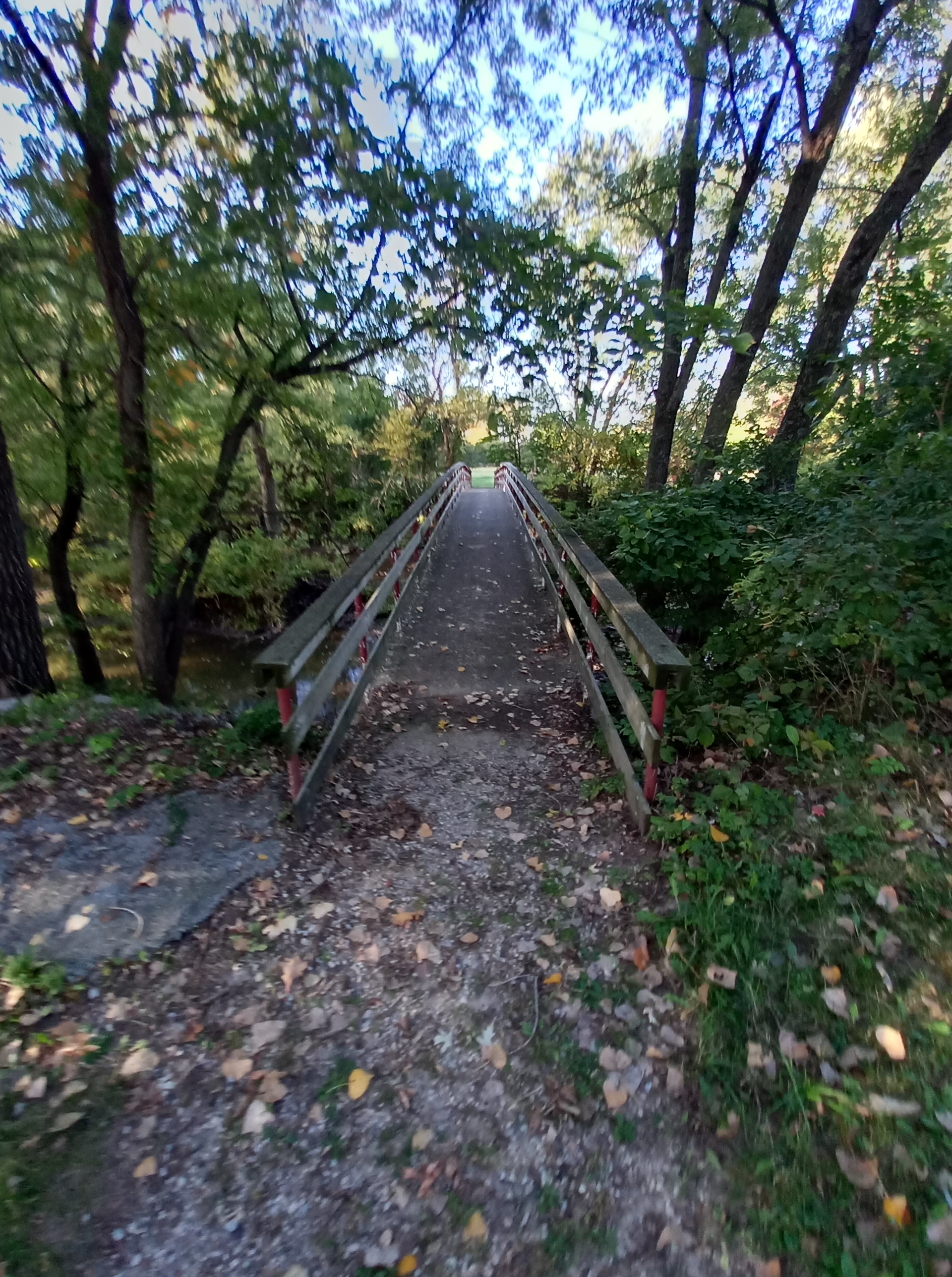
It is just a few miles from the town to the camp.  I drove by the house we used to live in and past the new swimming pool.  The camp had originally been built on the flood plain of the South Skunk River, which used to flood on an annual basis.  Much of it, had been rebuilt on a higher bluff, leaving some of the old buildings to rot.  Things looked in rough shape.  I parked in front of the old cafeteria, which looked deserted, and crossed the footbridge over to the basketball court.  The river was just a muddy trickle.  The pond on the other side had evaporated.  No more paddleboats.

Crossing back over, I walked up to the iconic Chapel, the image of which serves as part of the camp logo.  Beside it was the good old hill, with the firepit for late night worship sessions.  It was hard to tell if the chapel was still in use or not.  I looked through the windows, remembering church services, concerts, and talent shows.  So far, I hadn’t seen one single person on the campgrounds.

What I’d been calling meditation on this trip had largely just been struggling to sit still and stay in the moment.  If I couldn’t sit still, I called it a walking meditation, and since I rarely managed to stay in the moment, a lot of times it was just walking and thinking.  To be back at the Bible Camp, seemed like a good occasion to do some kind of reflection, maybe offer up one of the prayers I’d rehearsed in my life and actually try to mean it.  I sat on a bench out front of the chapel, and thought about my father, the pastor, up there at the pulpit, directing things through thick and thin.  One time a few of the campers had egged my youngest brother into booing him.

A cold wind immediately blew in my face.  There’d been so many storms in Iowa, intense thunder and lightning storms, great tornadoes that upended the camp and sent canoes flying through the air, blizzards so thick in the winter, you couldn’t see the road ahead of you.  The leaves were changing all around me.  They rustled across the empty volleyball court.  There were now soccer nets.  They hadn’t been there before.  A ridge ran through the playground, some construction project that had left a scar.  There was the old slide.  Once during a tornado, I’d seen it flapping in the wind. 

Not far off, I could hear the sound of cars on the 35 south.  I closed my eyes and saw the movement of sunlight and leaves.  There used to be tractor tires at the foot of the hill.  We’d push them up to the top, get inside, and then roll ourselves down, end over end, a thrill that couldn’t even be matched by an amusement park ride.  The danger was real.  It wouldn’t have been hard to get knocked out cold.  The tires were gone now.  Too much liability, I imagine.  Everything is too much liability now.  You can’t even hurt someone’s feelings without getting sued. 

Back in the time, before drugs and alcohol, right around the time that rock and roll entered the picture, all our thrills came from playing rough and getting hurt.  Turning the air rifles on each other.  Jumping our bikes into a ditch, solely for the crash.  Up on the top of the grain elevator, dancing near the edge.  Oh my God.  That makes me dizzy just to think about.  Climbing in the tractor tire, saying you were ready, then starting to roll.  In the world we were living in, it was one of the few things that made sense.  You knew why you were being tossed around and knew that it would stop.  When you got out and staggered to your feet, you belonged to the clan, those who were willing to take a risk and roll the dice.

One day the Skunk River flooded so bad, that we had to get up in the middle of the night and sandbag all night long.  I went down and saw a few bloated dead pigs, bobbing down the river like driftwood.  Now there wasn’t enough water in the river to call it a river.  I got up and walked towards the car.  Next stop, Kansas City.

pages fly away 43

Considering how much I’ve traveled in my life, it’s a wonder that I’d never really been to Kansas City.  I’d passed through it on freeways and trains, but that was about it.  If my luck held up, that was about to change.  It was three and a half hours from Story City, a straight shot on the 35 south. 

On the way I stopped at a rest stop with a marker that recognized the Mormon Trail, a 1,300-mile route that stretched from Illinois to Utah.  Between 1848 to 1867, over 70,000 Mormons traveled on it to the Salt Lake Valley, hoping to find their own promised land.  Like most acts of manifest destiny, it didn’t take into consideration that there might be people already living on it, which there were.

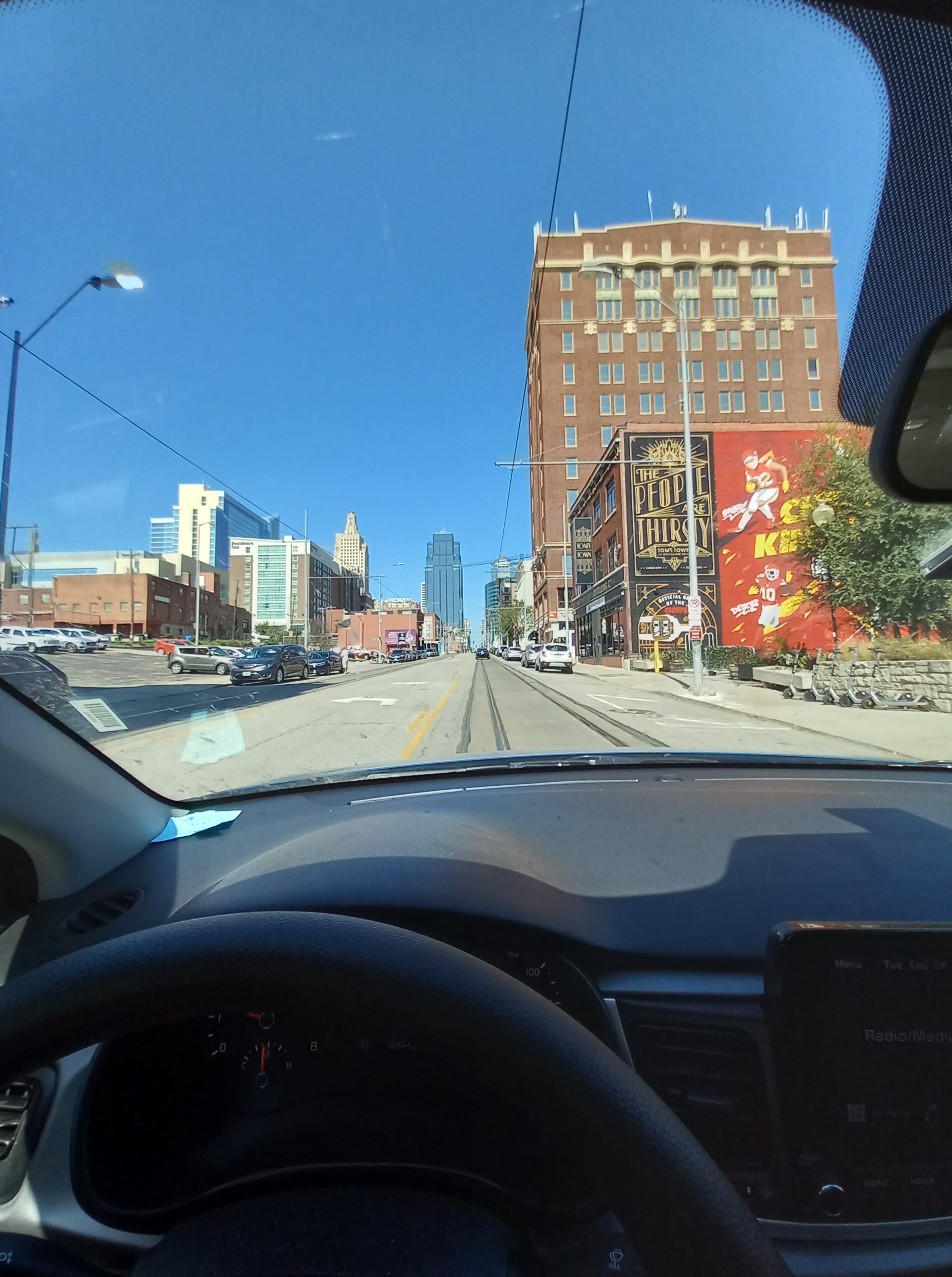
I was mostly avoiding cities on this trip but wanted to at least drive through Kansas City.  I got out on a downtown exit and then parked briefly beside Washington Square Park, where a homeless man was sleeping beneath a statue of George Washington at Valley Forge.  I stood there and watched another guy going down the middle of the street in a scooter, holding up all the traffic.  From there, I tracked down Arrowhead Stadium, home of the Chiefs, which ended up being right next to the stadium where the Royals play baseball. 

The idea for the day was to make it as far as Lake of the Ozarks and look for a place to camp.  I’d never been there either, or to Branson, which I figured I’d hit up the next day.  I took the 70 east to the 65 south.  It had been a long driving day already.  I reached the Lake Ozark Dam in the late afternoon, only to find that the road was closed for construction.  Along the way I must have passed ten thousand billboards, half of them for realtors.  It was almost like watching page-flip animation.

Lake of the Ozarks was a tourist hot-spot, with lake cruises, live music, a big pirate, a big Indian, old-time photo shops, restaurants, gift-shops.  I did a search for a campground and Karen from Google Maps ended up taking me halfway across the lake, on a little road, as steep and winding as a rollercoaster.  The cars behind me looking to pass were going just as fast.  The real estate billboards were paced every hundred feet.  Life on the Lake.  Living the Lake Life.  The sun was glaring through the windshield.  It nearly caused me to melt down.

At last, I arrived at the Iroquois Campground.  It was only for RVs.  There was no one there to talk to.  Google found another site for me, the Little Niangua.  I blindly followed where Karen led, like a man in the desert stumbling towards a mirage.  Somehow, I still missed a turn.  Karen began to harangue me, insisting that I do a U turn.  I did and regrouped at a gas station.  The campground was only a mile away.  Finally, I found the long-ass driveway and pulled into it.

There was no one at the office.  It looked like another place just for RVs.  A few of them were parked about fifty yards from where I pulled in.  By now it was so dark, I had no option but to throw up my tent on a patch of grass.  If anyone came around asking, I’d just pay them whatever they wanted.  I was no longer fit to be driving.

One of the battery lamps I’d invested in had gone missing.  The other was without a charge.  I had no groceries.  There was no way to start a fire.  Ducks were quacking on a nearby river.  A cow was mooing.  Then a dog started barking.  Four deer came out of the trees and just stood there observing me.  Then I saw the flicker of fireflies.  Once again, things had turned out all right.  Even when a horde of mosquitoes arrived on the scene a half hour later, things had still turned out better than they could’ve.  It was important to keep that mind.