Category Archives: Travels

pages fly away 44

Around four in the morning, I went out to use the bathroom, with my only source of light, a small flashlight, and came across a small possum stumbling along the edge of the tree line.  Littered across the grass were small glowworms, lighting the land like the fireflies had been lighting the air only a few hours later.  I looked up and there were stars, like glowworms in the sky.  The world was alive, both above and below my feet. 

The moon was an open portal that shined through the wall of my tent once I returned to it.  I sat up, cross-legged and listened to the chirping of the crickets and cicadas.  Then I counted my breaths and listened.  Dew drops were falling from the branches.  All got quiet, and then one single insect returned, rattling alone with all its might.

It was still dark by the time I began breaking down the camp.  By now I had it down to an art, a five-minute operation at most.  I threw the blankets and pillows in the back seat.  Then folded the tent in half, quartered it, and laid it in the trunk, on top of everything else.  The bag the tent had come in?  Forget about that.  The tent pegs?  I hadn’t tried using those since the first night of the trip.  This was guerilla camping, the only thing more primitive being the trips to San Onofre we used to take in high school, where we’d drink two cases of beer and then sleep facedown around a smoldering fire.

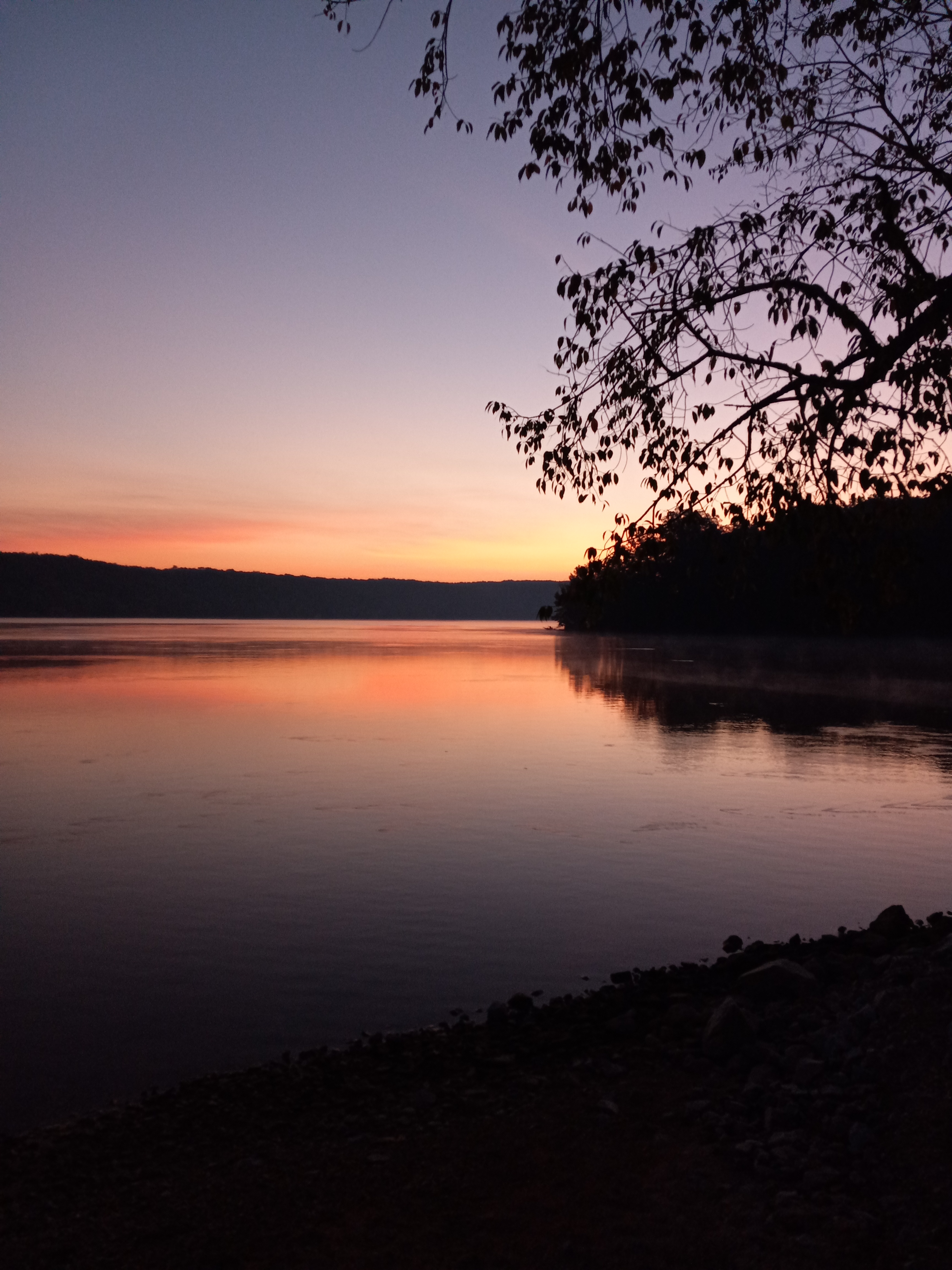
Although I was at Lake of the Ozarks, I still hadn’t seen much of the lake.  I did a search for the National Park and was directed to the McCubbin’s Point Entrance.  I reached the shoreline just as the sun was beginning to rise.  The surface of the water was absolutely calm, with touches of pink, purple, and blue, framed by the silhouette of branches.  It could’ve been a lake of magma, the very evolution of the earth taking place.  The chirping of the bird was nearly deafening.

It was two hours to Branson, a place I was curious about, knowing it has a reputation for live music and shows.   I took the 5 to the 44 south, passing but not stopping in Springfield.  When I arrived at Branson Landing, I wasn’t sure where to go.  I parked beside a Giant Bass Pro Shop and walked down to the White River.  From there, I made it over to Downtown Branson, a place of restaurants, gift shops, and small theaters, but felt like I wasn’t at the center of the action.  That turned out to be W 76 Country Boulevard, a five-mile strip, something of a cross between Las Vegas and the Grand Ole Opry. 

It was a grand slice of Americana that awaited me there, starting with go-karts and batting cages, a toy museum, the Bigfoot Fun Park, a Ferris Wheel, Ripley’s Believe it or Not, the Hollywood Wax Museum, with King Kong and Jack Nicholson, a Mount Rushmore replica with the heads of John Wayne, Elvis, Marilyn Munroe, and Charlie Chaplin.  There was the Titanic Museum, Outlaw’s Old Time Photos, Presley’s Country Jubilee, the Wonderworks Amusement Park, an aquarium with a giant octopus, the King’s Castle Theater, the Andy William’s Moon River Theater, more go-karts, a giant Rooster in a star-spangled vest, McDonald’s, Crispy Crème, and near the end of the strip, the Dolly Parton Stampede.

By the time I reached the end of it, I was wiped out and dispirited.  Up until now, I had no idea if I’d even go much further east than the Mississippi River, but I still had the Mountain Bluebird for three more weeks, and instead of being satisfied, wanted to see even more, to drive all the way across the country.  I’d gotten away with it so far and felt I could keep it up.  How far could I go?  Memphis was five hours away.  I could be there by early afternoon.  After that maybe Nashville?  Kentucky?  Ohio?  Virgina?  I wasn’t sure, but as long as there was still road ahead of me and a bit of money left in the bank, I was bound to find out.
pages fly away 45

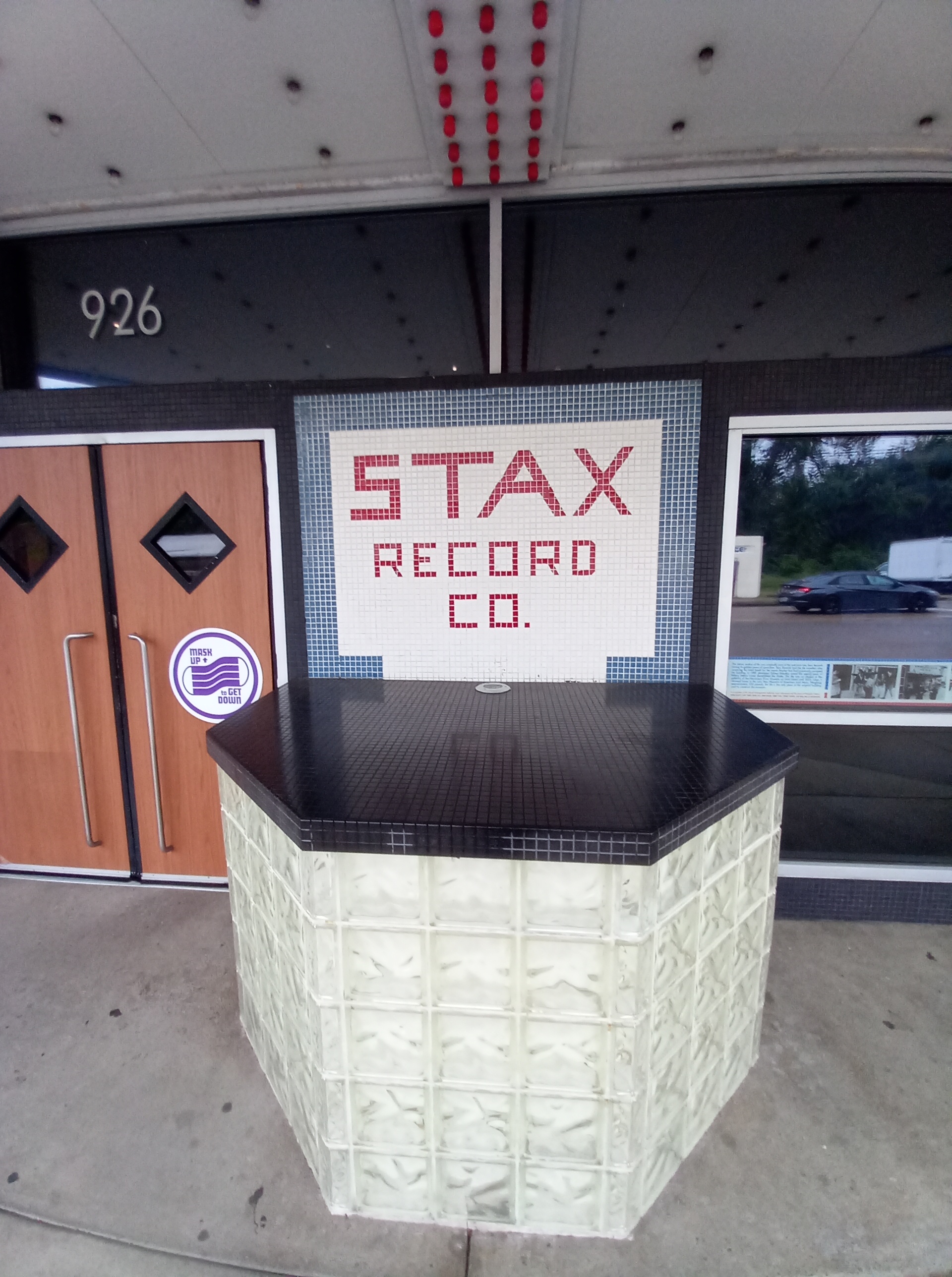
When I’d rented the Kia for six weeks, I’d had no idea where I was going, but had the rough idea to visit as many Indian reservations as I could.  By now the scope of my journey had expanded.  I was on my way to Memphis, the birthplace of the blues and rock and roll.  I’d been there a few times before, to Sun Studios, where Elvis, Jerry Lee Lewis, Roy Orbison, and Johnny Cash had all gotten their starts, also to Beale Street and Graceland.  For some reason I hadn’t visited Stax Records yet, however, and vowed to rectify that.

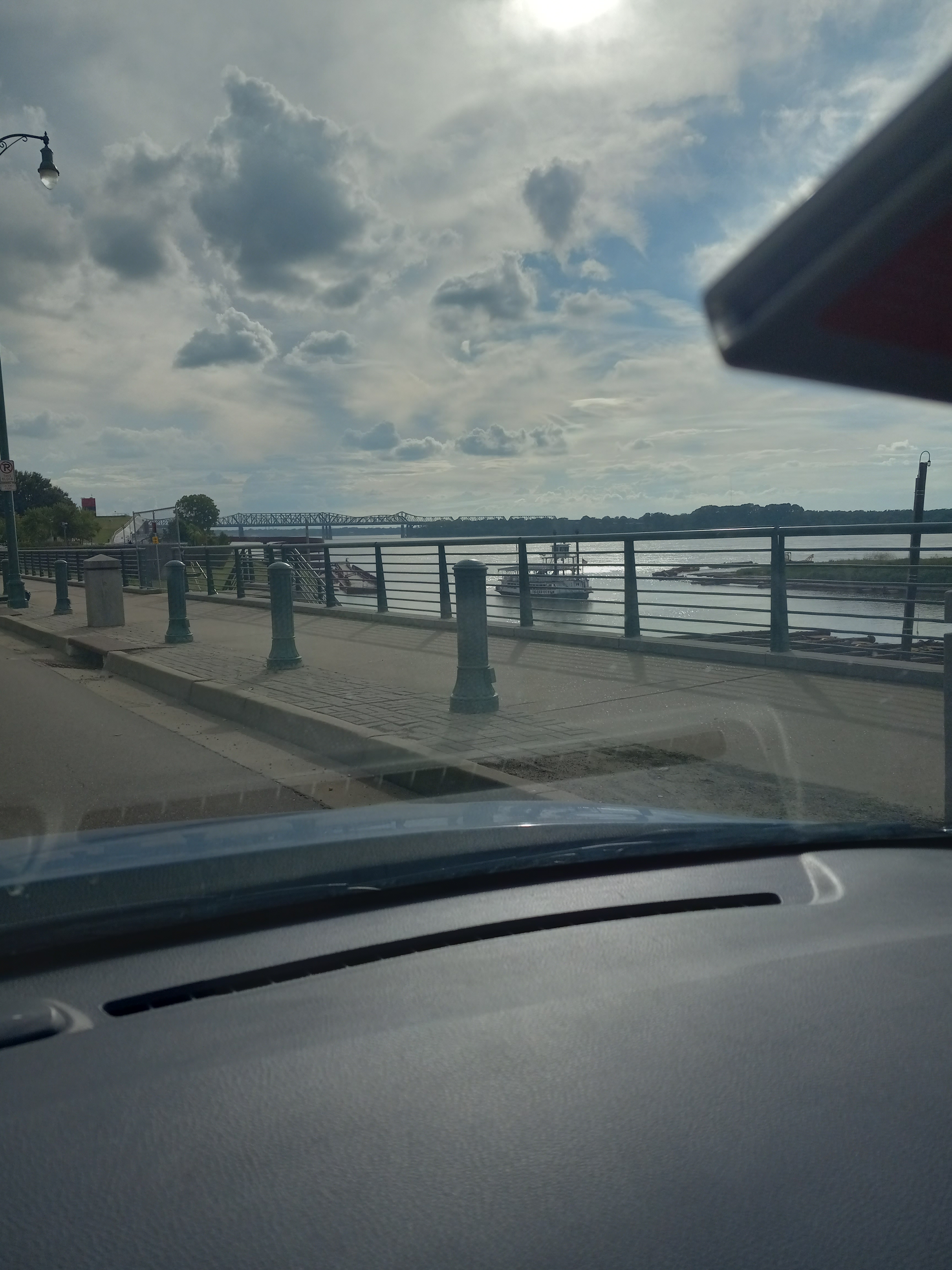
I took the 160 through Gainesville to West Plains, then the 63 south.  There were many rolling hills, and it was slow going.  Sometimes eight or nine cars would get all bunched up, looking for a straight section of road where we could all pass.  When I reached the 55, I caught up with the Mississippi River again, all grown up now and going to school.  I crossed the Hernando do Soto Bridge and got off at the Mississippi River Park, across from Mud Island. 

Inside the visitor center was a statue of Elvis and one of B.B. King.  It was time to look for a place to sleep, but I was spent, driving around downtown for twenty minutes, before finally looking for a campsite on Google.  Karen began directing me to a place called Dogwood Ridge that was almost twenty miles north of town.

It wasn’t easy to find the campground.  I’d almost given up and was at a gas station, filling up the tank and buying chicken strips, when I decided to try again, passing expensive homes and horse stables on my way back.  This time I found it and there were a few sites open.  My spot was on bare earth and even before the sun had set it was swarming with mosquitoes.  It was going to be one of those survival nights.  As soon as the sun set, I climbed in the tent and waited for it to come back up. 

There were a few Chickasaw Indian monuments I hoped to find the next morning.  The first was just a plaque on Mud Island, but by now it had started to rain, only the second time on the whole trip, and didn’t seem as if it would let up anytime soon.  It was raining too hard to look for it on foot, so I set off to find the Chickasaw Heritage Park. 

Here I discovered two earthen mounds, the first in a series of mounds I would encounter, built by paleolithic tribes, perhaps as a foundation for their temples.  These mounds had been hollowed out and used for storage during the Civil War.  There was also a statue of an Indian women, with other figures above the hem of her dress, a woman and child, a man with a guitar, a Spanish explorer on horseback.

It had continued to rain off and on.  Walking back to the car, it started pouring.  It was too early to visit the Stax Museum.  I decided to try to do my meditating, or measured breathing, right there.  Rain was pounding on the roof of the car.  Above the sound of that, I could hear the squawking of a bird.  A man with an umbrella was out walking a dog.  Behind him came another man, with no umbrella, but a COVID mask.  They entered the park together. 

Two cars passed with their headlights on.  Then a gas truck came by.  The rain kept drumming on the roof.  My mind was jumping all around.  The two dogs with the dog came out of the park.  Rain started falling even harder.  By now, I had to piss.

I thought about revisiting Graceland, but saw a sign when I got on the freeway, pointing in the direction of an archaeological site and museum called the Chucalissa Indian Village.  There was a mosaic of two serpents on the outside of the building.  Although they only accepted credit cards to get in, they let me in for free once I stood stalling long enough, holding out the cash in my hand.  The mound in the back is over a thousand years old.  The stratigraphy suggests that it was built in three phases.  It also suggests that there may have been a fire on the top at some point. 

Walking back to the car, I saw something moving in the grass.  It was a turtle, plowing ahead, its shell wet and glistening in the rain.  It was time for me to do the same.

pages fly away 46

The Stax Museum didn’t open until ten.  It was still raining as I drove there, past the Holy Ghost Temple and a sign that said I Love Soulsville.  I parked in back and walked past the Satellite Record Shop.  As soon as I’d entered and paid, a security guard came in and told them not to let anyone else in.  The whole neighborhood was under lockdown orders due to a recent school shooting.  Two minutes later and I would’ve been out of luck and desperately unhappy.  As, it was, I got to go inside and have the museum all to myself.

Stax Records was created in 1957, by siblings Jim Stewart and Estelle Axton, who put their last names together to come up with the name.  Prior to that they’d called it Satellite Records.  It wasn’t their intention to invent Southern Soul Music, but that’s what came out of the mix of gospel, country, and blues music that was coming into the studio at the time.  This resulted in ethnically diverse musicians working together and a singular sound, based on the fact that they always used the same studio, setup, songwriters, and session players.  They went on to partner with Atlantic Records for distribution and make an enormous impact on the world of music, until finally being forced into closure in 1975.

The tour started with a short movie clip about the label.  It was just me sitting there, then getting up and walking into the next room myself.   There, the front room of a country church had been set up, much of the soul in soul music coming from gospel and spirituals, that surrendering to a higher power, be it God or just love.  The Stax groove was explained as the power that the drummers had to make you want to dance and move.  There were exhibitions on Booker T and the MGs, the Bar-Kays, the mixing board from Studio A, Isaac Hayes gold-plated Cadillac, and a long hallway lined with all the hit records they’d produced.

Now feeling inspired, I realized I was for sure busting east of the Mississippi River, in fact I knew exactly where to head next, the famous music town of Muscle Shoals, Alabama.  I Googled it when I got back to the car and found out it was only two and a half hours aways.  Somehow, I noticed that if I veered slightly north, I could also hit up the home of mythical railroad man Casey Jones, so I got on the 40 heading east.

Casey Jones has become a folk hero in story and song, since giving his life in 1900 to slow an out-of-control freight train that was hurtling into a packed station.  The legend is that he died with one hand on the whistle cord and one hand on the brake.  The Casey Jones Home and Railroad Museum is in Jackson, Tennessee.  When I got there, I went and stood outside the small home with the white picket fence where John Luther “Casey” Jones was living at the time of the accident.  A sign talks about the folk song that was written about his death behind the throttle of the Old 382.  I’d heard a few versions but knew him best from the song by the Grateful Dead.

From Jackson, it was still two hours to Muscle Shoals.  I took the 45 south to the 224 to the 69, arriving at Muscle Shoals Sound Studios in Sheffield in the late afternoon.  There are two famous studios in Muscle Shoals.  Sound Studios is an offshoot of Fame Studios, which was established in the late 50s by Rick Hall.  Etta James, Aretha Franklin, Otis Redding, and the Rolling Stones all recorded there.  In 1969, the famous group of backing musicians at Fame, the Swampers, went out on their own and set up Sound Studios.

The next tour at Sound Studios didn’t begin until 3:30, so I raced over to Fame and found they closed at six and their last tour was at 4.  I hurried back to Sound Studios, just in time for the 3:30 tour.  It was a tiny building, and the studio was just one room, with an isolation booth for the drums.  It was where Lynrd Skynrd had done their first recordings.  There was a piano that had been used on Freebird.  There were also black and white pictures of Mick Jagger and Duane Allman.  They played us recordings by Aretha and Paul Simon.  It was incredible to think that all that music had been recorded live in one room with the same group of players.

It was late when I got out, but I still rushed back over to Fame Studios, and was able to sit in on the last tour of the day which was already underway.  It was being led by the grandson of Rick Hall, the founder.  He took us into the control room and played recent recordings by Steven Tyler and Kid Rock.

What a day of music it had been.  I realized I had to break down and get a hotel that night. Although the rain had stopped, my feet were still wet and cold from the morning.  On one strip of hotels and fast-food joints I found a Red Roof Inn which was eighty-five a night and worth about half of that.  It seemed like people were living at the hotel.  My room stunk like cigarette smoke.  Once I turned the TV on, I couldn’t turn it off again.  I managed to get the volume down, but images kept splashing across the ceiling and through my mind all night long.

pages fly away 47

In the morning, I got up and took a shower, which went on to flood the bathroom floor.  I used the towel to mop it up the best I could, then headed out, stopping by a Foodland to pick up some groceries.  There I asked about a park and was referred to one called McFarland.  It ended up being on the Tennessee River.  There was a swinging bench facing the river next to the O’Neil Bridge.  It seemed like a good place to attempt a morning meditation.  My mind was already jumping so hard that trying to contain it later that day would probably be impossible, especially since I was on my way to Nashville.

Sitting down on the bench swing, I pushed off the pavement with my toes and the swing slightly rocked back and forth.  It made me think back to being a kid, swinging with all my might, stretching out my legs to the sky, feeling freer than any other way I knew how.  White clouds were bunched up in the sky.  The reflection of them almost floated downstream.  There was a steady whir of cars passing over the bridge.  Songbirds were singing in the trees.  A V formation of ducks flew overhead.  Somewhere off in the distance a train whistle blew. 

It was hard to focus and keep track of my breaths.  A couple passed by, both of them with gray hair.  Off to the side of me a crew was setting up a stage.  There was a festival scheduled to take place that weekend.  The sound of trucks went rolling by.  Some motorcycle freedom fighter went roaring over the bridge.

The first time I went to Nashville, I was about twenty-five and traveling around the country on a Greyhound bus.  I had a five-hour layover and made my way to Broad Street, or Broadway, finding the Ryman Auditorium, home of the Grand Ole Opry, on my own, then cutting through the alley over to Tootsie’s to drink beer and watch some country music up and comers take the stage.  From there, I went into Ernest Tubb’s Record Store to browse through records, and hit up a few other bars, before making my way back uphill to jump on my bus.

It was two and a half hours to get to Nashville from Muscle Shoals.  I Googled the Country Music Hall of Fame and let Karen direct me to it, taking the 64 to freeway 65.  When I got off in downtown Nashville, it was thirty dollars to park.  There was no way to back out of the garage I’d pulled into.  I was steamed.  Then when I got out on the street there were all these partiers on pedal tavern tours, cranking up Brittney Spears and the Back Street Boys.  This was all part of the new pop country movement.  Any moment now, they’d all start rapping.

I decided to take a stroll before visiting the Hall of Fame.  There was the Johnny Cash and Patsy Cline Museum, what you might call old-schoolers in this part of town.  I walked past the Sun Diner, a red rooster playing the electric guitar, and Luke’s 32, a cowgirl in short shorts with an electric guitar of her own.  There was Jason Aldean’s, not far from Betty Boots, the Music City Showcase, Nudie’s Honkytonk, and the Ernest Tubb’s Guitar Store, just about to go out of business.  A mural at Legend’s Corner, depicted some true legends, seated amongst a crowd of new up and comers.  Time would tell how many of them deserved to be seated there.

From the Ryman Auditorium, where statues of Bill Munroe, Loretta Lynn, and Little Jimmy Dickens, stand outside, I went looking for Tootsie’s, and found it had been refurbished, almost as if an old honkytonk had been archived inside a new one.  There were two stages and a thousand headshots on the walls.

It was almost ninety degrees out.  As I made my way back to the Hall of Fame, I realized how much I needed to find a laundry mat.  It was thirty dollars to get in, the same as I’d paid for parking.  The museum traces the evolution of country music.  The origins of it are based in folk music, much of it derived from England and Ireland, and blues from the rural south.  Black and white photos showed an old man on a porch with a guitar, two young men, one with a fiddle, the other with a banjo.  Most of the earliest recordings were done in the Appalachians and the South.  There were pictures on the walls of early heroes like Jimmie Rodgers, Hank Williams, Roy Rogers, Eddie Arnold, and Roy Acuff.

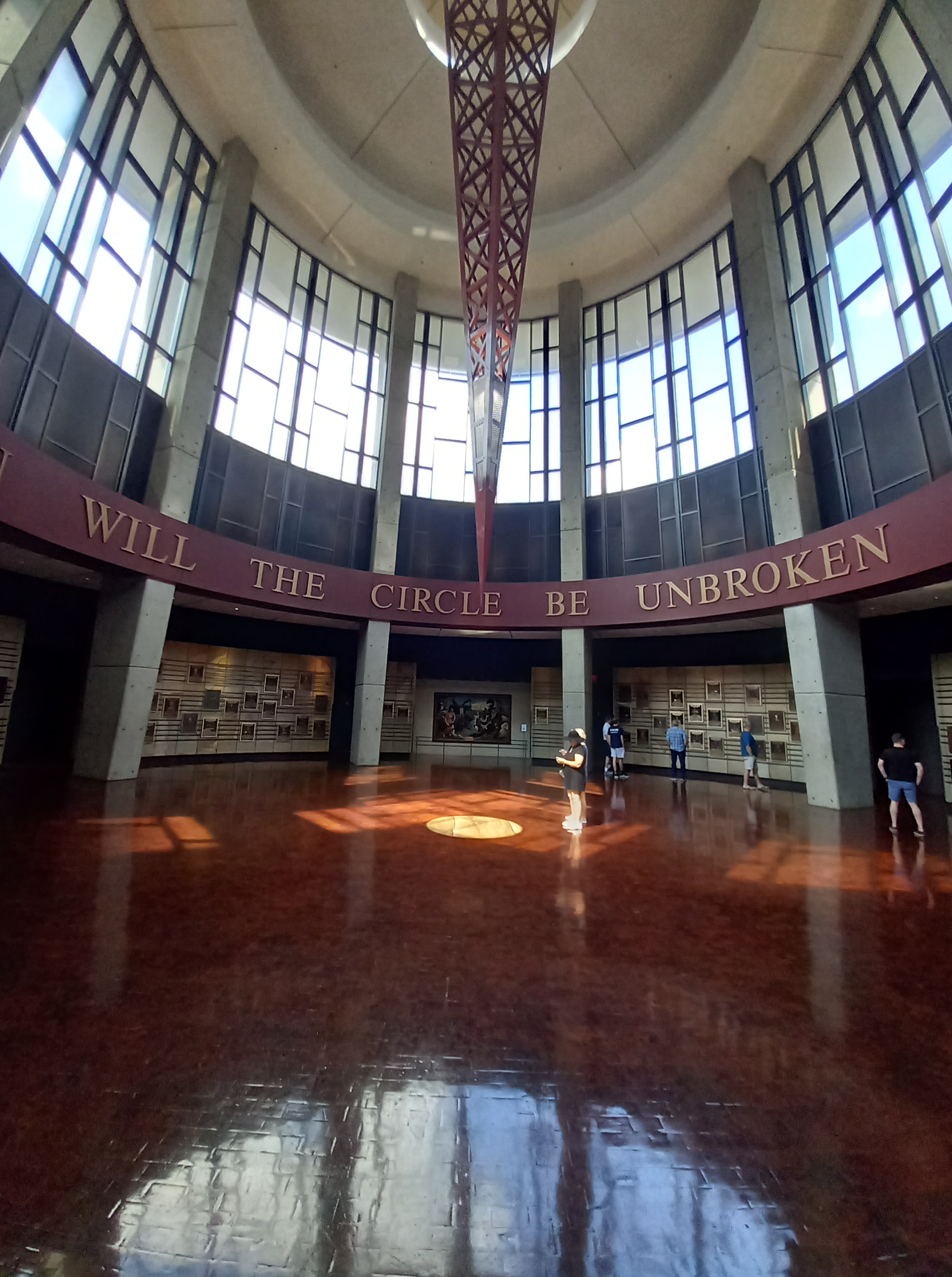
There was also an exhibit about the Outlaw Country movement that sprung up in Texas during the 70s, songwriters like Willie Nelson and Waylon Jennings, who grew their hair out and injected some rock and roll attitude into their performances.  The Hall of Fame itself, is a circular enclosure with plaques on the walls commemorating those who have been inducted.  To the young people pedaling bicycle bars around out front, most of the names on the wall probably meant little. 

It became popular about fifteen years ago, for people to claim how much country music had always meant to them.  In reality, when we were kids, whenever Hee Haw came on I wanted to run out of the room and throw up.  I liked Kenny Rogers.  I liked Alabama.  I liked Willie Nelson when he sang with Julio Iglesias.  I liked Waylon on the Dukes of Hazard. If it crossed over to top 40 radio, there’s a chance I might’ve listened to it.  If not, I wanted nothing to do with it.  Country music was just music for old people and rednecks.  Now it’s for everybody, popstars, rappers, and DJs too.

pages fly away 48

Before leaving Nashville, I stopped at McDonald’s for a meal, part of my immersion into the consumer culture that I’d just stepped out of, dripping with grease.  There are the old times and there are the greasy times.  I was filling up my tank with both.  As I sat in the restaurant with my book of maps, I saw I wasn’t far from the birthplace of Abraham Lincoln, or the grave of Daniel Boone. 

I’d just contacted an old girlfriend, Jenny, who I hadn’t seen in nearly thirty years.  She was living in Virgina.  It looked like I might be in her neck of the woods.  That hadn’t been in the plan, but yet again, there hadn’t been a plan.  Kentucky.  Ohio.  West Virgina.  I’d vaguely been thinking along those lines.  Now I was charting the course.

The Abraham Lincoln Birthplace National Historic Park was mostly a straight shot on the 65 north.  Then I quickly switched from one highway to the next to reach the 31E.  When I pulled up in front of it, a ranger was just closing the gate, but there was another car, pulled over on the driveway in front of me.  I waited until the ranger left, then approached the family that was stepping around the gate, pushing an old woman in a wheelchair.  They told me the ranger had given them permission to look around, but that all the buildings were closed.

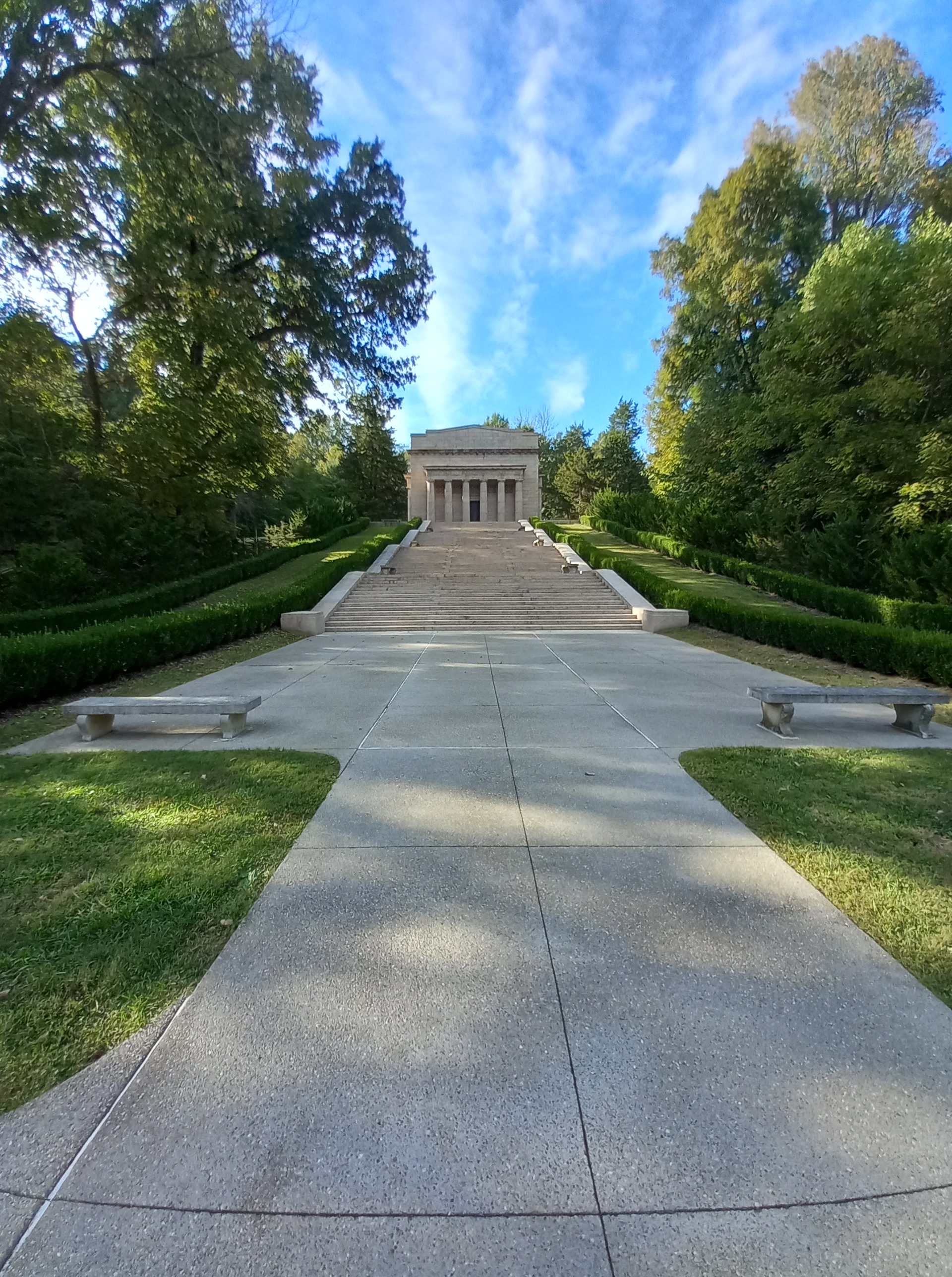
Abraham Lincoln was born in 1809 in Kentucky.  From what I could see of the memorial on the property, it resembles the one in Washington D.C., something of a Greek temple.  Inside is a symbolic log cabin, like keeping a manger in a cathedral.  I heard a squawking and saw that the old woman in the wheelchair was exerting her independence, defiantly lurching forward in it, requiring the whole family to rush over and restrain her.  There were a few other cabins, also replicas, but not much else to see.

Ten miles down the road, I came across another Lincoln site, that of his childhood home.  He lived at the Knob Creek Farm between the ages of two and seven, before moving to Indiana with his family.  A younger brother was born and died here, and Lincoln himself nearly drowned in a creek before being rescued by a neighbor.

It was late afternoon by now, and I realized I needed to start looking for a campsite.  Google came up with one called My Old Kentucky Home that I headed towards.  It was a half hour away, north on the 31E, outside of Bardstown.  Once I got close, the phone signal dropped out a few times, and I was lost for a while. 

By the time I reached it the sun was starting to set.  The campground was next to a golf course and full of RVs.  There were no open spots, and I was starting to panic when I saw that people had set up tents on some grass across from it.  There were a few picnic tables and fire pits, but no designated places to camp.  I popped the trunk on the car and threw up my tent in the cover of early evening.

Later I walked over to the main site and saw I guy on a golfcart returning to the entrance booth.  I was glad he hadn’t been there when I’d showed up, as I probably would’ve been turned away. Now it was my full-time job to avoid him.  There were loud voices all around, people who’d reserved their sites months in advance, out celebrating, with enough supplies to last a month.  I had an apple and a bun. 

After dinner, I climbed into the tent and kept my flashlight aimed at the ground.  If I could make it through the night without attracting any attention that would mean another narrow escape.  Even when things got tight, however, they still kept working out.

pages fly away 49

Who was Daniel Boone?  If people think of him at all it is usually as the second guy in the coonskin hat, right behind Davy Crockett.  The truth is, he came before him, but like Crockett, became an embodiment of the American frontiersman, as much for his ability to tell a tall tale, as for his exploits. 

Boone is known for helping blaze a trail through the Cumberland Gap and settle the territory that became Kentucky.  At one point he may have been adopted by the Shawnee Indians.  Although he had the reputation for being a backwoods man, he went on to serve three terms in the General Assembly of Virgina.  He became famous when an account of his adventures, published in 1784, found him shooting a panther through the heart as a child and later swinging on vines, like Tarzan, to escape from Indians.

I’d seen that Daniel Boone’s grave was just an hour away, in Frankfurt, so of course I was going to head straight there in the morning.  It had been a rough night at My Old Kentucky Home Campground, camped on a patch of grass, my tent behind a tree, trying not to draw any attention.  At the first light of dawn, I was up and on the road. 

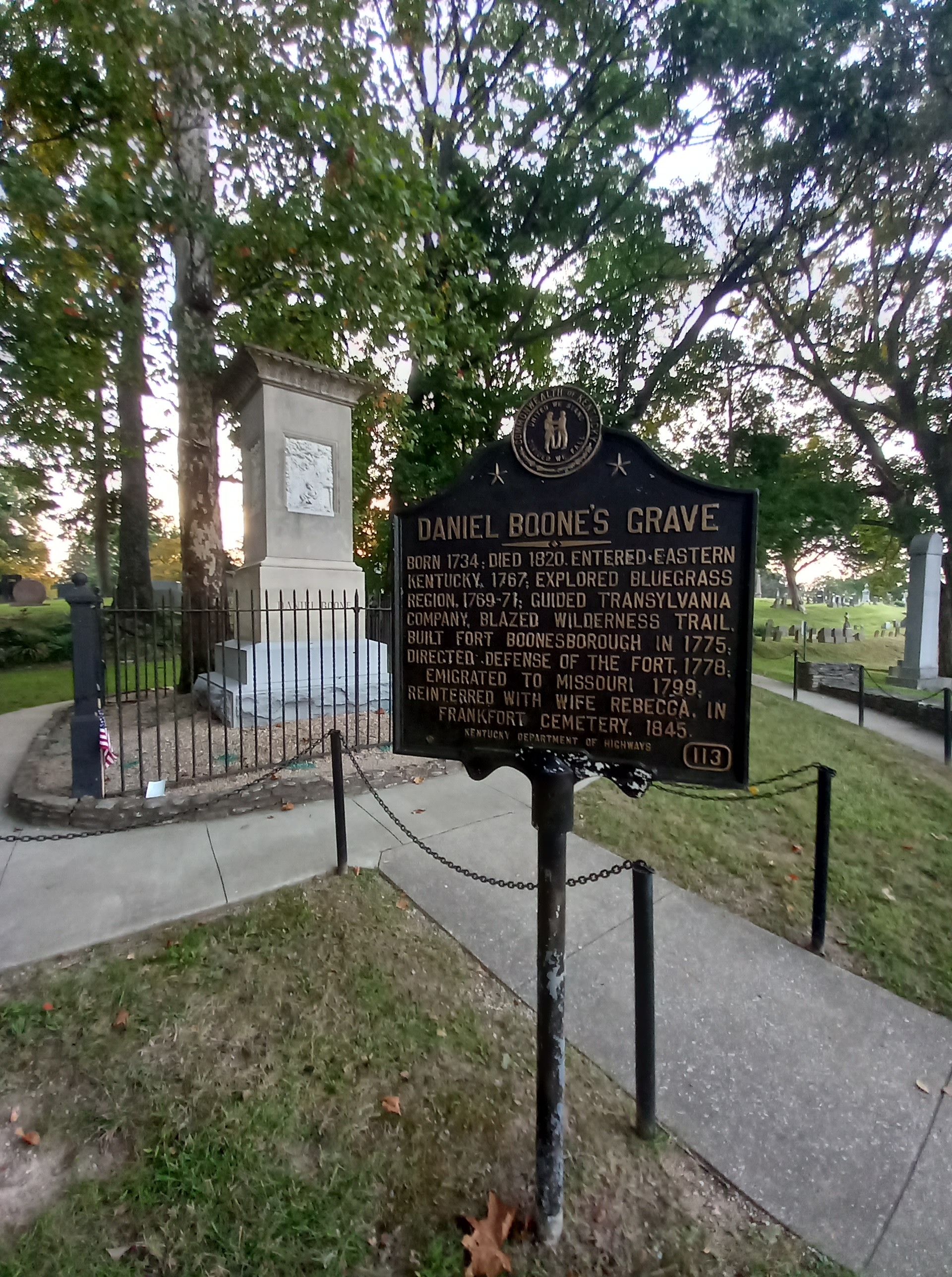
I took the 9002, the Bluegrass Parkway, to the 127.  Karen, from Google Maps, got me right up to the cemetery gates, but I needed a caretaker to point me in the right direction once I got there.  The grave was on a hilltop, looking down on the Kentucky River and the capital.  As I pulled up a few white-tailed deer went skipping through the headstones.  His wife, Rebecca, is said to have been buried next to Boone.  Someone had left a pencil drawing of the man there as a tribute.

It was a calm, serene morning.  The view of the river, trees, and capitol building below could not have been better scripted.  I decided to sit beside the grave and do my meditation for the day.  There was the faint barking of a dog.  Then a bird began screeching.  Now came the high peeping of another bird.  Cars passed on the freeway.  The screeching bird became a nagging bird, with a high, piercing cry. 

Down below the valley began to come to life.  I hadn’t shut my eyes yet but was measuring my breathing.  Right behind me lay the remains of an American legend.  What had been real about him and what hadn’t?  At one point he’d been reinterred from an earlier burial site.  Was that even him and his wife beneath the marker?   What matters more, what we know or what we think we know?  A little bird zipped across the sky.  The barking of the dog became louder.  The streets below began to fill up with cars.

A few years earlier, I’d taken a Greyhound Bus from Laredo, Texas to Bangor, Maine.  Somewhere along the way, I’d had to make a midnight transfer in Cincinnati.  It had seemed like a mysterious destination at the time, full of bridges, strange lights, and dark shadows.  Although I’d resolved to largely avoid cities on this trip, I decided to drive through it on my way to the Serpent Mound in southern Ohio.  It was an hour and a half away.  I took the 127 north to the 71 heading east.  The city looked different during the day.  The bridges were still there.  I drove through downtown and past the stadium where the Bengals play.  Then it was the 275 to the 32.   

The Serpent Mound represents a snake with a curled tail.  It is more than 1,300 feet long.  Of all the destinations on my trip, this was one I was possibly the most excited to see.  When I pulled up in the parking lot and tried to jump out, however, I found that I was stuck fast to my seat.  I tried getting up again, and was pulled back down.  I pried one hand under an ass-cheek and it felt like I was reaching into tar.  I yanked it back out, and realized I’d sat in Juicy Fruit gum that someone had smeared on a ledge in front of Daniel Boone’s grave. 

The gum was easier to get off the seat, thank God, than it was my pants.  The pants would never recover, but what I really wanted to know is who would defile the grave of such a patriot with a mouthful of Juicy Fruit gum?  Was it anarchy or just plain ignorance at work here?

After cleaning out the car and the seat of my pants the best I could, I proceeded to go investigate the Serpent Mound.   There were three burial mounds in front of the visitor center, attributed to the Adena Culture.  The serpent mound may have been used in ceremonies designed to placate a spirit.  There was an observation tower that I needed to climb to the top of to get an overview of it.  It did seem to go on forever, both literally, and figuratively, snaking through the trees.

pages fly away 50

My old girlfriend, Jenny, had gotten back to me and was excited about the idea of seeing me again, even if it was only for a night.  We hadn’t been in touch much for the past thirty years, but every once-in-a-while, we’d exchange emails.  From what I understood she was teaching English and living with her two kids in Charlottesville, Virginia, which was only a day away.  After thirty years that had come up rather sudden, but it was what it was.

I was really pushing it on this trip, already up to around nine thousand miles on the rental car.  The agreement had been unlimited mileage, but did that mean no cap on common sense?  Ever since leaving Huntington Beach, I’d been driving nearly sixteen hours a day. 

The Mountain Bluebird, by now, had become a popular hero in my own personal folklore, but were there no limits to what it could endure?  The Sierra Range, the Rocky Mountains, now the Appalachians?  Why not?  As long as there was money to put gas in the tank we’d go on flying, around the world, east to west, north to south.  We’d fly up to heaven and visit the Thunder Beings, bring back light and understanding to all mankind.  Something like that.

It was already past noon, and I had no idea where I was going, just east, towards Virginia.  It was two and a half hours to Charlestown, West Virginia.  I continued on the 64 to Beckley.  There I was directed to the Coal Mining Campground, which seemed promising at first.  There was an Exhibition Coal Mine and little prop village when I pulled up.  When I got to the campground in back, however, reservations were required and there didn’t seem to be any spaces open.  A few locals stood around gawking at me, as I tried to back out.  I got back on the road and started to drive, although by now my head was starting to spin.

The next place that came up was called the Beaver Creek Campground, another two hours away, back again on the 64 to the 219.   By now I’d reached the rounded mountains of the Appalachians.  Some local radio station was playing bluegrass music, the perfect soundtrack to the rambling turn of events, the galloping banjo, mandolin, and guitar, leaping forward in a three-legged race, a rickety wheelbarrow ride of a good time.  Wow.  Was I having a flashback?  I slapped my knee in time to the music and the Mountain Bluebird surged forward.

It was a wonderful relief to find that they did indeed have open campsites at Beaver Creek.  Not only that, there were no reservations required.  They also sold firewood.  The site that I claimed seemed to be a half an acre, with trees all around, a table, and a firepit, which for only the second time on the whole trip I was able to use.  Camping isn’t really camping without a fire.  What I’d been doing so far was mostly crashing. 

On this night I had time to gather up some kindling and branches, however, and keep a fire going for a few hours with the wood I’d bought.  In the night air, I could hear another group.  It sounded like they were singing hymns.  I got my ukelele out and sat plucking along to the music.

In the morning, I was up at six and back on the road again.  The fog was so thick it was almost like driving through a blizzard.  There was only about twenty feet of visibility ahead of me.  Suddenly, I came over a rise and there was the sun, looking like the ghostly light at the end of the tunnel.  The stripes on the road were white, the fog was white, and the sun was even whiter.  The whole of my time and attention were being sucked into it.  It felt like I was driving straight into the light that never dies.