Category Archives: Travels

pages fly away 58

The city of Clarksdale is the blues music capital of the world.  From the crossroads, it was only a ten-minute drive into town.  Once again, I’d put off looking for a campsite until the very last minute and was incredibly relieved to find an Expo Center with an RV Park that was unattended.  There were only a few RVs on site.  I pulled into an empty space and threw up my tent, then stumbled over to a Popeye’s Louisiana Kitchen and choked down a sandwich, before hurrying back to hide out until the dawn.  My track record for finding camp spots had been remarkable so far, largely due to Google Maps, and I was on the downhill portion of my journey by now, only two weeks to go.

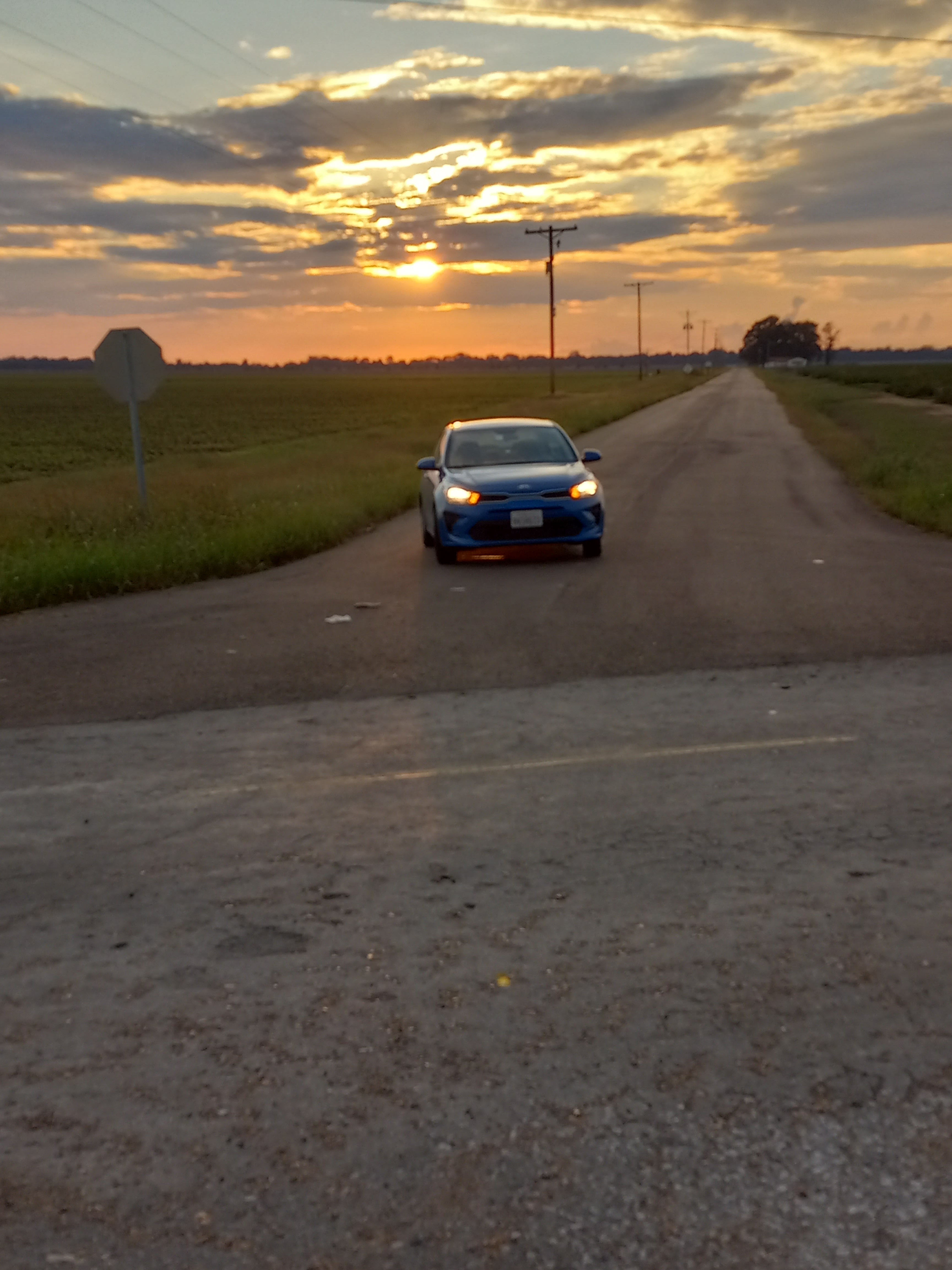
Right at dawn, I headed back out to the Crossroads.  The only thing I hadn’t sold for my music is my soul.  That was OK these days.  I was just lucky to be alive.  Driving back through the cotton fields, I was still in a daze, almost the meditative state I rarely seemed to achieve.  There was Sunflower River Road, the same intersection, railroad tracks, and trees.  I got out of the car and started walking, the sun right at my back.  My shadow stretched fifty feet ahead of me, up to the tracks, up to the trees.  It was like a figure from a dream, or a sinner being illuminated by the fires of hell, only these fires were cleansing fires, what came out of them was a new being, a new way of life. 

I sat down beside the tracks.  Crickets were chirpings and a few crows were cawing.  A power truck pulled over beside my car.  A few minutes later a black truck pulled up next to it and the drivers began a short conversation.  Beyond them I could hear cars whirring by on highway 49.  The black truck moved down the road.  Some yellow and red lights began to flash on the power truck and it crawled off as well. 

A tractor was coming down the road now.  What did I look like to the farmer?  Just another blues nut, I imagine, trying to make his own deal.  The noise of the tractor grew louder and louder.  The chirping of the crickets seemed to swell.  Right before the tractor reached me, I looked up and nodded my head.  The farmer smiled and waved his hand.  At least one of us had a job to do that day, actually both of us, if laundry counted as a job.

My act was looking pretty raggedy right about now.  After leaving the crossroads, I went off in search of a laundry mat.  It was still an hour and a half before the Delta Blues Museum opened.  There was a laundry I found right across from Abe’s Bar-B-Q.  After putting a load in the wash, I decided, with some trepidation, to call Avis because I was considering asking for the car for two more weeks.  Everything was going so well, and as long as I could keep finding places to camp, I wasn’t spending that much. 

When I got ahold of a representative I got a rude reply, however.  Not only could I not extend my lease.  She demanded that I return the car the next day.  I took a deep breath and explained to her why this wasn’t going to happen.

It is true.  I had put over ten thousand miles on the car in a month, but she didn’t claim that to be the issue.  Even though she acknowledged that my reservation had been for six weeks, she said the lease I’d signed had only been for a month, and that it ended the next day.  This was devastating to hear but what could I do, but plead and implore. 

They must have been tracking my journey.  They knew I’d been out on a rampage.  Was this there way of getting back at me for taking advantage of the unlimited mileage clause?  At last, the woman relented, and said I could bring the car back on the last day that I’d reserved it.  Good god.  To go out like that would’ve taken the wind right out of my sails.  I still had big, big plans for the Mountain Bluebird.

A couple smoking a joint outside of the laundry mat helped me figure out the dryer.  When my clothes were done, I drove to the Honson Plantation just outside of town, where in 1935, cotton picking first became a mechanical, rather than a hand-picked, operational.  Here the famous piano player Pinetop Perkins once drove a tractor.  It looked like a good place for a blues retreat, period equipment strewn around the property, and sharecropper’s shacks that looked like they could be rented out.

After that, I went looking for the Delta Blues Museum, passing the old Riverside Hotel, where Bessie Smith had died, following a car accident.  The museum was on the corner of Delta Avenue and Blues Alley.  The area it was in seemed to be enjoying some kind of renaissance, with various cafes, street art, and galleries, giving it a vibrant atmosphere.  I walked past Bluestown Music and Deak’s Mississippi Saxophones, advertising live music, folk art, and cold beer.  There was the Sunflower River Walk and banners celebrating Robert Nighthawk, Willie Brown, Son House, Charlie Patton, and Howling Wolf.  Outside the museum was the Blues Mobile, a Cadillac as long as a train. 

Cameras were off-limits in the museum.  I could’ve spent a week inside, but on this occasion hurried through, my head already stuffed with information and images.  I walked over to the Delta Blues Stage where someone had stenciled an image of Robert Plant. 

Walking back to the car, I took a picture of Muddy Waters holding a microphone that was inside one of the windows.  Reflected in that same window was a street lined with cars, a mural of other blue greats, and an image of myself, holding up my phone, looking into the past, the present, and the future at the exact same time.  The next time I made it to Clarksdale, I’d be playing music there.

pages fly away 59

One place that had always intrigued me that I’d never been to was Hot Springs, Arkansas.  The name conjured up images of pools of hot water surrounded by pine trees.  I decided to make that my next destination, but first wanted to pass through Little Rock.  I took the 49, briefly pulling over at the Louisiana Purchase State Park before deciding that my plate was already full enough, and getting back on the road.  I got on the 40 west and was just about fifteen miles from Little Rock when I saw a sign for the Toltec Mounds, which I decided to check out.  I took the 15 south to the 165 and the park was right there.

The Toltec Mounds were named that, based on a false assumption that they were constructed by the Toltecs of Mexico.  Both the mounds, there and at Moundville, do resemble the bases of sites I’ve been to in Mexico, but even archaeologists don’t know for certain who really built them.  The best that they can do is make educated guesses, like dreaming up a whole dinosaur out of a discovered tooth or bone. 

A wooden walking trail looped around the mounds, but what interested me more than anything was a cluster of broad-based swamp cypress trees growing out of a narrow, green lake behind the second mound.  The color of the water and the way the trees reached out of it took me by surprise, adding a science-fiction element to the grand mystery of it all.  A UFO touching down on the mound right behind me would have fit right in.

It was just twenty miles to Little Rock from there.  The few times I’d passed through had all been on a Greyhound Bus.  On this occasion, I didn’t see much more, just drove downtown and past the state capitol.  What I really wanted to do was get to Hot Springs National Park in time to enjoy the rest of the day there.  I envisioned myself changing into my swimsuit, sitting beside a hot pool with my ukelele, dangling my legs in the water.  It was just an hour to get there.  I took the 430 to the 30 to the 70. 

When I reached the National Park, I was puzzled.  I’d been directed to downtown Hot Springs and a series of bathhouses on the main street.  Was this the park?  Apparently, it was.  I found street parking about a half mile away and walked back to Bathhouse Row.  Dating back to 1892, eight historic bathhouses stand side by side: Superior, Hale, Maurice, Fordyce, Quapaw, Ozark, Buckstaff, and Lamar. 

I walked past those, looked at the Fordyce Spring, took a picture of an Indian mural in a parking lot, stopped outside the Gangster Museum, with Al Capone on a bench out front, looked into the window of the Wax Museum, featuring both George Bushes, and passed the Gambling Museum on the way back to my car.  What I never did was get into my swimming suit or get wet.  Frankly, I was confused.  I needed to find a place to camp.

There was a campground on Lake Catherine, about twenty miles from Hot Springs.  I let Karen from Google Maps take me there.  I was on auto-pilot, just blindly following directions, hoping there’d be something open.  It seemed to take forever to get there.  When I did, there were a few spots available.  I was supposed to register at the office, but it had looked closed when I passed it.  I just took my chances and put my tent up, flipping the sign in front to say it was reserved.  Just as I’d gotten my camp set up, here came a ranger.  He said it was OK if I stayed there.  I could just pay when I checked out.

It had rained a few days on my trip, but mostly every day had been beautiful.  This was another good one.  A long deck stretched out into the lake.  I walked to the end of it.  There was not the slightest breeze.  The water was totally calm.  The sky was still blue, and the lake was blue, ringed by a green reflection from the surrounding hills.  The lake seemed shallow, not deep enough to dive into.  Some locals told me I’d come at the perfect time.  For the past week, it had been almost unbearably hot.  Now everything had cooled off in time.  The weather was going to be just fine.

pages fly away 60

It was my intention to stop by the office and pay for the campsite I was occupying at Lake Catherine once I woke up, but then I woke up at two in the morning and couldn’t sleep again.  I was anxious and restless, ready to hop back in the car and charge.  My idea was to hit almost the whole of Indian Territory in Oklahoma.  As the days left on my trip began to wind down, my desire to stuff them beyond maximum capacity only escalated.

I tried to calm my frenzied mind, climbing up into a cross-legged position and attempting to monitor my breathing.  Instead, my breaths came out hard and forceful, like those of a woman in labor.  I zipped the door opened and tried again.  The stars were showing above the pine trees.  A few of them were scattered in the branches like Christmas lights.  There it was, the electric hum of the crickets and cicadas that accompanied me for most of the journey.  Lights from houses that circled the lake reflected off it; white, silver, yellow, orange.  They rippled across it and then rippled through my mind.  My mind was still racing. 

Something raced past the door of the tent.  Then another.  I picked up my flashlight to investigate.  It was four racoons, their eyes shining in the glare.  One was already up a tree.  Two others had begun to climb it.  The fourth sat motionless on the ground.  I sat back down and tried to calm my mind.  It was impossible.  I jumped up and started to break down camp.

It was the middle of the night.  I was on my way to Oklahoma.  I went gliding out of the campground, past the many RVs and registration office.  Sorry about that.  Many deer were standing by the side of the road.  Their eyes looked like lanterns.  Two of them crossed the road ahead of me, crouched as low as coyotes.  I stopped for gas and got a coffee and Hostess cupcake.  I had a long day ahead of me.

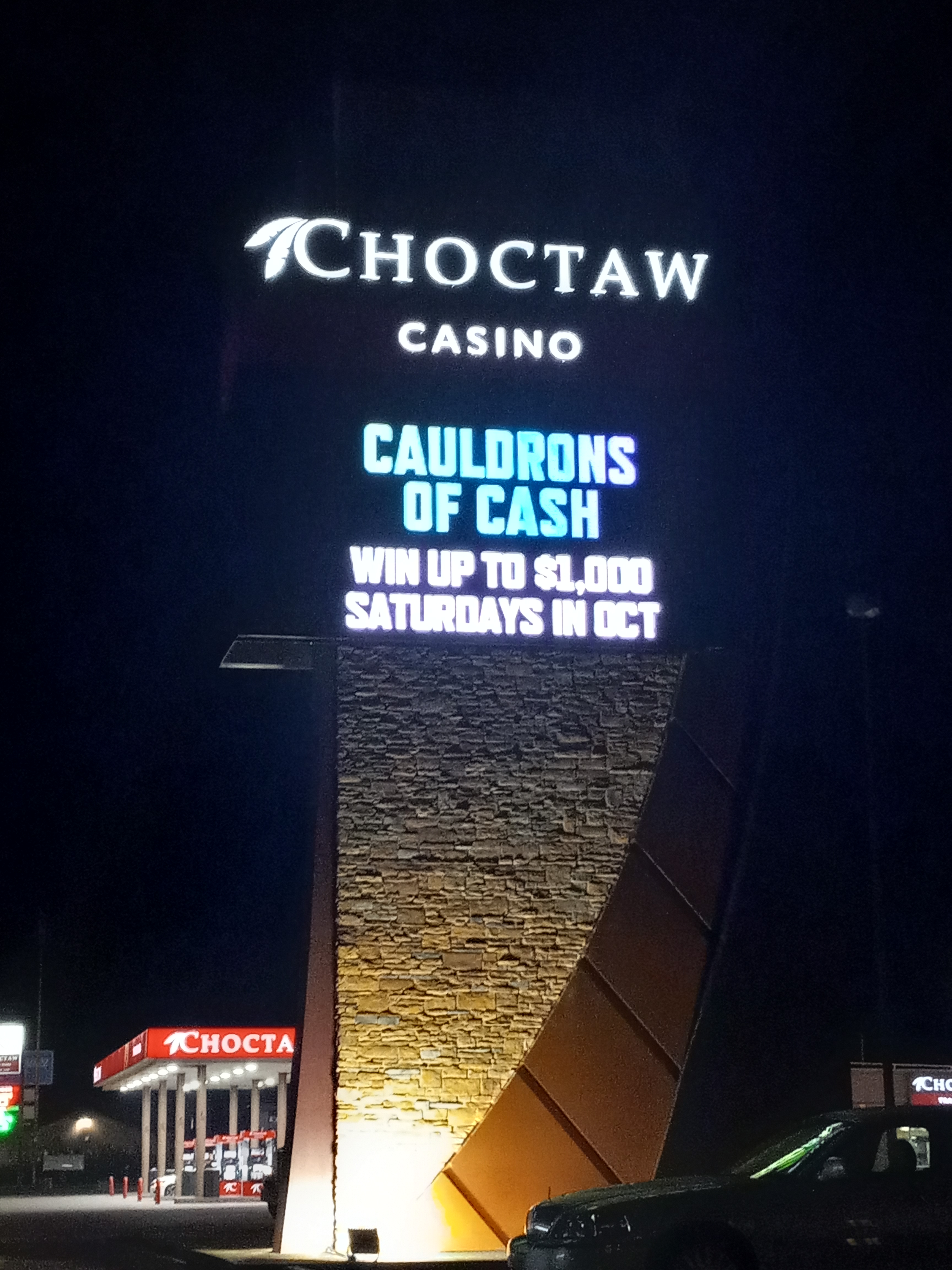
I took the 70 all the way to Broken Bow, driving through the dark night, with my headlights on bright for most of the time.  My aim was to reach the Choctaw Indian Reservation.  The first sign of it was the lights of the Choctaw Casino in Durant.  I stopped at the travel plaza to fill up on gas and get coffee.  Then I drove into downtown, the first light of day only now breaking in my rear-view mirror.  There were two statues of horses at the Heritage Plaza, one on its hindlegs, bucking its way to freedom.

The Choctaw Nation of Oklahoma is the second largest reservation in America.  In the 1830s, many Choctaws living in Alabama, Arkansas, Mississippi, and Louisiana were moved to Indian Territory, west of the Mississippi.  This relocation, known as the Trail of Tears, shattered their way of life and identity.  Other tribes that were forcibly removed from their ancestral lands included the Chickasaw, Cherokee, Creek, and Seminole.  My hope was to visit the Choctaw Cultural Center, but it was closed.  Instead, I crossed the road to the casino, and saw the Tim McGraw, Reba, and Keith Urban were playing there later that year.

It was two hours to get to the Chickasaw Nation.  It covers 7,600 square acres in south-central Oklahoma and the tribe is the thirteenth largest in the States.  To get there I took the 70 west to the I-35 and headed north.   I exited on the 7 and came to the Chickasaw Cultural Center, which fortunately was open. 

There was a large museum to explore, with interesting statues out front.  Out back they were demonstrating a circle dance, which was one of the highlights of my trip so far.  An elder was explaining the tradition behind the dance and seven young dancers were demonstrating.  The women had cans with rocks or beads inside strapped to their legs that rattled when they danced.  These were particularly apparent when they did the stomp dance.  They also used deer hooves and turtle shells as percussion instruments.

It was another hour and a half to get to Oklahoma City.  All I did was drive up there and cruise around the downtown for ten minutes.  I didn’t have a destination.  I was just passing through.  When I left town, I went to get on the 40 east, needing, for some odd reason, to merge onto the freeway from the right.  Someone wasn’t paying attention, and I came a quarter of an inch from being sideswiped by a car roaring past in the next lane. 

Once again, I could not afford for something like that to happen.  I was getting into the homestretch now.  I could taste it.  One false move and everything would go straight down the tubes.  I would have to keep my eyes wide open from now on.

pages fly away 61

Five tribes in Oklahoma, the Choctaw, Chickasaw, Cherokee, Creek, and Seminole, became known as the Five Civilized Tribes.  This was because they acclimated to American culture and adopted European dress and Christianity.  Some even owned slaves.  After being relocated to Oklahoma they were established as independent nations, but lost much of their autonomy over the years.  The Dawes Act of 1887, which divided the reservations into individual allotments, decimated the communal holdings of the tribes.  This had happened elsewhere, and though the Act was later repealed much of the damage could not be undone.

After leaving Oklahoma City, I went looking for the Seminole Reservation.  Google Maps, and the voice of it, Karen, had done a lot of good so far.  In this case, however, following her directions took me on a wild goose chase.  Exiting the 40 on the 377, I passed through the town of Bowlegs, and then kept driving, down a solitary, country road, across a nearly demolished bridge. I was notified that I had arrived at my destination when I reached a lonely farmhouse. 

The Seminoles came from Florida.  Some of them married runaway slaves and became the Black Seminoles.  The government launched two wars against them.  After the second one in the 1830, four thousand were moved to Indian Territory.  Although I was on the reservation, the only sign I saw of it was on a water tower and at a high school, where the football team was called the Chieftains. 

Two hours away there was the Five Civilized Tribes Museum in Muskogee.  Driving there, the song Okie from Muskogee, by Merle Haggard came to mind.  That was a small revelation.  I took the 69 north, past the Creek Nation Casino and Thunderbird Speedway.  I got to the museum an hour before it closed.  It was standing on a hill.  There were exhibits dedicated to each of the tribes.  I read about Te Ata, or Bearer of the Morning, a storyteller from the Chickasaw tribe who performed at the White House and in Europe.  A movie was later made about her life.

By now it was getting late and I was wasted with exhaustion.  My plan was to make it as far as Tulsa.  I was interested in visiting anything related to the musician JJ Cale, but by the time I got there couldn’t even concentrate.  In fact, I almost needed help.  It was too late in the day to search for a campsite.  I Googled Motel 6, a go-to from back in the day, and was directed to one about a mile away from the gas station I was parked at, too bewildered to continue.  Karen led me there, but when I arrived, found it wasn’t even a Motel 6 anymore, but a step down.  It looked like a dormitory for meth-heads. 

My initial reaction was just to drive off, especially with the crowd surveying me from the second -floor balcony.  Since I was already there, I figured it wouldn’t hurt to see what they had.  It was forty dollars a night.  The receptionist eyed me twice and said I didn’t need to put down a deposit.  I was good to go. 

My room was on the ground floor, right beside the cracked, empty pool.  I made sure I could see the Mountain Bluebird from the window.  When parking it, there’d been a lot of activity from the next car over, as if someone were living in it.  Two guys on an opposite railing were leaning over with cigarettes, smiling with only a few teeth left in their heads.

 I’d lived in cheap hotels like this one for years.  They were my joints.  Now I wasn’t even sure if the bed was fit to sleep on.  The lampshade was all busted up, but someone had patched it up with playing cards, two Aces and a Jack.  Right beside it, someone had suggested what all cops can do to themselves.  It’s not an adventure if you get too comfortable.  I had a long, classy night ahead of me.

pages fly away 62

It used to be a Motel-6.  Now it was a step beneath a Motel-6, so low that it didn’t even have a name yet.  If it did have a name, it wasn’t posted.  The swimming pool had become a dumping ground.  The building looked like it had been hit like an earthquake.  Some of the balconies resembled ramps.  I liked the fact that someone had patched the lampshade with playing cards.  That was a nice touch.

It was in that room, truly the abode of many a lost soul, that I decided to try and meditate, focus on where I was and why, before hitting the road.  There were two plastic chairs outside the office.  People had been walking past my room all night.  I’d kept a curtain open a crack, just so I could keep an eye on the car.  The air conditioner was clanging like a bell, filling the room with cold, canned air.  There was a hole in the wall by the bathroom.  Inside the bathroom, one of the walls was coming down. 

What had led me to stay in hotels like this for years of my life, besides economy and pride?  Is that what it meant to be an artist?  To suffer, starve, and be neglected?  I’d seen the reality of that myth.  All that matters is the quality of the work, no matter what you need to get it done.  I’d done a lot of bad work in rooms like this, locked up in the bathroom with a bottle and a pipe, but I’d also done some good work.  When I put the good ones aside, I had a decent body of work, one that I could live with. 

Also, who was I kidding?  To live wild and loose is terrifically fun, at least for a while.  But seasons pass, and if you don’t change you either die, or even worse, become boring.

There was a beeping coming from the parking lot.  A truck was backing up.  The room was cold.  My feet were cold.  It was still dark outside.  Where would I go next?  North to Kansas, then Nebraska, and Colorado, where I had family.  After that, there was all of New Mexico and Arizona, home to some of the largest reservations in the States. 

There was a Waffle House across the street.  I’d never been to a Waffle House before.  Breakfast had never really been my thing.  After checking out of my room, I drove over to give it a shot.  The parking lot was crowded.  They only had a seat at the counter.  When they brought out my order, I understood why.  My breakfast filled two whole plates and covered most of countertop in front of me.  Pancakes, eggs, hashed browns, biscuits and gravy, bacon.  I was stupefied.  The waitress asked how everything was.  I told her it was my first time ever at a Waffle House, but I’d be back.  Boy, would I be back. 

I crunched down on a piece of bacon for emphasis and a crown in back of my mouth exploded, filling my mouth with shrapnel, bacon, and blood, the same smile fixed on my face for thirty seconds, until she turned away.  Then I reached for a wad of napkins and spit it all out.  That’s what you get with no dental insurance, when you get all your dental work done in Mexico and Saudi Arabia, fillings that explode like pop rocks, bridges and crowns that shatter after two years.

It was too early yet to do much in Tulsa.  I’d have to return at a later date.  By now I needed to hit the road if was going to make it to Dodge City that day.  I’d seen something on the map about the Pawnee Bill Ranch that looked worth some investigation.  It was an hour away.  I took the 412 west to 18 north.

Most everyone has heard of Buffalo Bill, but how many people know about Pawnee Bill?  I didn’t, not before I showed up at his ranch.  It turns out that they had both been Wild West showmen who’d briefly combined their shows to create the Two Bill’s Show, ultimately a financial disaster that nearly led to bankruptcy. 

Pawnee Bill got his name working on the Pawnee Indian Agency.  He briefly worked for Buffalo Bill’s Wild West Show as an interpreter, before starting his own show in 1888, Pawnee Bill’s Historic Wild West.  His wife May was one of the stars.  After the failed collaboration with Buffalo Bill, Pawnee Bill largely retired to his ranch on Blue Hawk Peak.

There was a corral with a small herd of bison when I pulled up in front of the museum.  It looked like I was the first visitor so far.  I put on my COVID mask and walked to the door.  Considering that only a year ago most every place was still locked down, I was pretty fortunate to get to see what I was seeing.  In the window was a picture of Pawnee Bill, with his stage suit, boots, and hat.  There were Indian artifacts and memorabilia from his shows inside.  It appears that he’d once hired Geronimo to tour with him. 

In a black and white photo, taken with Buffalo Bill, there is no question who the junior partner is. Pawnee Bill comes off as a stumpy sidekick.  If things didn’t work out between them, it is assuredly he who got the short end of the stick.  Somewhere I saw that he’d called Buffalo Bill a boy who’d never grown up.  That is probably a charitable summation, as there are those over the years who found way worse ways to describe him.

pages fly away 63

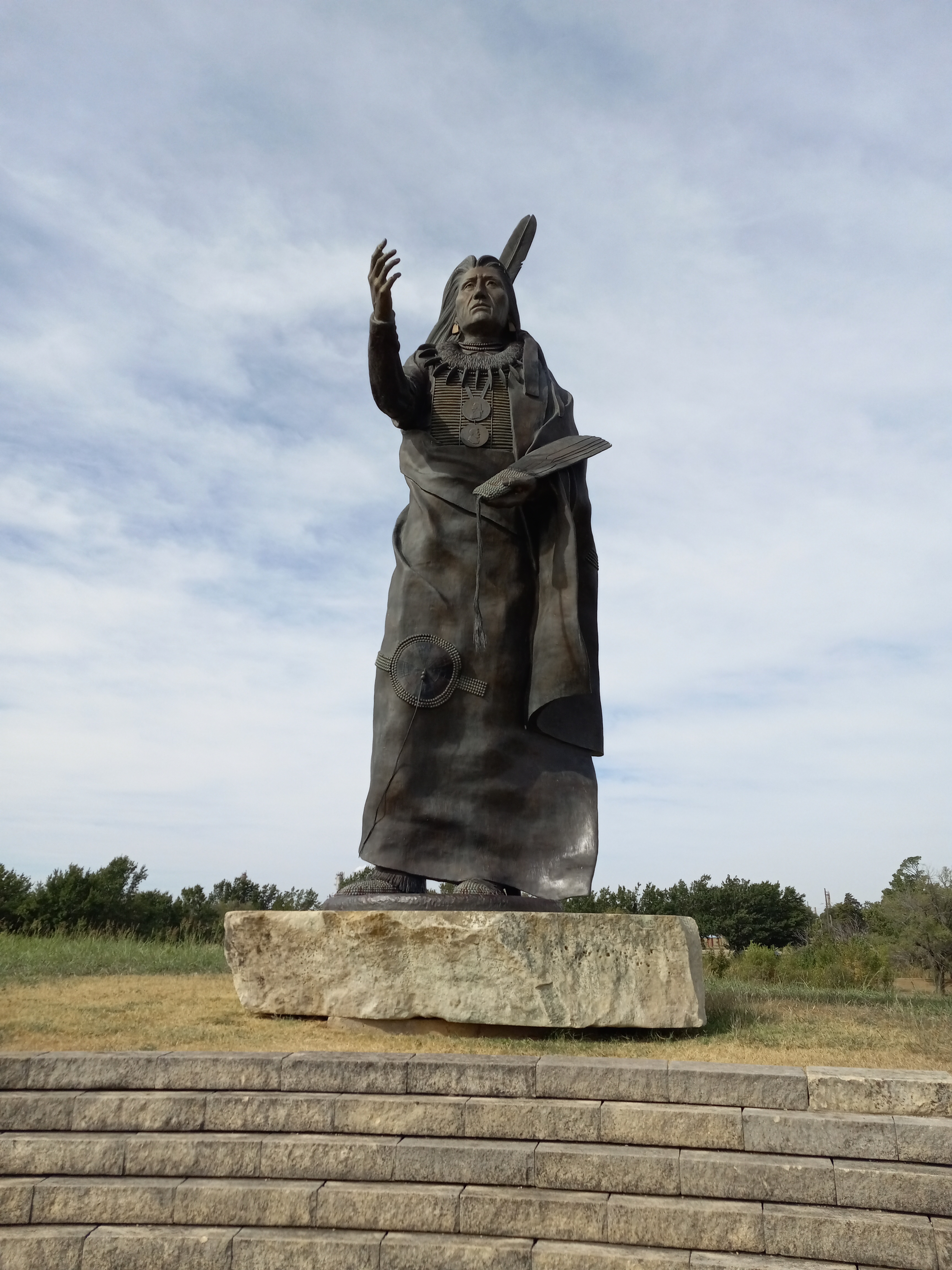
Forty miles from the Pawnee Bill Ranch is the Standing Bear Museum and Education Center in Ponca City.  I took the 15 to the 177 north to get there.  Standing Bear was a Ponca Chief and early civil rights activist, who argued before the US District Court in 1879 that Native Americans deserved the same rights as the European settlers.  He pointed out that though his skin was dark, if cut, he would still bleed the same blood.  The judge sided with him and declared him a person under law. 

When I got to the museum, I saw the twenty-two-foot statue of Standing Bear from a distance.  There was a walking trail to reach it.  I stood at the periphery of the large medicine wheel in front of it, and then backed away slowly and took a series of pictures in which the statue grew smaller, and the horizon grew larger.  There was also an interpretive center that introduced the six tribes of the region: the Osage, the Ponca, the Pawnee, the Tonkawa, and the Otoe-Missouria.  A replica of each tribe’s seal was on display, like round shields, with their own designs and symbols.

It was four hours to get to Dodge City.  I got on the 35 north, which just happened to be a tollway.  That caught me off guard.  There was a machine that I needed to take a ticket from.  A few miles later I pulled over at a gas station and rest area, on an island, so to speak, between the north and south lanes of the 35.  I wanted to see if they had an ATM. 

I’d tried getting money in Tulsa that morning, but the transaction had failed.  Now it failed again, and I got worried.  It was the EDD card I’d been getting my unemployment payments on.  I called the number on the back of it and was informed that they’d placed a block on it, due to all the improbable locations that had been popping up on it.  Thanks for looking out for me, I let them know, but I need it to work.

The woman I was talking to transferred me to the IT department.  While she was doing that, I drew some money off a credit card, not happy to be doing so.  It took a while for anyone to pick up.  The guy who finally did was as suspicious as an FBI Agent, asking me all kinds of insane questions about my movements in the past month.  Then he asked me to answer three security questions, one about a home equity loan I’d never applied for, another about a telephone number I’d never had, and the third about an address I’d never lived at.  My total confusion at the questions seemed to affirm my identity.  He put me on hold.

Meanwhile, Karen from Google Maps, was giving me directions on where to go once I got to Wichita.  She started hounding me to exit, right when the security analyst got back on the phone to ask a few more questions.  Just then, I arrived at the exit for the toll road, and needed to feed cash into the machine to get out.  I was parked too far away.  When I stood up, all the money I’d just gotten out of the ATM spilled out onto the road.  I was trying to wrap things up with the agent.  Karen was nagging me.  The seat belt alarm started beeping.  I got down on my knees, sweeping up twenties, stood up, tried to insert a crumpled five-dollar bill into the slot three times before it finally went through, then got back in the car and started screaming at Karen.  Shut it.  Shut it.  Would you please shut up?   The guy from the bank had hung up by now, at least I prayed that he had.  I was losing it.

They say that Kansas and Nebraska are flat, but you don’t know what that means until you’ve driven across them.  There was not a mountain in sight, not a hill, not a bump, not a ridge, only miles and miles of farmland, flat as a tabletop.  I was on the 400 heading west now.  With nothing to distract me, the drive became a torturous grind.  The grass was bleached out and the sky was pale.  By the time I reached Dodge City I was sore in the saddle.  I got out at a gas station, swung the doors open wide, walked up to the ATM, and reached for my EDD card.  If it didn’t work this time, all hell was going to break loose.

pages fly away 64

Dodge City grew up around Fort Dodge on the Kansas frontier and became a boom town in the 1870s when the Great Western Cattle Trail started running through it.  For a few years it may have been the wildest town in the West, full of gunfighters, gamblers, saloons, and brothels.  Famous figures who once roamed the streets include Wyatt Earp, Bat Masterson, and Doc Holiday.  It was the setting for the popular TV Western Gunsmoke, although the filming was actually done in Utah. 

It was late in the afternoon by the time I pulled up adjacent to the Boot Hill Museum.  There was free parking and the façade of an Old West town.  At the first intersection I came to there was a statue of Wyatt Earp, an opportunist who drifted from boom town to boom town with his brothers, both a lawman, gunfighter, prospector, possible brothel owner, and even boxing referee.  Like many legends of the Old West, he was a storyteller and mythmaker, and it is sometimes hard to know where the truth lies when it comes to the many adventures and deeds attributed to him.

There were supposed to be gunfight reenactments and can-can dancers, but I was arriving late in the season as well as the day.  There was a statue of a longhorn and one of Marshall Dillon from Gunsmoke.  By the time I got to the museum, they were getting ready to close.  I didn’t beg to be let in, but the attendant took mercy on me and let me run up to Boot Hill.  I passed a rack of law badges at the door and made my way past a replica pioneer town with a wooden boardwalk. 

The cemetery had been on the highest hill in town and only used for about seven years.  There was a poem written from the perspective of the unsung dead, urging passing travelers not to cry for them.  Some of the causes of death included shooting, hanging, scalping, and freezing.

After leaving the Museum, I passed The Western Hotel, then the Gunfighters Wax Museum.  They too were closed, so I missed out on the chance to see Davy Crockett, Calamity Jane, Frank and Jessie James, General Custer, Wyatt Earp, Doc Holliday, the Dalton Brothers, Belle Star, Bat Masterson, Sitting Bull, Billy the Kid, John Wesley Hardin, Buffalo Bill, Wild Bill Hickock, really almost the entire Old West Gang, most of them only famous for killing people.

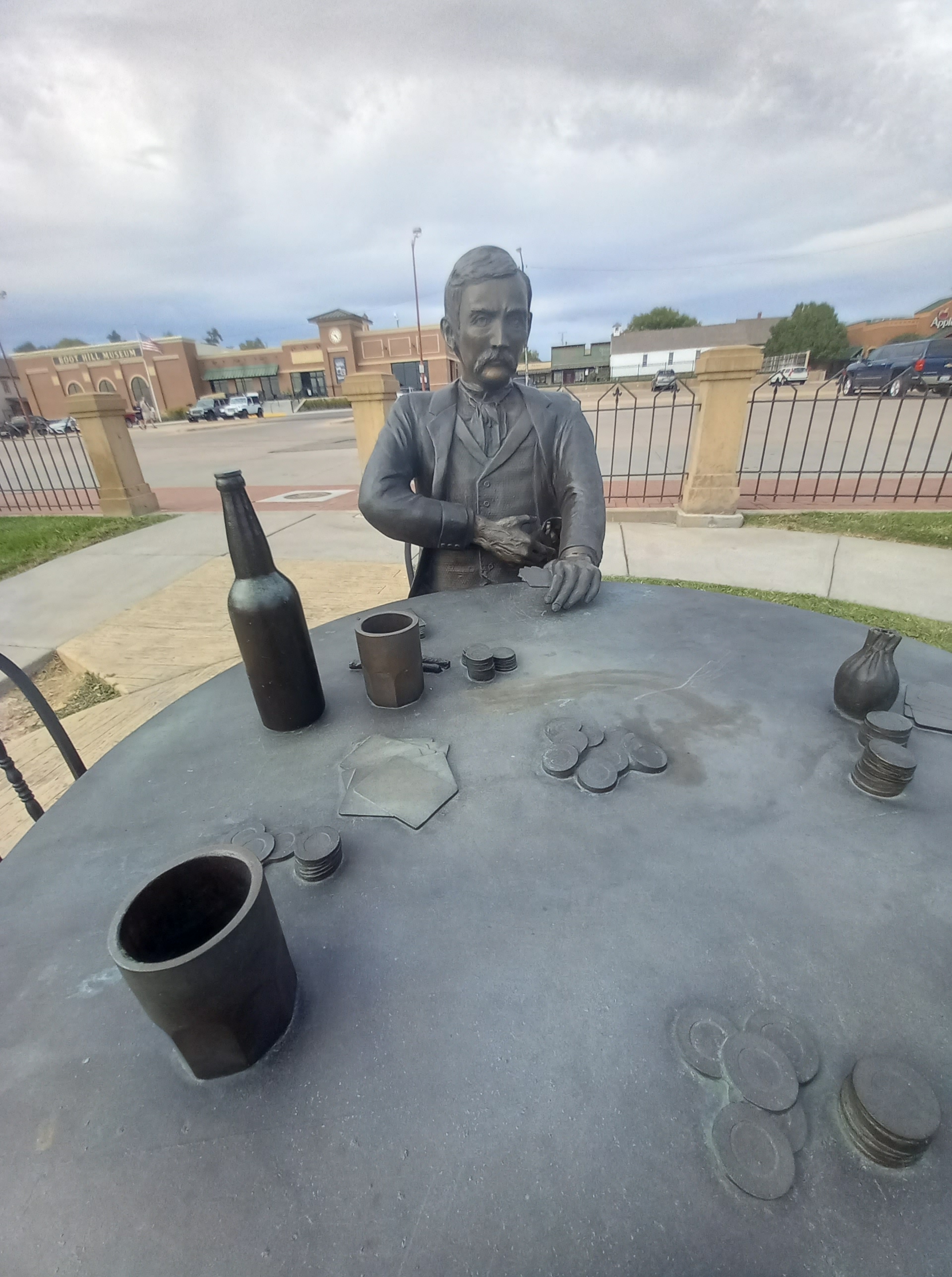
As I was leaving, I passed an old locomotive and statue of Doc Holliday, sitting at a table covered with money, cards, and alcohol, reaching for his pistol.  He’d been a dentist with a bad temper and a drinking problem, and now sat there, inexplicably, a hero to many.

I’d passed a hotel on the way into town, advertising rooms for twenty-nine dollars.  That seemed too good to be true, and it was, but I got one for forty.  The woman who owned the place had been a refugee from Vietnam who’d worked at a meat packing plant for twenty-four years before buying the hotel.  Room 24 in the back was large, with pictures of white-tailed deer on the walls.

There was a Chinese restaurant with a buffet that I ate dinner at.  So far, I’d bought most of my food from gas stations so the whole night felt like a luxury.  At the next table, the group of young people were talking about a real-life outlaw they all knew who was back in prison again.  Would he get a statue on Main Street?  That was doubtful.  Maybe if he started rapping about his criminal lifestyle.  Then there was a chance.