Category Archives: Travels

pages fly away 65

When I’d picked up a rental car in Huntington Beach over a month earlier and just started driving, I’d only had a vague idea that I might drive through Indian reservations.  By now the trip had become a crash course in the whole history of Western expansion, and I was still flying across the land with some of the most interesting lessons ahead of me.  Fortune had mostly smiled on me the whole time, from the weather, to what was open, to the places I’d found to camp.  If I’d started my trip needing to find hotel rooms right away, it would’ve been over within a week.

My plan that day was to drive from Dodge City to North Platte, Nebraska, and Ogalala, then on to Denver that evening.  It was a lot for one day, possibly too much.  I got up while it was still dark and loaded the car.  When I was ready, I looked up North Platte on Google Maps and asked for directions, hesitating for a moment when I remembered how I’d yelled at Karen the day before.  Would she even answer?   That was ridiculous.  We’d spent so much time together, and honestly, she’d saved my skin so many times, that I’d gotten oddly attached to her.  I was relieved when her voice came through bright and clear, my angel of the morning, directing me to take the 400 west to the 23 north.

In a half hour, the sky opened up in bands above the highway, pink, pale blue, and a darker shelf of gray-blue above that.  Talk about flat.  You could have laid the foundation for a house on the horizon.  I passed through Grinnell and Oberlin.  A flock of wild turkeys strutted across the road.  Later, I drove past huge pens of cattle, tens of thousands of them.  The air reeked of sulfur. 

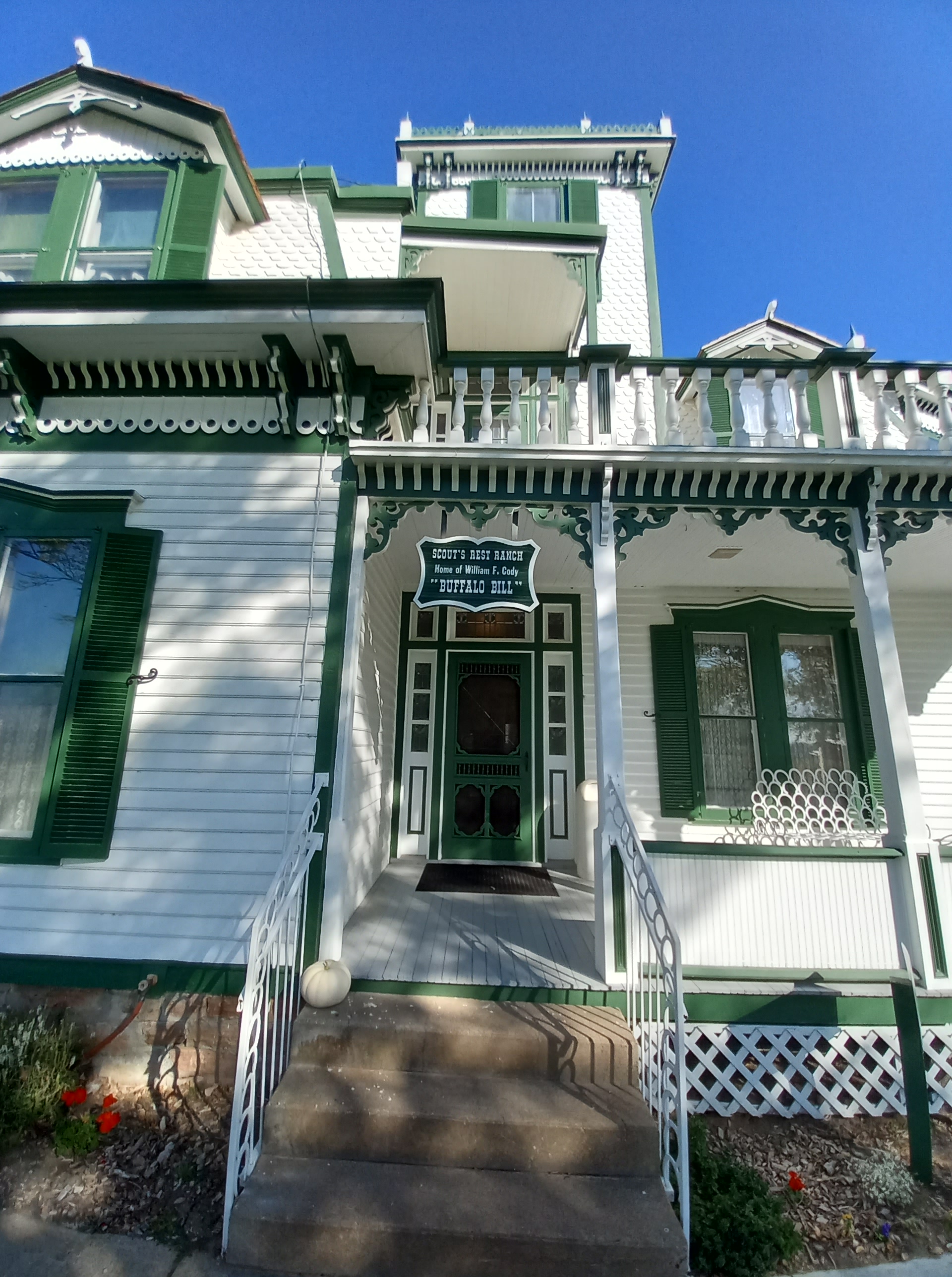
I had a cousin in North Platte, but I’d be seeing her at my aunt’s in Ogalala after lunch.  My destination was the home of Buffalo Bill, Scout’s Rest, as well as the trading post and tourist trap, Fort Cody, which had been a favorite childhood stop on our trips between my grandparents’ homes in Denver and Lincoln.

Buffalo Bill was showing up everywhere on my trip.  His Wild West Show had gone on to define an era for most people, in the same way that certain movie actors define a generation.  What was he like as a man?  It depends on who you ask?  He gave audiences what they wanted to see, white heroes restoring order to the universe.  Was he a drinker and philanderer?  By some accounts he had to be tied to his horse to keep from sliding off, and his relationship with his wife was barley civil. 

Was he influential?  Enormously so.  His vision of the Wild West would go on to inform all the stereotypes about it that we’ve come to know by heart.  If you grew up playing Cowboys and Indians, you already knew how the game should go.

When I reached the Buffalo Bill Ranch State Historical Park Museum, there was a wedding party meeting up in the parking lot.  On the other side of the road was a rodeo arena.   Scout’s Rest, the home where Buffalo Bill rested up and entertained guests in between tours, was built in 1886.  I did a quick tour on my own.  There were pictures of him at various ages, one with his daughter, Irma, a couch he used to recline on, a buffalo robe, in one case comic books and action figures, a picture of Sitting Bull, and one of Pawnee Bill.

Out back in the barn, there were stables, riding gear, a covered wagon, artwork and posters from his different tours, and pictures of the cast members, many of them Native Americans who’d only recently been conquered and forced onto reservations.  From what I understand, Buffalo Bill respected them and treated them well, even if they were expected to lose every fight.  I read some of the names:  Moses Flying Hawk, Amos Two Bulls, Bull Ghost, Amos Little, Mrs. Yellow Hair, Whirling Horse, Sam Surrounded, Crow Eagle, Charles and Julia American Horse, Mrs. Black Tail Deer, Iron White Man, Bad Bear, Chief Iron Tail, Joe Black Fox, Buffalo Fat. What names, what pride, what identity, what culture. 

There was also a picture and poster that billed Annie Oakley, one of the top stars of the show, who could shoot a cigar out of her husband’s hand or hit a playing card at thirty paces.  Outside was a tipi and small park, that was decorated for the upcoming fall holidays.  When I left the home, I went and parked in front of the tipi, to gather my thoughts for a moment.  It had become nearly impossible to stop and count my breaths for any length of time.  If I didn’t get to it right then, it wouldn’t happen.

There was a pumpkin patch beside the tipi and a cold wind blowing through the trees.  Some cattle and a few buffalo were standing inside a corral.  Children were running around, playing and yelling.  The whole property was the perfect playground.  Off in the distance I could see a mule and a couple of goats.  What was exciting the children was a zipline.  I could see the movement of bodies flying through the air, but not where they started or stopped. 

We made our own ziplines when I was growing up out of rope, we jumped out of trees and swings into bushes, we rode laundry baskets down flights of stairs, coming close to annihilation, yet somehow surviving.  That had been the thrill of it all.  The wind was rustling, and orange leaves were flying all around.  An old man in a cowboy hat walked by carrying a gas can.  My mind began racing like the wind.

Next up was good, old Fort Cody.  As children, we’d had to beg and plead from a hundred miles away to get our father to stop at Fort Cody.  He would’ve pulled over regardless.  It was one of our most cherished traditions.  Back then they’d had Indian dancers performing in the back court.  It was an adventure just to be there.

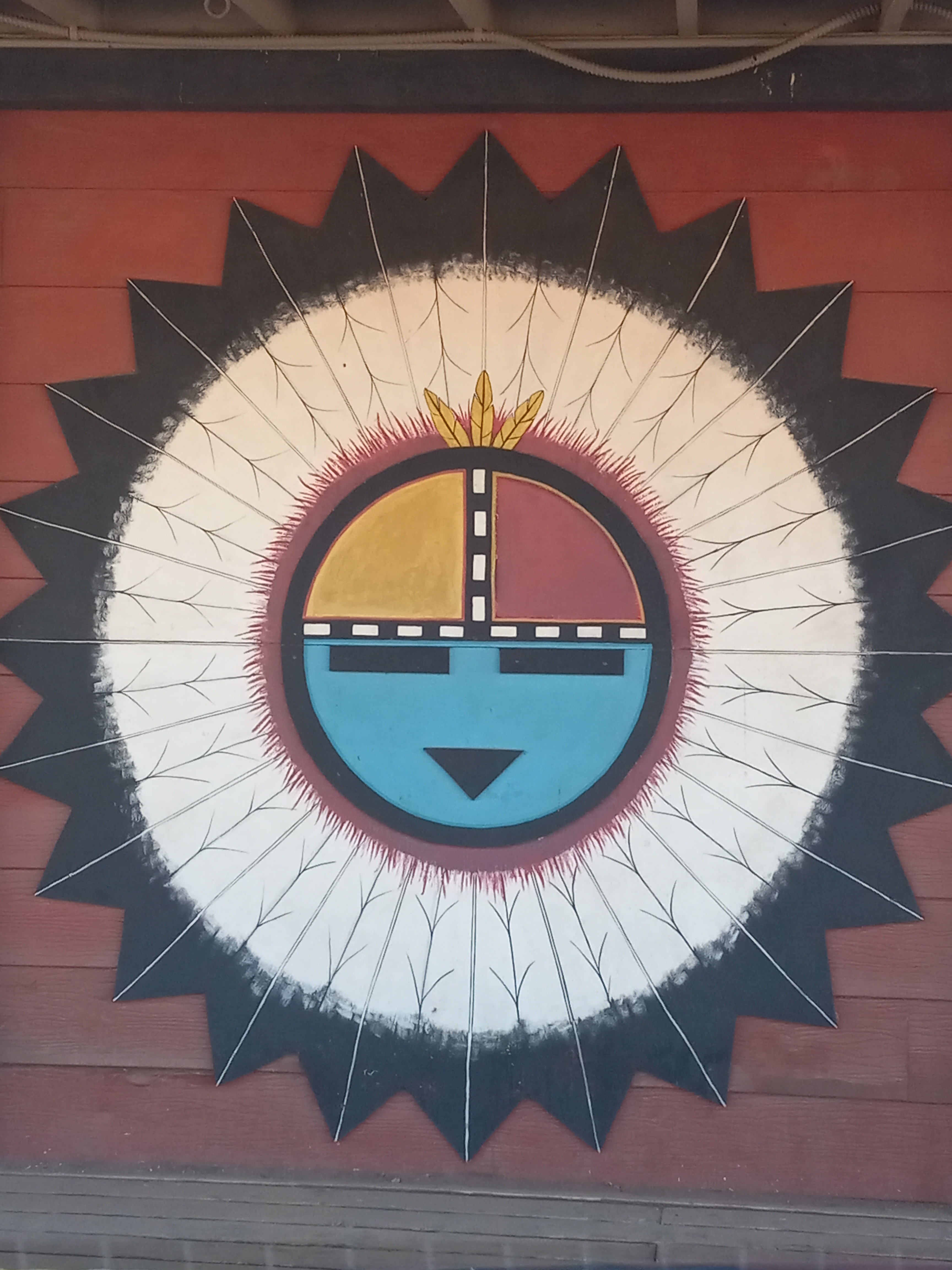
As I pulled into the parking lot, I was flooded with the nostalgia.  There was the sign, Buffalo Bill, in his fringed jacket and hat, cradling a rifle in his arms.  Outside were a buffalo, grizzly bear, pony, and kachina doll.  Along the fort walls were posted sentries from the Calvary.  One was folded over with an arrow sticking out of his ass.  Yellow flags were flying.  A cannon stood ready.

Inside there was a miniature version of the Wild West Show and a two-headed calf.  There were two mannequins standing in cases side by side, one an Indian in full regalia, the other Buffalo Bill.  Overhead was the skin of a bobcat.  There were drums, moccasins, pictures of Red Cloud, Kicking Bear, Sitting Bull, and Gall.  In the backyard was a small jail, a rider on a bucking bronc, with a hole around his head for you to look through while someone took a picture, a big Indian, and another buffalo.

It was largely how I remembered it as a young child.  It looked like they had removed the lewd merchandise that had infiltrated some of the shelves during my teen years.  My brother and I always joked about a cup we’d seen when we got older that was a tit, where you were supposed to drink out of the nipple.  We’d always considered that to be the end of the innocence.

pages fly away 66

From North Platte it was an hour drive to my Aunt Barb’s house in Ogallala.  Her and my Uncle Vern had started up a business there nearly thirty years ago.  Vern had passed away in 2020, around the same time I’d suffered a nervous breakdown under quarantine and then had a seizure.  I’d barely given Barb any notice, but the timing worked out as my cousin’s Stacy and Roy would both be there with their families.  I took the 80 west.

Ogallala was once a stop for the Pony Express and served as a crossroads between the Great Western Trail and Union Pacific Railroad on cattle drives.  My first stop once I got there was the Boot Hill Cemetery, maybe not as famous as the one in Dodge City, but just as interesting.  The name came from the practice of burying bodies with their boots on, often in canvas bags.  I read about horse thieves and gamblers buried there, one of them, Rattlesnake Ed, who was shot down over a nine-dollar bet in a saloon called The Cowboy’s Rest. 

There was a narrow stairway to get up to Boot Hill, with the name on an overhead sign.  The centerpiece of it is a sculpture of a horse and cattle driver, leaning on the saddle, gazing back towards Texas, the way he’d just come.

When I got to my aunt’s there was a football game going on between their team, the Cleveland Browns, and the Los Angeles Chargers, formerly of San Diego.  Stacy and Roy’s children were nearly grown up.  I had never known them well.  There was pizza on hand.  Aunt Barb had to run to choir rehearsal.  I’d recently seen her at a wedding, so we’d had a chance to catch up.  It was strange not having Vern around.  My father was gone now, my uncles were gone, all my grandparents and great-grandparents were gone.  All that remained were my mother and three aunts.  Our family had been scattered around like seeds in the wind.  There were few cornerstones or hiding places left. 

I only stayed until half time.  Denver was a long way off, over three hours.  When I left, the Browns were winning, though I later learned the Chargers snuck it past them at the very end.  It was a good thing I got out of there when I did.  I took the 76 all the way through. 

By the time I arrived on the outskirts of Denver the sun was setting down behind the Rocky Mountains, illuminating their rugged profile.  My stop that night was at my college buddy Riley’s place in Littleton.  In the morning I’d try to find the lot where my grandparents’ house had been in Englewood, as well as track down any family members who were available.  The plan was to stay with my cousin Gwendolyn that second night.

Even with Karen from Google Maps doing her heroic best, I still got tangled up in the foothills looking for Riley’s place.  She looped me through a labyrinth tract of identical suburban homes before finally narrowing down his cul-de-sac.  Then I was inside, greeting him, his wife, and grown son.  Most of my friends had houses and families by now.  All I had were wild stories that had largely devalued with the passing of time.  Still, it was fun to catch up.  As with my college friends in Minneapolis, there comes a day when you’re just excited that anyone out there still knows and cares that you’re alive.  They had a guest bedroom for me with a towel folded at the foot of it.  I slept about four hours beneath the towel and woke up bucking to hit the road.

It was not far to Red Rocks, the famous amphitheater chiseled out of stone.  I’d never been to a concert there but had been up to hike around it a few times.  On this occasion, it was still early in the morning.  I parked and walked up to it.  The sky could not have been any bluer and the rocks could not have been any redder.  The sun shining through a railing on the walkway cut a symmetrical shadow ahead of me.  When I reached the amphitheater I found a seat about halfway up, in the very center of it, and sat down on a bench.  Workers below were readying the stage and people were exercising, running up and down the stairs.

The weather and temperature were perfect.  The sun was not yet too hot.  Outside of random voices, the only intrusion was the sound of someone cleaning with a high-pressure hose.  A woman to one side of me was doing sit-ups.  An old couple were posing for a selfie.  They picked up their dog and forced it into a group shot.  Some kids were playing at the front of the stage. 

In high school I’d gotten a cassette tape of U2’s live show at Red Rock.  That’s where I knew it from.  The sun was shining in my face.  The high-pressure hose was getting closer.  It began to drown out the other sounds.  One time in college we’d climbed up to the top of the overlook here and tried to smoke some weed out of a beer can.  The can had popped back into shape and catapulted our only bud over the ledge.  That had been a bummer. 

Someone came running up the seats right next to me.  That incident in college had happened over thirty years ago.  People always ask, where has the time gone.  Most of my life I’d been unable to get rid of it.  Maybe at the last second, I’d wish to have it all back.  For now, I’d found a small eternity inside of it, but the high-pressure hose was on me now.  The serenity shattered into a billion bright shards.  Denver was waiting below.

pages fly away 67

Because we moved around a lot when I was growing up, away from our extended families, the only two cornerstones I had growing up were the red brick house in Lincoln where my father’s parents lived, and the green one in Denver that belonged to my mother’s parents.  Those had been there my entire life, places for family members to meet up and regroup when they needed to.  Though a very modest home, the green house had once seemed immense, with a converted attic and a basement.  We would make haunted houses and play hide and seek.  There were thousands of places to hide.  The backyard had a swing set with a trapeze, the site of countless circuses and stunt shows. 

After my grandfather passed away at the age of 95, still living on his own, the house had been sold and torn down.  Now I was going back to revisit the old neighborhood for the first time since.  I took the 70 west to the 25 south.  The largest thoroughfare was South Broadway.  Once I got close enough, I knew how to get there, although the surrounding blocks looked sketchier and more downtrodden since the last time I’d passed through.  What dominated now were the fast-food restaurants more than anything. 

When I got to the site where the green house had been, there was nothing to remember it by.  Even the hill out front had been brutalized.  It had been chopped in half and leveled.  The house was modern and sterile, void of memories and emotions, someone else’s obsession to carry with them now.  The great tents of the world were becoming unpegged.  Scrapbooks had been left outside in the wind.  Pages were flying away.

My aunt Joan still lives about a mile away from her parents’ old property.  I’d given her a call and said I’d stop by before heading over to Gwendolyn’s.  She is my mother’s twin sister, once the Bobbsey Twins of Flood Middle School.  Joan was waiting for me in the dining room, looking a little older but still getting on.  She was eager to hear about my travels and presented me with a little banjo that her fingers had gotten too arthritic to pluck.  She was going to join us for dinner that night, so after a short visit I excused myself and raced towards Casa Bonita.

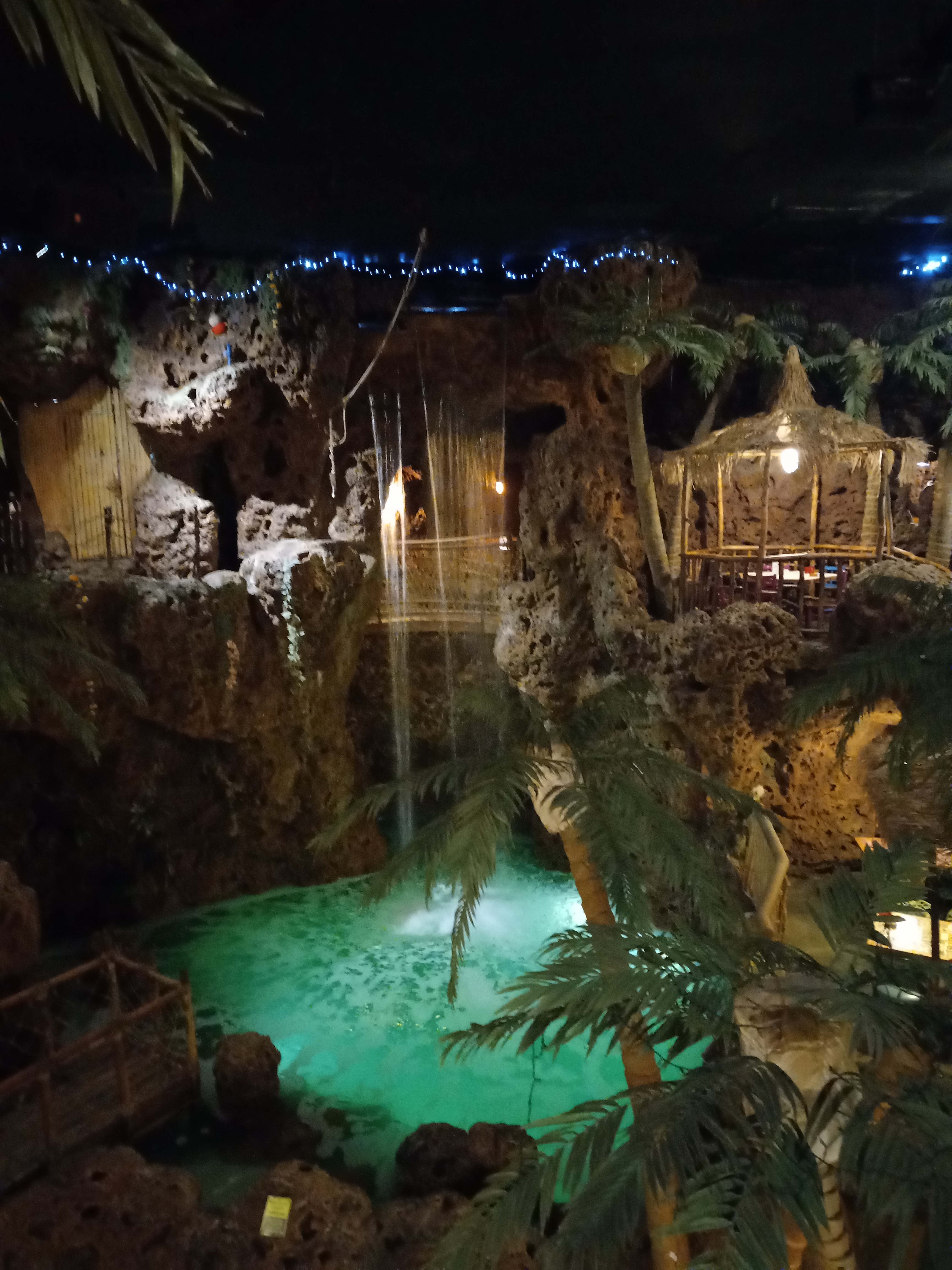
Casa Bonita had been another treasure of our childhood, right up there with Fort Cody.  Because we only saw our relatives once a year, a trip to Denver always meant an outing to Casa Bonita.  A Mexican restaurant and entertainment complex, with a bell tower that rises above the mall it operates out of, it is almost up to amusement park specifications, with an indoor waterfall, divers, variety shows, mariachi bands, a puppet theater, and video arcade.  Some of the tables and viewpoints are carved out of a rock façade.  It had been shut down for a few years now, but I stopped by just to look at it and found they were conducting daily tours.

Gwendolyn only lived a few blocks away.  I ran over to fetch her and dragged her back for the last tour of the day.  Talk about a lucky break.  What wasn’t going right on this trip?  We drove over and joined two couples who were waiting for the tour as well.  The guide was dressed in black, like a medium or witch.  It was getting close to Halloween, but she also took us to a secret banquet room where lights were said to flicker off and on by themselves.  Overall, Casa Bonita was how I remembered it, although without any customers.  The waterfall still fell thirty feet into a pool.  The air was misty and smelled like chlorine.  There were posters of bullfights on the wall.  We could’ve been in Acapulco.

One of our favorite things back in the day had been to wander through Black Bart’s Hideout.  Now as middle-aged adults, Gwendolyn and I tromped through it.  There was the snarling face of a witch, a bottomless pit to cross, a dragon mouth to enter, in which Gwendolyn posed for a picture, in addition to some kind of ice zombie, and the threat of exploding dynamite. 

When we exited, I walked over to the wishing well.  It had once been the home of a green ghost, whose face would ripple beneath a thin veil of glass and speak in an ominous tone.  Now the well had been given a makeover, all red and yellow, with nothing but coins inside.  Glancing inside it was just as unsettling.  As a kid, the scariest thing you can imagine is running into a ghost.  As an adult, what really gives you a fright is running out of money.

pages fly away 68

After our tour of Casa Bonita, Gwendolyn and I returned to her apartment, and a few minutes later Aunt Joan showed up with French-dip sandwiches.  My cousin Bill, Joan’s son, and Gwendolyn’s brother arrived shortly after.  Both Gwendolyn and Bill had spent time living with my family when they were growing up, but by that time I’d been away at school.  There were a few other cousins in Denver I didn’t have a chance to look up on the trip, the children of my Uncle Gene, who’d passed away two years after my father.  All the patriarchs were gone now.  Only the women remained.

After Joan and Bill left, Gwendolyn and I kicked back on the couch and watched Netflix.  Later, I crashed out on it, telling her I needed to leave around eight.  Instead, she came downstairs around six and I left then, hugging her as I almost ran out the door.  The idea was to drive to New Mexico and probably camp around Taos.  The 285 looked like an interesting way to get there since it went up into the Rockies, close to Breckenridge, before heading south.  The leaves were yellow, which were particularly compelling on the white aspen trees. 

Before long, I was driving through the mountains at a high elevation.  The temperature outside was in the 30s.  It started to rain, which then turned into snow.  All of a sudden, I was driving through a snowstorm.  What turns wouldn’t this trip take?  In Alamosa the road became Los Caminos Antiguos Scenic Byway.  A black locomotive sat covered in the white snow.  Only ten minutes later, the snow turned back to rain again.

On the outskirts of Taos, there was a mural of an Indian with a flaming heart, holding two plant spirits in his hand.  My wish was to visit the Taos Pueblo, but for the first time on the trip I was turned away because of COVID.  Most of the reservations in New Mexico are called pueblos.  Although I’d been to the Taos Pueblo before, I was still disappointed and the freezing cold rain that kept falling made me wonder if my trip had finally run off the rails.  Was my luck about to run out when I needed it the most?  What would all of my journeying accomplish without a strong finish?  I couldn’t even go there.

There were doing major construction downtown.  I managed to find free parking and dash over to the Kit Carson home.  Carson was a hunter, trapper, guide, and soldier, who, like Buffalo Bill, grew famous based on dime novels and the exploits attributed to him.  As an Indian fighter, his strategy was to destroy their sources of food, just as others had slaughtered the buffalo.  The adobe home that serves as his museum, was where he lived with his Hispanic wife and seven children before moving to Colorado.

Whatever I thought I was going to do in Taos, wasn’t happening in the rain, which continued to fall, cold and unrelenting.  I decided to just move on, and after multiple detours because of the construction, got on the 68 heading towards Santa Fe, by now my irritation flaring.

I’d put twelve thousand miles on the Mountain Bluebird by now, and that was causing me some concern.  It was due for an oil change, but as had been the case in Duluth, I went looking for an independent operator, afraid that if I pulled into an Avis agency, they’d snatch the car back before my trip was finished.  At a pueblo called Ohkay Owingeh, I came across a Jiffy Lube and pulled over to check with them. 

They needed an hour to change the oil and had some problems getting to the filter.  The whole time I sat in the waiting area with my laptop, tense with paranoia, waiting for the Avis police to kick the door in and haul my car away.  Whatever the fine print on the contract had been, I didn’t want to know.  If they grilled me later, I’d produce the receipts to prove I hadn’t totally neglected the engine.  Beyond that the strategy was just to play dumb.

pages fly away 69

There was some interesting street art on display when I first pulled into Santa Fe.  It was a combination of futuristic and Native American themes; a mechanical Mayan god looking out of a scrapyard, a raven-headed boy, an electric Madonna, striped, feathered warriors, a stick figure from a sand-painting holding up two discs.  I made my way to the Santa Fe Plaza in the center of town, passing the San Miguel Church, the oldest church in the States, built by the Franciscans in 1610. 

Continuing along the old Santa Fe Trail, I passed galleries and sculptures, a Native couple holding pottery, a brave in a tussle with an eagle, a frontiersman on a bench with his rifle, another warrior battling a cougar, two mountain men in a packed canoe.  It was the romantic ideal of the Old West, one filled with nothing but heroes and battles that made sense.

Even though the rain had stopped, it was still cold and windy.  It felt like I was on the verge of having my first bad day of the trip.  A few had been a little sketchy, but up until this point nearly every one had paid off in a big way.  It was just another fifty miles to Albuquerque.  Not knowing what else to do, I returned to the car and kept driving, getting on the 25 and heading south. 

Under a shelf of gray clouds, the wind was blowing so hard that a strong gust would push the car sideways.  When I got into town, I saw a sign for the Indian Pueblo Cultural Center.  That proved to be another lucky break, as it was well-worth checking out.  There seemed to be some event going on.  The security guard was talking to someone else and didn’t see me walk in.  I don’t know if that would have been an issue or not.  There were artifacts and old photos, art work that fired the imagination. 

One mural depicted two dancers with buffalo bonnets, leading a train of others who wore antlers.  This was the Herd Dance.  Another showed six men with rattles, standing behind six women in turquoise jewelry.  It was the Turtle Rain Dance.  In the Eagle Dance, two dancers with feathers over their arms soar above the dry land.  There was also a painting of two horses, introduced by the Spanish, and integral to the lives of the Natives, a source of power and pride.

It was late in the day and I had no idea where I’d sleep that night.  I went over to check out the Old Town of Albuquerque, which seemed to be something of an outdoor mall that was closing.  Gallup was the next town I wanted to hit up, but that was still two hours away.  I got back on the 40 and was heading west, when suddenly the last of the daylight faded from the sky and it grew pitch dark.  It was cold outside; almost colder than any other place I’d been.  I’d probably need to spring for a hotel, but didn’t know where, maybe at a truck stop.  Just then I saw a billboard for the Sky City Casino.  They had rooms there for less than a hundred.  I probably wasn’t going to do any better that night.

The casino is administered by the Pueblo of Acoma.  My room was at the end of a long hallway.  To get to it, I had to pass by the gaming room, mostly full of slot machines.  It was a huge room with a huge bed, the towels rolled up into coils at the headboard.  After putting my stuff away, I decided to walk up to the casino.  Walking down the yellow hallway, I passed black and white photos of the old days on the reservation. 

A woman is standing on clay steps, balancing a pot on her head.  In another, dancers in regalia are lined up at a ceremony, adorned with feathers and jewelry.  One man stands with a band around his head, sash around his waist, and necklaces around his neck, in front of a wall that is crumbling down.  When I turned the corner, there was the casino, with its flashing lights and clanging noises and sirens.  The difference between the way things were, and the way they seem to be now.

pages fly away 70

It didn’t seem possible that I was coming into the final week of my road trip, one that had been fueled by spontaneity and ecstasy, covering the vast expanse of the former American frontier, most of it now privately owned, a good portion of it cut off from everyone.  The spaces were still there, but the freedom was gone.  You didn’t have to commit a crime to be locked up for life.  All you needed was to go to a good college or buy a reliable car, and if you weren’t one of the elites, could end up an indentured servant. 

Where was the promise now?  Where was the hope?  It came in the form of casinos and lotteries, that one last wild, extravagant fantasy, that anyone, from any background, can one day strike it rich and spend the rest of their life on Easy Street.

I have nothing against gambling, casinos, or lotteries, I’ve just never been a player.  I learned the value of a dollar too well.  The entire scope of my life had been adjusted to the parameters of hundreds and single thousands of dollars.  I was still in habit of walking out of restaurants that showed double digits on their menus.  These days that would keep me out of every establishment.

When I got to the Sky City Casino I was in a haze; too much driving, too little sleep, too much manic observation, too little repose.  It had been a long hard day and my feet were still chilled from the rain.  The thing to do was to hit the shower and bed, but I wanted to walk down to the casino, to sit there and meditate if that was even possible.  If I got disrupted it wouldn’t be like yanking me down from Shangri-La.  I was already agitated.

In Wyoming I’d climbed to a mountain top to visit an ancient Medicine Wheel.  Now I walked into the casino and stood before the Hot Stuff Wicked Wheel.  A little devil toddler sat with his chin in his hands.  The grand prize was fourteen-thousand dollars.  There were two hundred and forty-three ways to win.  Lights flashed in front of my eyes.  A thousand sounds assaulted my ears; whoops, hollers, bells, sirens, clangs, bongs, computer voices, lasers, coins falling, groans of desperation, elevator music. 

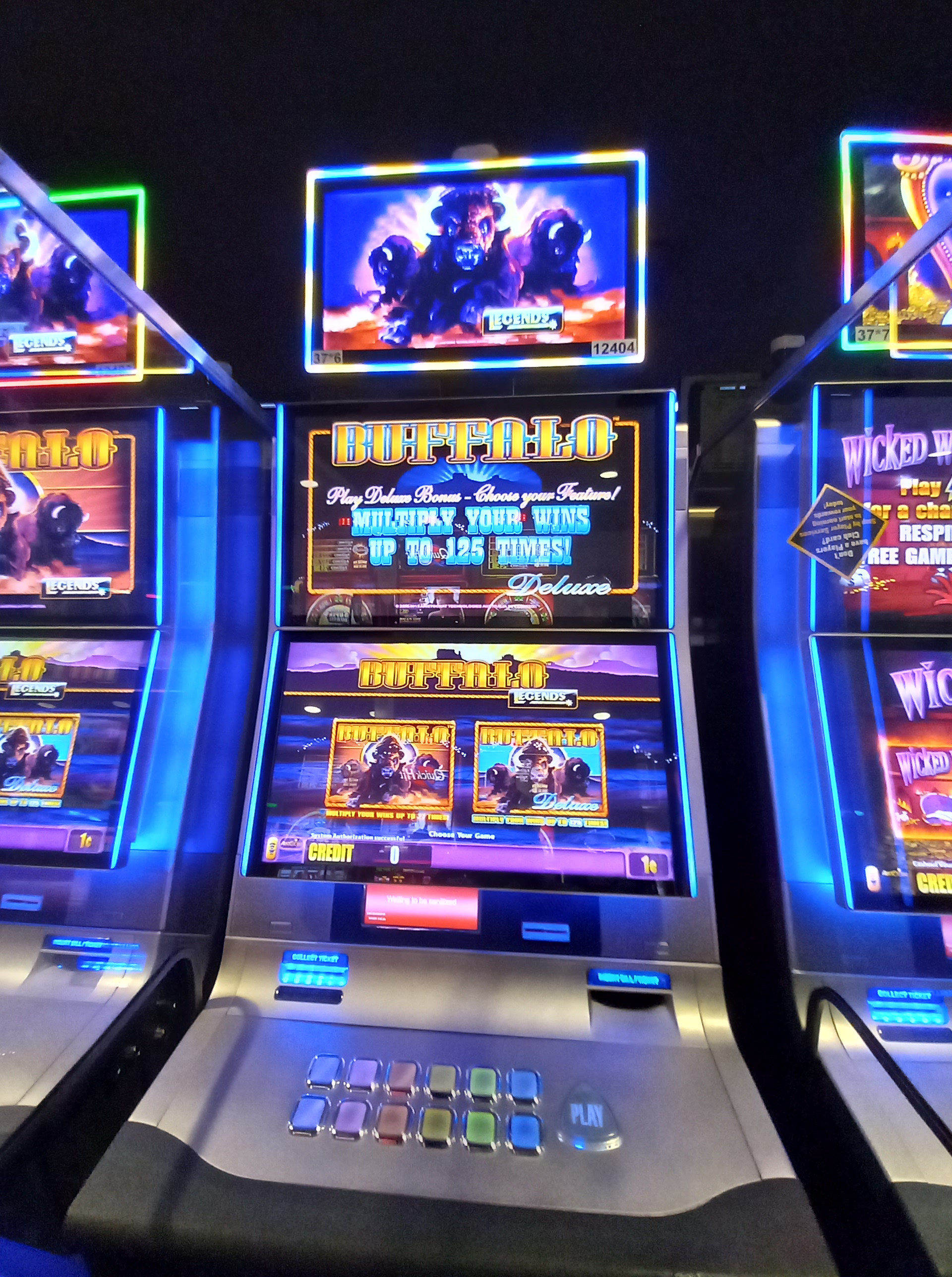
I walked over to the Rawhide Quick Strike.  This was the New Wild West.  The three wheels on the slot machine depicted cowboys, covered wagons, and bags of gold.  There was the Buffalo Slot.  Three charging buffaloes raising up a cloud of dust.  Multiply your wins up to twenty-five times.  Multiply your wins up to a hundred and twenty-five times.  I went and sat down at a slot machine that had just been sanitized.  The man to the left of me was trying his luck at the Celestial Temple.  Come on, Zeus! 

A pop song came on the radio.  How can any woman be too beautiful?  The carpet was a pixelated haze.  It was a very small crowd for such a big noise, just a handful of senior citizens and a few tribal members.  Ding-dong.  Ding-dong.  I put three dollars in the penny slot and lost it all in a few minutes.  Wolf – Ace – Elk.  What did you need to win?  I got up and started walking again, almost stumbling, in a trance.  Flamenco Forever.  Shadow Diamond.  Golden Tower.  Spartacus.  The room was full of every distraction in the world.  Even a holy man could wind up wrecked. 

Somehow, I made it back to the hall and headed back towards my room.  Now I was hungry and there were vending machines, but I’d used all my singles dollars in the slot machine.  That was messed up knowing that I’d gambled away my food money.  For someone who didn’t gamble, I’d sure caved fast.

That night I didn’t sleep well.  The bed was comfortable, but my mind was bumpy.  At four-thirty I got up and made a pot of coffee.  Then I got in shower and stood in the hot water until it ran out.  The night before had been the first winter storm of the year.  It was in the 30s all over the region.  It was still dark out when I left and went out to the car.  There was so much frost on the windows I had to had to warm up the car to melt it before I could drive.

pages fly away 71

The place I was heading to that day was the Navajo Nation, with a few stops along the way.  I’d been through it a few times before, always making it a point to visit Monument Valley.  The Navajo Nation is the largest reservation in the States, exceeding the land area of ten of the states.  The people who inhabit it call themselves the Dine, or the People.  Their way of living is described as walking in beauty. 

I took a scenic drive to get there, taking the 40 east, but then veering south on the 53, passing the Bandera Volcano and Ice Cave, the El Morro National Monument, and then briefly stopping to visit the Zuni Pueblo, once part of the Seven Cities of Cibola, sought by the Spanish explorer Vasquez de Coronado.  There was a visitor center I went into with maps and black and white photos, and also a few gift shops I stopped outside of.  Most places weren’t open yet, but the art outside was fantastic, butterfly dancers, corn maidens, kachina dolls, ads for turquoise and silver jewelry.

From the Zuni Pueblo I got on the 602 and was heading towards Gallup, when I passed a trading post with a series of life-sized Kachina doll cutouts out front.  That made me nearly whoop with excitement.  Kachina dolls are based on spirits that live on sacred mountains in the Southwest.  When dancers wear the masks of the kachina they come to embody the same spirit.  They are wildly colorful and intricately carved. 

There are over 250 kachinas.  A few examples are the Broadface, the Buffalo Warrior, the Hoop Dancer, the Morning Singer, the Mudman, and the Owl.  They are the superhero action-figures of the Native belief system.  Just seeing them beside the road gave my mood a giant boost. After stopping to take pictures, I looked down at the speedometer and saw I was flying down the road.

Gallup, New Mexico, is known as the Indian Capital of the World, and was formed as a base for the Union and Pacific Railroads.  The Famous Highway 66 runs through it as well.  I drove into it with zero expectations, but came aways suitably impressed by all the artwork, galleries, and trading posts I passed.  Jewelry, blankets, and pottery were for sale. 

A mural in town showed dancers beneath a rainbow and settlers with their wagons.  Another showed Native families, the men in yellow shirt and red bandanas, with their horses, cows, sheep, and goats.  In one window was a stuffed mountain lion and huge rack of antlers.  In a second, were kachina dolls of every color and stripe.

It was just twenty-five miles from there to reach the Navajo Nation.  The first thing I happened across was the Navajo Nation Zoo, which features animals indigenous to the region and gives their Indian names and designations.  The bobcat was known as the hunter.  Mule deer were called the respected ones. The Mexican gray wolf is the endangered one.  The cougar is the silent one.  Golden eagles were called our great protectors.  The elk was the powerful one.  The owl was the messenger. 

Porcupines were the unique ones.  The red fox was the distinguished one.  The gray fox was the grizzled one.  Wild turkeys were the colorful ones.  The red-tailed hawk was the efficient one.  The racoon was the masked, curious one.  All of the names meant something and were spot-on, the same as the names they gave their people.  What do our names mean?  How many Johns and Steves do you need?

In an adjacent museum I read the story of the Navajo Hero Twins, Born of Water and Monster Slayer, sons of Changing Woman, who set out to rid the world of monsters that were endangering the lives of their people.  Then I headed towards Window Rock and Fort Defiance.

The name behind Window Rock was clear once I arrived.  Beneath a window in the rock stood many government agencies.  Nearby Fort Defiance was established in 1851 on land that was important for grazing to the Navajo.  This led to numerous attacks and raids.  The response was an assault on the livestock and food sources of the Navajo, who were then marched 450 miles to Fort Sumner.  At least twice Fort Defiance was abandoned and burned.  The Navajo Treaty of 1868 returned a portion of the land to the people.  

When I got there it seemed to be mostly houses and horse trailers.  It didn’t strike me as a good place to just get out and go for a walk, so I wheeled the car around and headed toward the Hopi Nation.  The road was black and the dust was red.