Category Archives: Travels

pages fly away 86

It was sixty miles to the south entrance of Joshua Tree.  My sister and I had discovered it by happy accident on a camping trip nearly thirty years earlier.  Through the years it had always been a special place to visit.  The Joshua Tree, a variety of yucca, look like a prophet with his arms raised.  Throw in a number of giant expressive boulders and you have the makings for an otherworldly destination. 

The plan was to drive through the park, and then take a run up to Pioneertown.  At that point the trip would be over, all except the crying, and the explaining.  In six weeks, I’d run up sixteen-thousand miles on the Mountain Bluebird.  How would Avis respond to that?  I could hardly wait to see.

Most of Joshua Tree was just more desert driving, looking through a bug-splattered window.  It wasn’t until I got to Jumbo Rocks that things got a little interesting.  This was the secret spot that my sister and I had discovered, perched on a rock with guitars beneath a full moon, listening to the wailing of the coyotes.  One of the rocks, Skull Rock, does resemble an oblong skull.  You can kind of see it.  The traffic got bunched up here, people stopping for pictures.  Jumbo Rocks has never been much of a secret.  Now it was even less of one.

I’d had some interesting experiences at Joshua Tree.  Once I spooked a herd of Big-horn sheep that rose up on high-heels and went clattering off.  Then there was the bobcat crossing the road one early morning.  Also, how could I forget my second seizure, one of three.  Let’s not get into why it happened.  Just trust me that it did.  I went into town to get some firewood and was standing there looking at a psychedelic poster for an upcoming concert. 

The next thing I knew, I woke up strapped flat to a board in the back of an ambulance.  When I realized where I was and remembered I’d recently quit my job and didn’t have insurance, I begged them to let me go.  They wouldn’t.  As soon as they got me to the hospital, I jumped up and tried to escape.  The doctor argued with me, but then let me go. 

The hospital was far from town.  I was just wearing a Led Zeppelin T-shirt and cut-off shorts.  I stood out in the cold, dark night and spied on the hospital from a distance.  A shuttle bus came up and I ran over and jumped on it.  Unfortunately, it took me to Twenty-Nine Palms instead of back to Joshua Tree.  I needed the last fifty dollars in my wallet to take a taxi back to my truck. 

Since that time, I never felt exactly the same about Joshua Tree, especially after getting a five-thousand-dollar bill for the ambulance.  Someone had made sure to go through my billfold and get my contact information while I was still unconscious.

Now I felt OK about things, not good, not bad.  I drove past the Joshua Tree Saloon and the Inn where Gram Parsons died of an overdose.  Not only had he made better music, he also had a better ambulance story, although not one he’d be telling anytime soon.  I took the 62 to Sage Avenue, then took a left on Sunnyslope Drive. 

Pioneertown is a movie set that was dreamed up in the 1940s by a team the included Roy Rogers, the Sons of the Pioneers, and Gene Autry.  It was designed to be a place for both work and play and over the years over two hundred productions were filmed there.  The on-site cantina later became the biker bar and live music venue, Pappy and Harriet’s, a true institute of California honky-tonk.  Out back is the famous sign.  Hippies Use the Side Door.

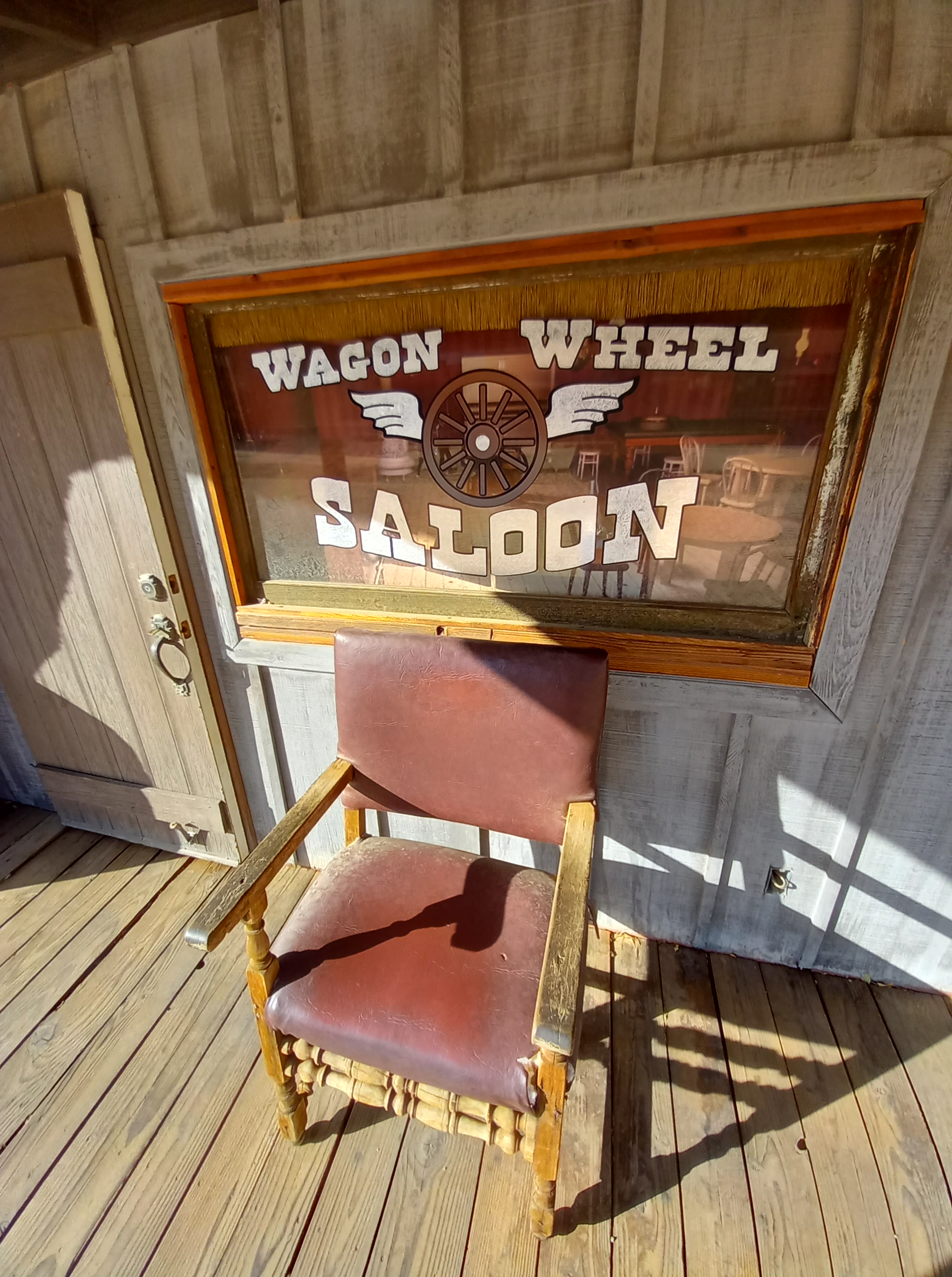
I parked the car and had the whole of Pioneertown to myself, if you didn’t include my shadow which staggered behind, some twenty feet long.  There was the Film Museum, the Pioneertown Bank, the Wagon Wheel Saloon, now an actual wagon, and an actual l wheel.  If I’d been a gunfighter my only opponent would’ve been my mind, which had already started future-tripping, now that the trip was almost up. 

There were other things I should’ve spent the unemployment money on, like finding a job, a car, someplace permanent to live.  What would happen next?  Where would I go?  Bang.  Bang.  Bang.  I needed to shoot those thoughts dead.  One thing at a time.  It was still a hundred and twenty miles to Los Angeles.  A lot could happen between now and then.

When I got back in the car, it was the first drive I hadn’t been looking forward to in the past six weeks.  Up until now, all I’d wanted was to drive, drive, drive.  Suddenly, I wasn’t in such a hurry.  When I got to the giant turbine windmills that line the hills outside of Palm Desert, I wished that they could blow me back, back a week, two weeks, a month, with freedom still ahead of me, but the only choice I had was to go forward.  The sun sat like a great white eye in the center of the road, and the clouds kept blowing past it like an endless succession of days.

pages fly away 87

Strange after traveling so far and wide to visit reservations and tribes across the land, that I’d visited none in California, which has the highest population of Native Americans of all of the States, nearly 800,000.  My reasoning was that I could make a smaller trip of it at a later time, even if I was back to work and could only head out on weekends.  I did happen to pass the Morongo Casino as I was driving west on the 10, but by now the exploration was over. 

I took the 10 all the way to Los Angeles, passing Redlands, San Bernardino, and Riverside.  It was twilight as I reached the outskirts of downtown and I got caught up in the stop and start traffic.  I knew the city well, yet didn’t know it at all.  It had been more of a death star than a home, one of life’s cruel jokes, to have my only base in the world be such an impossible to navigate logjam.  The sun was setting just to the left of the skyscrapers, the sky beside it orange and capped with clouds.

Desperate for one last rush of adrenalin, I pulled off on Alameda, thinking I might drive through the Art District where I’d briefly lived and recorded some music.  Somehow, I got lost, even though I’d driven through that neighborhood a thousand times.  There was no sense of homecoming, only isolation and dread.  Los Angeles is not a community as much as a coalition of warring parties.  I’d had no desire to compete and conquer.  The stress of living in the rat race had seen me fall through the cracks fourteen years earlier, and I’d been largely untethered since.

I took the 10 to the 110, then the 405 to Seal Beach Boulevard.  It was dark by now, after sitting in bumper-to-bumper traffic for most of the last hour.  When I got to Huntington Beach, I parked in back of my mother’s cottage and used the back gate to unload the car, tossing everything in one unorganized pile on the auxiliary bed in the popup camper.  The Mountain Bluebird was intact, but looked shaken and was trembling a little.  I’d get up and return it the next morning.  The number of miles I’d put on it weighed heavy on my mind.

That night it was cold.  I’d been camping for a year and a half by now, ever since the pandemic had brought me back from Vietnam and my brother had gotten the camper from a neighbor.  It was my space, but hardly private.  Everyone in the surrounding houses could look into the yard and see what I was up to.  The cloth walls neither kept out the cold nor the noises from the neighborhood.  That night I just lay there and worried.  It made no sense, but I couldn’t avoid it, not until the Mountain Bluebird was back at the agency and everything had been settled.

That morning I sat up cross-legged on the bed and attempted to suppress my nervous energy by focusing on the moment.  Sparrows were chirping in the hedge.  At the end of the block came the whine of a power drill.  There was the cawing of a crow and the barking of a dog.  Someone across the alley was always locking a dog in their garage and it would bark all day.  That was beyond maddening.  A garage door went up and then came back down again.  I could hear the crunching of gravel beneath the tires of a car that was slowly passing. 

The past was gone everywhere I went.  The places where my family had settled had changed.  No one was left from the old days.  The country was not what it had been.  Outside of the nature, the most colorful part of my trip had been history, the remembrance of old ways.  What was left was largely a machine, a cold monster. 

Southern California was as difficult as it gets, yet this is where my family had moved and where my mother and siblings lived now.  It was the closest thing to a home that I had available.  This was the moment I’d been brought back to once again.  Maybe it was time to accept it and look for the good in it.

From downtown came the ringing of a church bell.  A plane passed overhead.  It was Tuesday, street sweeping day.  From two blocks away I could hear the street sweeper getting closer and closer.  Then it was upon me.  The roar of it filled my ears.

pages fly away 88

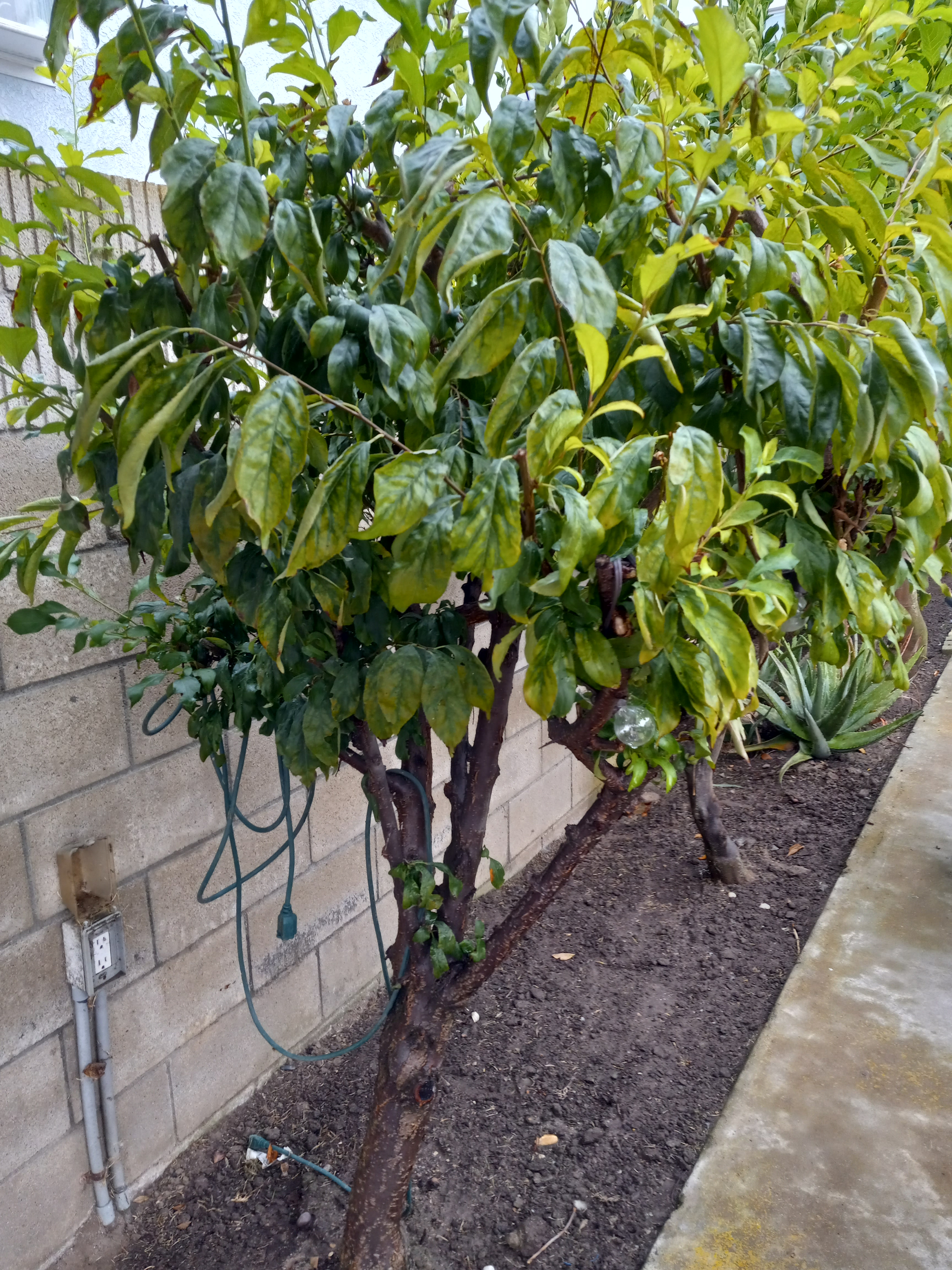
In Black Elk’s vision as a boy, he’d been given a red stick by the Fourth Grandfather that he plants at the center of the nation, right where the good red road, meets the black one of difficulty.  When he does so it blooms, and all living things are happy.  Stepping out of the camper that morning, on my way to return the Mountain Bluebird, I saw that the plum tree we’d planted over my father’s ashes six years ago was full of leaves. 

That was a nice change.  For two years it had stood there, just a dead stick, never any change at all, until the third year some tiny leaves unfurled from it.  By now it had blossomed a few times over, but in all that time had only produced two plums maximum, both in the same year.  We’d taken that as a sign, however, that miracles and healing can happen over time.

I don’t know why I didn’t take the Mountain Bluebird to be washed before returning it.  My feeling was that I was going to get called out on something more substantial on whether the car was dirty or not.  Sixteen thousand miles is a lot to drive in six weeks.  I can tell you how many hours you need to drive a day to match that.  Mendez didn’t seem to be paying attention when I brought the keys and paperwork into the office, however.  I asked about the incident in Mississippi, where they’d tried to get me to bring the car in.  He said the lease had been in two parts, one for a month, the other for two weeks.  There was no issue,

He went out to check the car, but didn’t say anything when he came back in.  I thought that was it, but as I turned to go, he shouted out.  Hey!  I wheeled around in alarm.  What he said was that the car was really dirty and that they’d charge me five hundred dollars to clean it.  There was a car wash right across the street.  I could avoid the charge if I had them wash it myself.  That was no problem, even though it drew out the suspense.  I drove over and told them to give me the platinum service, to make sure they waxed it and even did the tires. 

When I returned, Mendez was busy with another customer.  He stepped to the door and acknowledged the shine coming off the car with a satisfied nod of the head.  What a brave, plucky little friend it had been.  I owed everything to it.

Once home, I started dispersing the pile of things on the bed.  The real challenge would be getting the tent back into the bag it came in, the one I hadn’t used once the entire trip.  If I could do that, I could do anything. 

That night I had a dream, one that would come off as contrived if it didn’t happen to be true.  I am driving the Mountain Bluebird, racing down the road.  I pass beneath a red arch.  The road began to go through hills, that same roller coaster ride, and on one bump I get bounced out.  The car continues down the road without me.  I start walking down the road in the direction it has gone.  I see a black raincoat and pick it up.  Then I see a blue jeep, but it is not the Mountain Bluebird.  It has traveled for miles now, and I know that I will never catch it, but if it happened once, it could happen again.  Given six more weeks, I believe we could do the whole of South America.  They’ve got a lot of Indians down there.  At least that’s what I’ve been told.

art is a war 1

It shouldn’t have to be a war not to kill yourself, but sometimes it is.  The disgrace had been a long time coming and by now there was no way of getting out from under it.  It felt like I’d been chased down a dead-end alley and could only run from side to side.  Still, I dusted off the credit card and bought a one-way bus ticket to Miami.  From there, it would have to be Colombia, or anywhere cheap enough to rent a room and begin the desperate search for funding once again.  It certainly wasn’t going to come from art, but that’s where it all would go to if I could manage to find it.  For me, by now, there was no other way to live.

As a young man I made my intention clear – to travel the world and write songs for the rest of my life.  This only served to amuse my friends, back when I had such a thing, and depress my parents.  All I had to do was mention a new song I’d just completed to see the light go out in everyone’s eyes.  Was I that bad?  I didn’t think so.  I listen back to the old recordings now, and concede it’s hard to hear much promise in them, but isn’t persistence the key to life?  How many of us come out of the womb fully-formed? 

It became clear early on that no one was going to share my enthusiasm for music making, and that was fine.  Over the years there would be no greater incentive for carrying on then that very same lack of support.  All of my drive was born out of defiance.  A greater, and chronic, problem, however, would be the lack of funds, not only to create, but to live.  Endowed with a decent work ethic, but no marketable skills, I took whatever job I needed to do to get by at the time.  As soon I’d saved enough to buy even the smallest freedom, I’d be off again.

How does one travel without much money?  At first, my idea had been to live out of the back of a pickup truck and roll from town to town like a gypsy.  What I immediately discovered, was that there was almost nowhere you could park for free.  If you weren’t in a designated pay zone, the police might pull up at any time, knocking at the window and asking to see identification.  You had to operate with the stealth of a thief, looking for cul-de-sacs or parking lots with other cars where you could try to blend in.  If forced to pay for a camp site, there were places where it was almost as expensive as a hotel.  Then there was the issue of gas and the endless string of repairs that inevitably came with navigating an unreliable relic across a vast expanse of land.

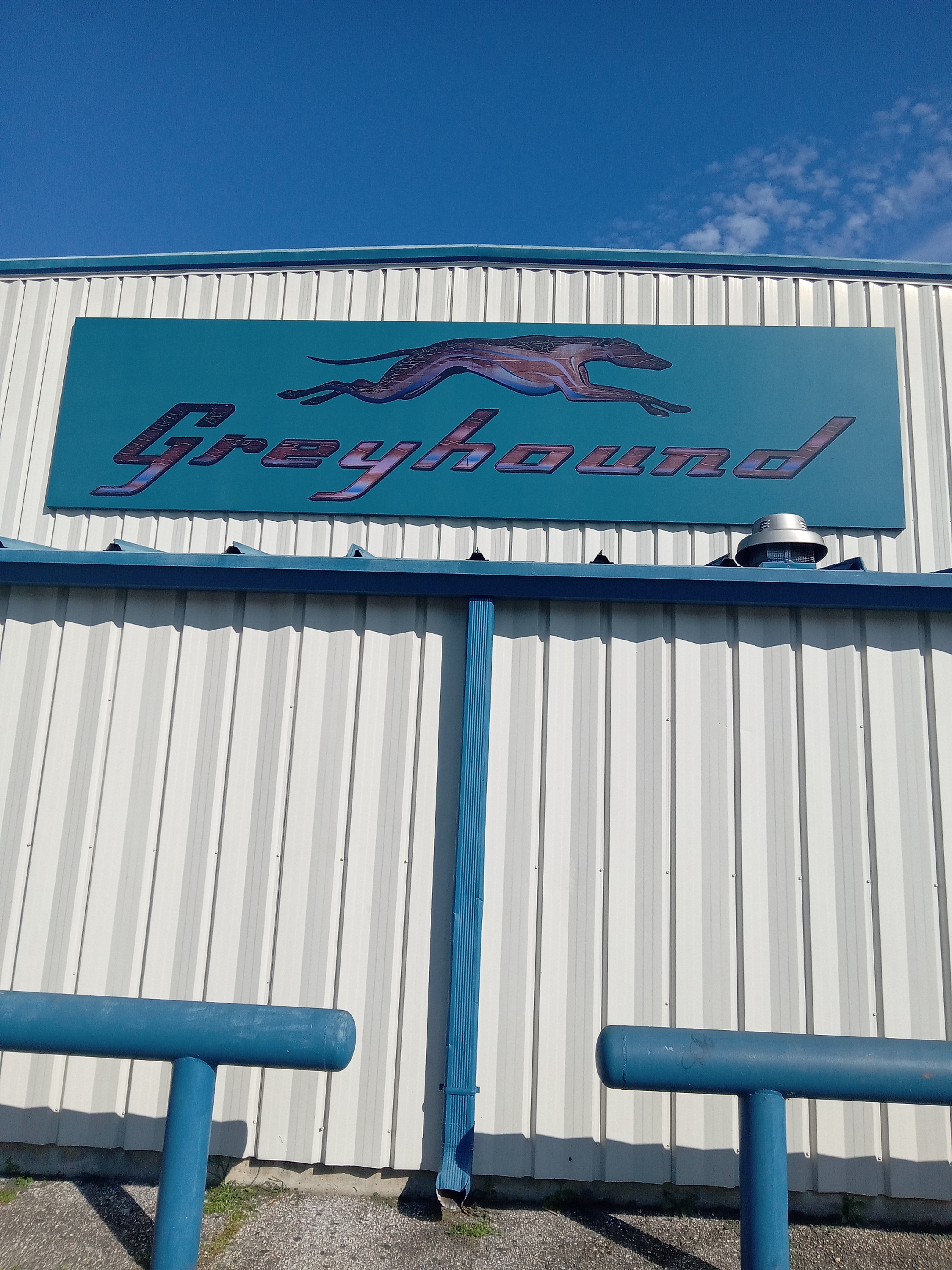
It was misfortune that led me to discover Greyhound.  I’d had a climbing accident at Yosemite and needed to travel to Eugene, Oregon, the place of my last employment, to have surgery done on my foot.  No one was available to drive me there, so I took the bus from Southern California to Oregon, my destroyed foot just wrapped in a thin layer of gauze.  Through that trip I discovered it was possible to buy a bus pass, for a week, two weeks, a month, however long you wanted, and ride any bus you wanted from city to city during that time.  There were a few years where I saw much of the United States that way, sleeping on a bus at night, then jumping out to explore a new city during the day.

After recovering from my surgery, I’d bought my first Greyhound pass and used it to travel to Denver, Georgia, and New Orleans, where a friend of mine was waiting with an apartment we’d agreed to share.  I’d never really been to the South and had no idea what to expect in New Orleans.  I remember getting off the bus and going in search of the Saint Charles Streetcar, only to get caught in a tropical squall and drenched to the bone, with just my suitcase, guitar, and cane.  Now here I was, over thirty years later, back at the Union Passenger Terminal, in many ways worse off than I’d been back in the day, waiting for a bus to Miami, with a one-way ticket in my hand.   

art is a war 2

The challenge was no longer to prove that I could do something.  It was to prove that I had done something.  Songs no longer flowed out of me like they had for many years.  Poems didn’t just leap out of my mouth like they once had.  In all that time, I’d acquired quite a few of them, however, and had spent the last winter in Guatemala, sorting through over thirty years of travels and writings.  The idea was to put together two galleries, one of song lyrics and one of poems, accompanied by images from some of the places I’d been to.  I figured if I could get somewhere cheap, probably Colombia, I could spend a few months working on that project while looking for the next gig.  If I could find something by Christmas, that might be OK.  If not, it was really going to be bad.

The first step was to make it to Miami.  What was complicating that was the hurricane that had recently destroyed half the state of Florida.  I’d just been traveling around the States on a USA Rail Pass, and the original idea had been to travel to Miami by train, but two times my trip had been cancelled because of the storm.  

Now I was traveling there on the Greyhound, but up until the last second still could’ve changed my mind and taken a train to Los Angeles, as my last ride on the Rail Pass, the Sunset Limited, which I’d even tried to cancel but couldn’t, was running five hours late and now leaving the same station at the exact same time as the bus.  Although it had already been decided, it was still strange to be there between the two lines forming, faced with two completely different futures, based on my next move.  Do you go right, or do you go left?  Things are rarely as cut and dry as that.

The last time I’d been on Greyhound had been 2019, traveling all the way from Laredo, Texas, to Portland, Maine.  What I remember most about that trip was the janitor who’d screamed at me in Dallas for standing in his way and the seatmate who’d begun detoxing on my shoulder as soon as we left the station.  By the time we got to Maine my feet were nearly too swollen to stand, and it was only then that I discovered that the ferry I’d planned on taking to Halifax had been suspended and that no buses went that far.  Even though this was a shorter trip, it still wasn’t simple as I needed to travel all the way to Atlanta and then transfer from there.

Before we even left New Orleans, the driver was already angry and yelling.  He wanted us to get into two lines, those who had already been on the bus, and those who were just boarding.  Half of the riders were immigrants, and he went around screaming the same three or four words of Spanish that not one of them could understand.  One of them needed help with his ticket and instead got the worst berating of his life, causing him to get back on the bus and ride to Mobile, when he had, in fact, already arrived at his destination.  Before we left, there was a kid with an afro who was barely allowed on the bus.

In my days riding the bus I’d encountered my fair share of grouchy drivers, but after you see some of the people who ride the bus you begin to understand why.  On this particular trip there was one man talking loudly on his phone.  At one point he cussed and the driver wasn’t having it, threatening to pull over and drop him off at the next stop we came to.  After that, I began to develop an appreciation for the man. There is no country I’ve been to where people act as loudly and badly on a bus as they will on a Greyhound if they’re allowed to get away with it.  That didn’t stop me from feeling bad for the immigrant who came up to me in Mobile with his ticket, wondering if we’d reached New Orleans yet. 

When we were getting back on the bus, I asked the kid with the afro what he thought about the trip so far.  How did he like getting yelled at all the way to Atlanta?  He told me he’d been torn between taking the bus and flying to Columbus.  Now he was second-guessing himself a little, but not sorry to be having an adventure.   If an adventure is something that you hate to go through, but later look back on with some fondness and pride, then he might’ve been having one.

Seeing that I would be in Miami in less than twenty-four hours, it was probably a good idea to start looking into a room.  Fortunately, I found a hostel right on Miami Beach where I could rent a bunk for forty dollars a night.  I also looked into flights to Colombia.  There were some good deals to Medellin, which intrigued me since I’d never been there before.

The bus stopped at a gas station about halfway to Montgomery.  The bus driver made an announcement, and what I think he was trying to say in Spanish was comida, or food, but most people just sat there puzzled.  Then, one by one, people began to get out to investigate.  The special was either fried chicken or fried catfish.  I ordered the chicken, which came with three potato wedges and a biscuit, that between them contained not one drop of moisture. 

There were some immigrants behind me who were having problems with their bill, as one of them had been charged for all of their meals and they wanted to pay separately.  I helped them settle it the best I could, and when I got back on the bus noticed that one of them, a woman with two kids, was sitting right behind me.  For the next hour and a half, the kids screamed at the top of their lungs and the woman coughed loudly, while I sat amidst the carnage of my chicken dinner, covered with grease from head to toe.

In Montgomery, I made it a point to switch my seat, grabbing one across from the toilet that was empty.  A few minutes later I was approached by a large young woman who asked if the seat next to me was taken.  She was apologetic and conscientious about how much of the space she was taking, even going so far as to sit with her legs in the aisle.  I told her not to worry about it.  I’d only paid for one seat.  She was leaving her boyfriend and going back home.  One day he’d just up and disappeared, but she knew he was staying at his dad’s.  She then surprised me by asking if I was cold, alluding to the amount of heat we could be generating.  I almost told her to scoot on over.

It was almost eleven by the time we pulled into Atlanta.  The woman was going in a different direction.  So was my friend with the afro.  I saw him lining up right away for a bus that was heading to Nashville in a few minutes.  I asked him how his adventure was going.  He said it wasn’t too bad so far.

art is a war 3

There were some immigrants on the bus I’d done a little translation for.  They now wanted to know the value of American coins.  One of them had a whole pile of change on a table, and I waited until they’d counted it out and converted it into pesos before taking my leave.  When we boarded the bus to Miami, the one with all the change was sitting beside me, like a little bull, with both his elbows thrust out at his sides.  It was going to be a long night.

The new driver was a woman who immediately got lost.  I think that’s the first time that’s ever happened on one of my trips.  It took a couple of awkward U-turns at dodgy intersections to get back on the right highway.  Then sometime around morning it happened again.  She actually got on the intercom and asked if anyone knew where the pickup point for Osceola was.  We were driving down a country road with Spanish moss hanging from the trees.  This time someone had to get out and direct her backing up so she didn’t plow over a mailbox or run us off the narrow road.  The pickup point ended up being a gas station. 

The only ones who got on in Osceola were three women convicts in white T-shirts.  A few minutes later the driver got back on the intercom and warned whoever was smoking the weed that she would not hesitate to pull over and call 9-1-1 if it happened again.  She might’ve been tripping.  I didn’t smell anything.  The woman behind me, who hadn’t been accused, was adamant that it hadn’t been any of them.  She appeared to be the brains of the operation and did the talking for all three. 

The land was flat and swampy on both sides of the road.  When we got to Orlando there was an hour layover.  I was sorry to see that the tough-talking prison gal was getting off there.  I went over to the café and got a breakfast sandwich from the cooler.  When I went to pay, however, it took nearly half the break as the guy at the cash register, who made the bus driver from New Orleans look like a linguistic genius, tried to explain to one of the immigrants in Spanish why he couldn’t break a twenty.  Either he had a nervous tic, or was in the middle of a seizure.  Later, when I lost a dollar in the vending machine, I just let it go, as he’d just been asked to cook a hamburger and that appeared to be the final straw.

For the past three weeks I’d been fixated on making it to Miami, but the closer we got to it the more I realized that Miami wasn’t going to solve anything.  In fact, as we approached Fort Lauderdale, it was suddenly getting overcast and soon it began to pour rain.  When my train had been cancelled a few weeks earlier, due to Hurricane Ian, my thought at the time had been that I’d ride the train straight into the storm if I could.  Now, with just a little rain and hardly any wind, it felt like everything had been ruined.  Like Jonah, who’d survived three days in the belly of a whale, only to have God send a worm to kill the shade tree he was living under, I wanted to rend my garment and disown my life.  That would’ve been a hasty reaction, however, as by the time we were pulling into the Miami Airport, which was now the stop for Greyhound, the rain had slowed to a drizzle, and by the time I found a bus to Miami Beach it had nearly stopped.

There were only a few people on the city bus I’d gotten on at the airport.  They all appeared to be Latinos.  After crossing the MacArthur Causeway, a homeless couple got on, only to realize after a block they were going the wrong way.  When they got off, I got off to, as it looked like I should be able to walk to my hostel from there.  By now it wasn’t raining at all.  In fact, the sun was out and it was hot.  Here I was, a moment ago at the end of my rope, now walking down a sunny street in Miami Beach.  Bad moods are like storms.  Sometimes you just need to get to the other side.