Category Archives: Travels

art is a war 4

There were two young guys in Hawaiian shirts at the desk when I checked into the hostel.  I almost had to check the address again to make sure I was at the right place.  It seemed too nice for a hostel.  There was an adjoining restaurant and heated pool in the back.  When I went up to the room, the bottom bunk I’d been assigned was one of those little cubicles with a curtain and a light and fan inside.

There was already someone in the room, a guy with a shaved head perched in the adjacent top bunk, looking like he wasn’t going anywhere for a while.  We got to talking and I discovered that he was a refugee from the war in the Ukraine.  His occupation in his country was a sommelier, or wine specialist, but he’d just come from working on a fish processor in Alaska and was hoping to get his foot in the door at any restaurant he could. 

After relentlessly riding trains all over America for the past two weeks; from the West Coast to the Midwest, to the Northwest, back through the Great Plains, to the Northeast, down to the Deep South, it came as a great shock to be at the beach in Miami.  It felt like I was in another country.  I walked out of the hostel and crossed Collins Avenue, passing 5-star resorts to get to the ocean.  The sky had gone back to being overcast, but rain didn’t appear eminent.  Small greenish-gray waves washed up on the cultivated sand.

There was a walking trail that I started following south.  The humidity was already causing my shorts to stick to my legs.  Not many people were out yet.  A few bicyclists passed by.  Just following the lifeguard towers, which corresponded to the cross streets, in descending order, I eventually came to South Beach and made my way over to Ocean Drive.  The atmosphere was festive.   People were sitting on patios enjoying cocktails.  The colors were tropical: pink, yellow, orange, aqua, green.  The mannequins in the gift shops flashed the same neon themes on bikinis, tank tops, baseball and straw hats, and headbands.  Outside of one bar a band of drag queens were getting warmed up for that night’s performance.

After passing the Art Deco Welcome Center in Lummus Park, I happened across two women dressed as Caribbean Carnival Queens, getting ready for a photo shoot.  Some guy was harassing them and they shouted him down the street.  I asked if I could take a picture, and after surmising the situation and concluding that I was harmless, just some passing old grandad, they nodded in assent.  That was as close as I was to get to the glamor of the world-famous South Beach.

When I got back to the hostel, I realized that I better move fast if I was going to go anywhere anytime soon.  I did a search on my phone and found a cheap roundtrip flight to Medellin leaving in two days, so just went ahead and booked it.  It was doubtful I’d use the return, but would probably need evidence of onward travel once I got to the airport.

Someone had locked themselves in the bathroom up in my room, so I grabbed a swimsuit from my suitcase and went down to check out the pool.  The colors changed every few minutes, from violet, to green, to blue.  Dipping a toe into it, I discovered that the water was warmer than the air.  One couple, in each other’s arms in the middle of pool, seemed like they were just getting to know each other.  She was doing most of the talking, at one point trying to add up how many times she’d been to rehab.  

Back in my room, I saw that the wine steward from the Ukraine had been joined by another roommate in the other top bunk, who peered down at me, like an emu, with a sharp face and black downy hair, and went back to what he was saying.  They seemed to be having a great time together practicing their English and laughing out loud.  Later, the guy from Ukraine asked me if I understood Portuguese, indicating that he didn’t understand one thing that the other guy was trying to say.  I listened to him rattle on for a moment, and shook my head.  I had no idea either.  It wasn’t English, but didn’t seem to be Portuguese.  It was like he was making up a new language as he went along.
art is a war 5

In the morning, the strange bird in the bunk above me spent an hour listening to unintelligible clips on his phone, before getting up and locking himself in the bathroom.  I used the respite to fill out the online immigration form that the airline had sent me for my upcoming trip to Colombia.  One section required me to list where I’d be staying, so hardly thinking, I went ahead and booked a week at a hostel in Medellin.  Because of the prices of hotels in America, you might be excused for staying at a hostel from time to time, but you know you’ve hit hard times when you book yourself a dorm room in Colombia.  Since it would all be going on a credit card from here on out, even six dollars a night could be considered exorbitant.

After getting out of the shower, my flightless bird of a roommate, perched at the windowsill right beside my bed for a breakfast of breadsticks and bottled coffee.  It was time to get up and face the day anyway.  I’d decided to check out downtown Miami, and had gotten the bus information from one of the guys in the Hawaiian shirts at the front desk.  All I had to do was cross the street and wait.  The S bus would be along shortly.

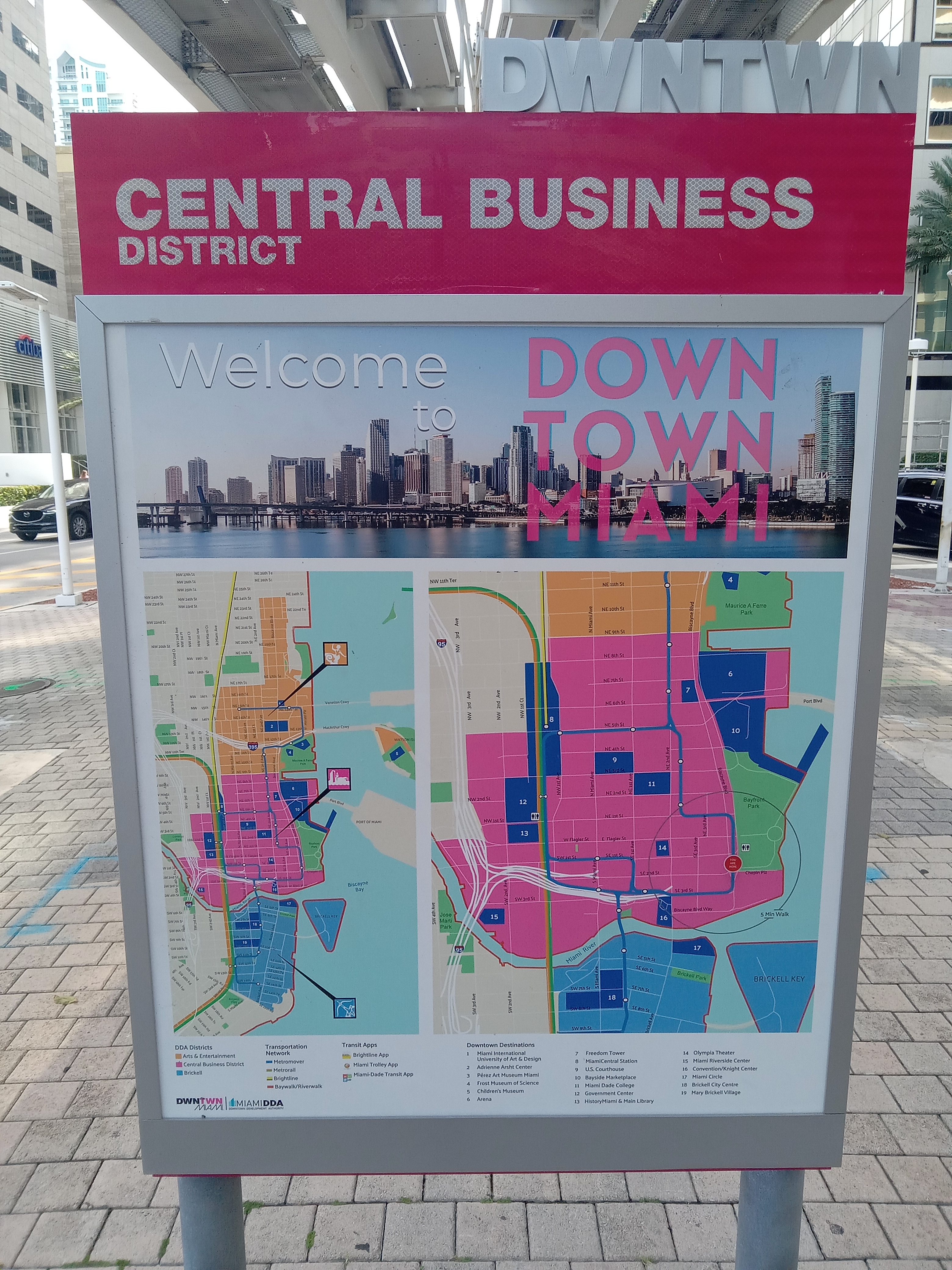
There were plenty of seats on the bus, but a corrugated mesh over the windows got in the way of any view as we crossed the Causeway and passed Bayfront Park.  The last stop was at a smaller park that was also the hub for the Metrorail.  Here homeless people sprawled out around a fountain and a sculpture that appeared to represent slices of fruit.  If the city seemed largely deserted, it was because, I found out later, it was Columbus Day.  At the time, the effect of so many wide streets and large constructions, with nobody out and about, was anxiety-inducing and slightly hallucinatory, like a return of the pandemic.

At one point I went into a 7-Eleven to get a drink and out of all the many, many choices at the soda fountain, only the Doctor Pepper was working.  Everything else came out as a clear stream.  I wasn’t sure if this was actually happening, or if it was just me, until a construction worker came in and lodged the same complaint with the guy behind the register.  Of all the drinks in the universe, it turned out Doctor Pepper was the only one he didn’t like.

Passing some government buildings, I found myself drawn to Bayside Park by the big Ferris wheel I could see at the end of the street.  Here there were a few tourists, dining at the restaurants in the marketplace and shopping in the shops.  This was no vacation for me.  I was just an apparition passing through, like the homeless folks I discovered around the statue of the founding mother of Miami, with nothing to do and all day long to do it.  It was a relief when the bus arrived to take me back over the bridge.  The stress of being homeless and jobless in America had nearly blown out my last circuit.

Back at the hostel, I put on my swimsuit and headed to the beach across the street, intending to swim in the ocean.  Most of the other people there were from the resorts.  A father and son skipped a ball to each other across the surface of the sea.  One earnest young Olympic hopeful swam laps in the shallow water.  I just bobbed.

There was nothing to do the rest of the day but kill time, so I walked back down to South Beach again.  By now dark clouds had begun to form, and when it started to rain it didn’t hold back.  I cut over to Washington Avenue and dashed from awning to awning.  When I got back to my room, I saw that the guy from Ukraine had moved out and a new girl, who didn’t turn around when I said hello, was taking his place.  I grabbed my trunks and headed down to the pool to float in the rain.  I was already as wet as could be.  What more damage could be done?

art is a war 6

In the morning, the girl in the top bunk who’d replaced the refugee from Ukraine, got up and went into the bathroom, flushing the toilet at least six times before finally reemerging to collect her things and leave.  The bird man above me had also mysteriously vanished sometime during the night. 

It was the first time I’d had the room to myself.  What luxury.  I walked around in my underwear.  Shaved.  Showered until all the hot water was gone.  Just as I was getting ready to retrieve my things from the locker beneath the bed, a new guy showed up and inserted himself right into the space I needed to pack.  He started to do an inventory of all of his possessions, laying them out one by one.  It was hard to keep from throwing my hands in the air.  Or around his neck.

My flight didn’t leave until 2:30. One of the reasons it had been so cheap was the fifteen-hour layover in Panama City.  After that it was just a few more hours to Medellin.  At eleven I checked out and walked across the street to wait for the express bus to the airport.  It took a long time to arrive, but once it did, only took a half hour to get there.

The airport was spacious and futuristic.  I had to take a tram to get to the terminal and it felt like my true destination might be the Kennedy Space Center.  After arriving at the terminal there were miles of moving walkways to traverse. 

Copa Airlines is a Panamanian carrier.  Part of their old school service included a complimentary meal, which I wished I would’ve known about before coughing up twelve dollars for a tuna sandwich right before we boarded, and a movie on a big screen, which was Doctor Doolittle.  I tried to remember if I’d seen a review that had accused it of being Doctor Do-nothing.  If not, it was a strange memory to invent.  At that point I kept falling in and out of sleep.  I was in that beautiful pocket between leaving and arriving where nothing can touch you, as long as you don’t land.

When we arrived in Panama my flight was leaving from the same terminal, only fifteen hours later.  I found a coffee shop where I could plug in my laptop and nursed an empanada and small coffee until they were finally closing and had to sweep around me.  Then I returned to the gate I’d arrived from and found the area mostly deserted.  One woman was sleeping on top of three benches.  Another one was stretching on the floor.  I went to a gate on the opposite side of where they were and laid down on the floor with my head on my backpack. 

That went on for the next eight hours, just lying there, not sleeping, on a tailbone that had recently been diagnosed as fractured and a hip that gone arthritic, for some reason needing to get up and use the bathroom almost every twenty minutes.  At one point I saw my reflection in one of the windows, and it appeared to be that of an old man on his death bed.  I had to get up then and do a lap around the terminal, just to fight back the fear. 

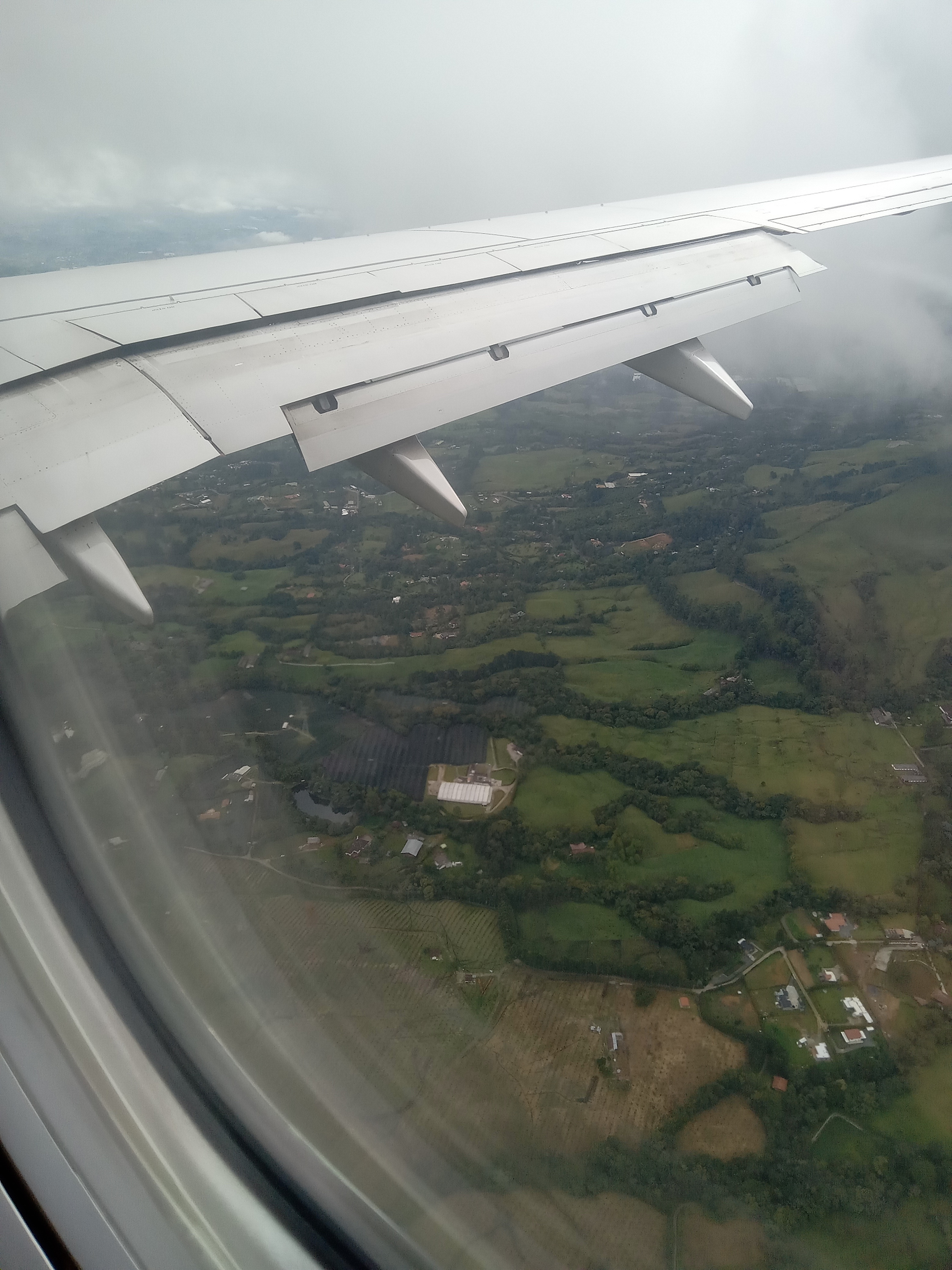
Right before dawn, voices began to fill the hall.  The gates began to open, one by one.  My flight was one of the first to board.  There was no need to check in with anyone.  I already had my boarding pass in my pocket.  The flight was short, but dramatic.  We flew over high mountains and rivers.  It looked like remote wilderness below us, rebel territory.  Medellin had once held the distinction of being the most dangerous city in the world.  I’d been told that it was peaceful now, however, a good place to chill if you get tired of the bustle of Bogota.

It took a long time to get through immigration.  It seemed there were only two agents for over three hundred passengers.  One old woman played the age card to go waltzing to the front of the line, only to not have her paperwork in order and tie up both agents for the next half hour.  All the sympathy she’d garnered turned to cries of exasperation.

I’d read that the airport was a long way from the city center, and was tired enough to be paranoid of the taxi drivers who approached me out front, not looking official and giving me quotes that seemed outlandish.  There was a bus that someone said went to the Centro, so I went over and hopped on it.  I’d lost my phone service after leaving the States, and just had some directions to the hostel scribbled in a notebook.  My hope was that the bus would drop me off close enough to walk to it.  As we reached the outskirts of Medellin, however, I saw that it was no quiet little hamlet in the hills, rather, it was an intimidating metropolis in its own right.  We came around a bend and a nearly naked homeless man was fanning a fire ten feet high beside the road.  Going through an underpass, another one was squatting there taking a dump.

I asked the kid sitting next to me to help make sense of my directions, but when he began to explain my Spanish failed me.  I understood something about the north terminal, but that was it.  It was obvious I was not going to find the hostel on foot.  Once the bus stopped by the side of the road, I got out and threw myself at the mercy of a taxi driver.  It took him about fifteen minutes, passing through a series of curves, like a sketchy Monte Carlo Grand Prix, to reach the hostel.  The neighborhood looked like a bit of a slum, but was actually the historic district.  Either way, I’d arrived.

art is a war 7

It was too early to check into my room, but the hostel I was staying at let me put my bags behind the desk.  After traveling across America a few times in the past three weeks and then lying on the floor of an airport in Panama all night, I was shot.  It is important to remember that when you are traveling, especially the first day of your trip, when you are disoriented and feeling vulnerable.  You need to sleep before making any big decisions.  Don’t change all your money at once or commit to a package tour you might regret.  Rest up, get your bearings, and then figure things out piece by piece.

The boy I’d asked directions from on the bus had mentioned something about the playa, which had confused me, since that means beach in Spanish.  What he’d been talking about was the neighborhood, Las Playas, that the hostel was in, which proved to be the historic district after all once I set out on foot to explore it.  Calle 51, the street outside the front door, was lined with busts of influential figures, ranging from educators to politicians and poets.  It was also lined with homeless men of the most bedraggled and despondent variety.  On my recent trip through the States, the plague of homelessness in some of the major cities had disturbed me greatly.  Now I could see that the crisis wasn’t reserved for America alone.  Some of the figures I came across were black with filth, barely recognizable as humans.

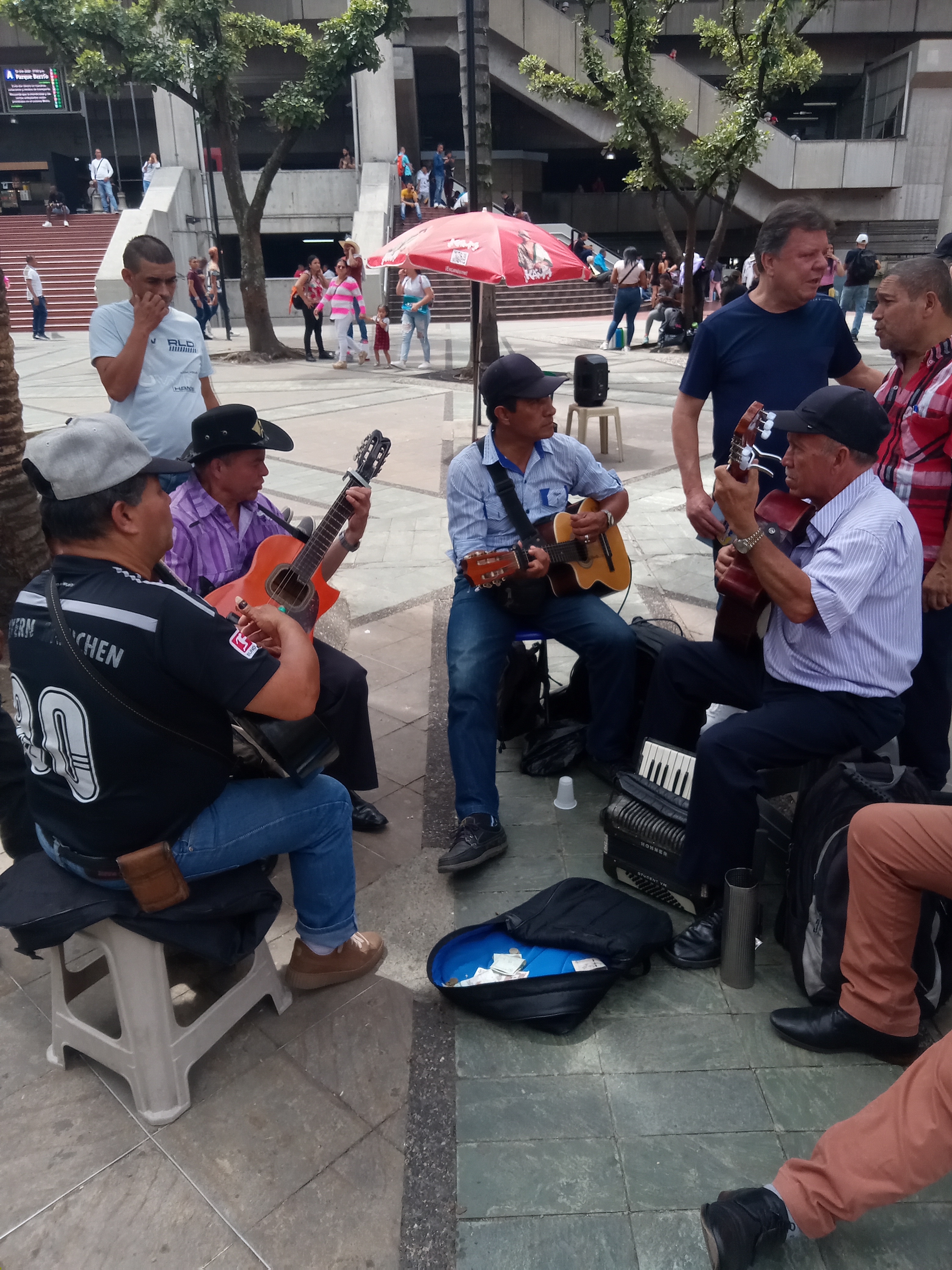
Following the street downhill, I came to a few casinos, and then a pedestrian mall where vendors sat beneath large umbrellas, hawking everything from watches to sunglasses, used books to mangos.  In a square outside a cathedral, across from a metro station, a group of four men with guitars sat facing each other playing folk music with a small audience huddled around their shoulders. 

As I walked back in the direction of the hostel, the sky was threatening rain.  It was still too early to check in, but a new woman working at the desk let me do so anyway, showing me a room with two bunks and its own bathroom.  Each bed had a small fan attached to it.  When I got into one of the lower beds and turned it on it roared like a little engine.  A few minutes later someone came in and began moving into the bed next to me.  I was aware of their presence, but floating in a pool of exhaustion.

When I got up, I was sickly anxious, but it was time to begin my big project.  On an external drive I had three hundred songs, three hundred poems, and about 20,000 images from my thirty years of traveling.  They didn’t represent all of my work, but perhaps the best of it.  I’d spent the previous winter in Guatemala, just narrowing it down to that.  My goal was to put together one gallery of song lyrics and one of travel poems, with an image to match each piece of writing.  My aim was five hundred pieces in total, but was willing to accept less if the quality began to suffer. 

I had never had a career in the arts or a reputation as a writer, even though I’d devoted my life to traveling off into the unknown in search of experiences that would make for rare songs.  That was fine with me by now, but I still wanted to create some kind of gallery I could direct people to if they ever asked about my work. 

Where to even start?  Well, there is only one place and that is the beginning.  All of my twenties, when I was traveling mostly in America, I made it a point of pride not to take any photos, claiming that all the pictures I needed were the ones in my mind.  I was later sorry for that attitude as I have almost no documentation of those wild, lonely years.  

In my thirties, I was teaching at an inner-city school in Los Angeles, and went on many long trips with the cheapest 35-millimeter camera you could find. Out of the seven or eight rolls I’d shoot, I’d usually have enough good pictures to fill one little album.  I’d scanned all of those, but many of them were washed out or sat crooked on the screen. 

When I was in my forties and had begun teaching abroad and living out of a suitcase, I got my first digital camera.  From that point on there were way too many pictures, pictures that I’d never even seen until my organization attempt in Guatemala.  The challenge now would be to narrow down five hundred of them that fit my words.  I wasn’t sure I had the objectivity to do so.

There wasn’t much of a common room at the hostel.  A chair across from the reception desk would become my office, so to speak.  Someone would later ask me if I was a businessman, seeing me hunched over my laptop night and day.  Yes, I would tell them, the worst businessman who has ever existed.  All I’d ever wanted was to give my product away for free, and even then, there’d been no takers.

art is a war 8

When I woke up it was hard to tell what time it was or even where I was.  There was only the faintest daylight at the window.  Then I started piecing things together.  I was no longer on a train, hunched over two seats with a sweatshirt under my head, nor was I in Florida.  Somehow, I’d made my way to Colombia and was in a small room.  I’d turned off the fan at the foot of the bed when my roommates had come in, as it was making more racket than a fighter plane, but now the air was unbearably humid and still.

There was a free breakfast up in the kitchen: hard-boiled eggs, bread, fruit, and coffee.  I went up with my laptop to try to come up with a plan.  This was a trip like few others.  Unless I found a job quickly, I had nothing to get back to.  That and the fact that I was now living on a credit card, made it hard to conceive of fun as an option.  No, this was more of a war, being fought in the jungle of my mind.  The only thing at stake now was my dignity.  The future had been ransacked and the past was lying in tatters.

Colombia is a country with a long history of conflict.  Like all of the Americas, it was first occupied by indigenous groups – the Muisca, Quimbaya, and Tairona – before the discovery of the New World by Columbus, in 1492, shattered their paradise.  The first Spanish settlement established on the Caribbean Coast was Santa Marta, in 1525.  From there the inland expansion began, based on rumors of gold.  By 1549, the capital of New Granada had been declared in what is now Bogota.

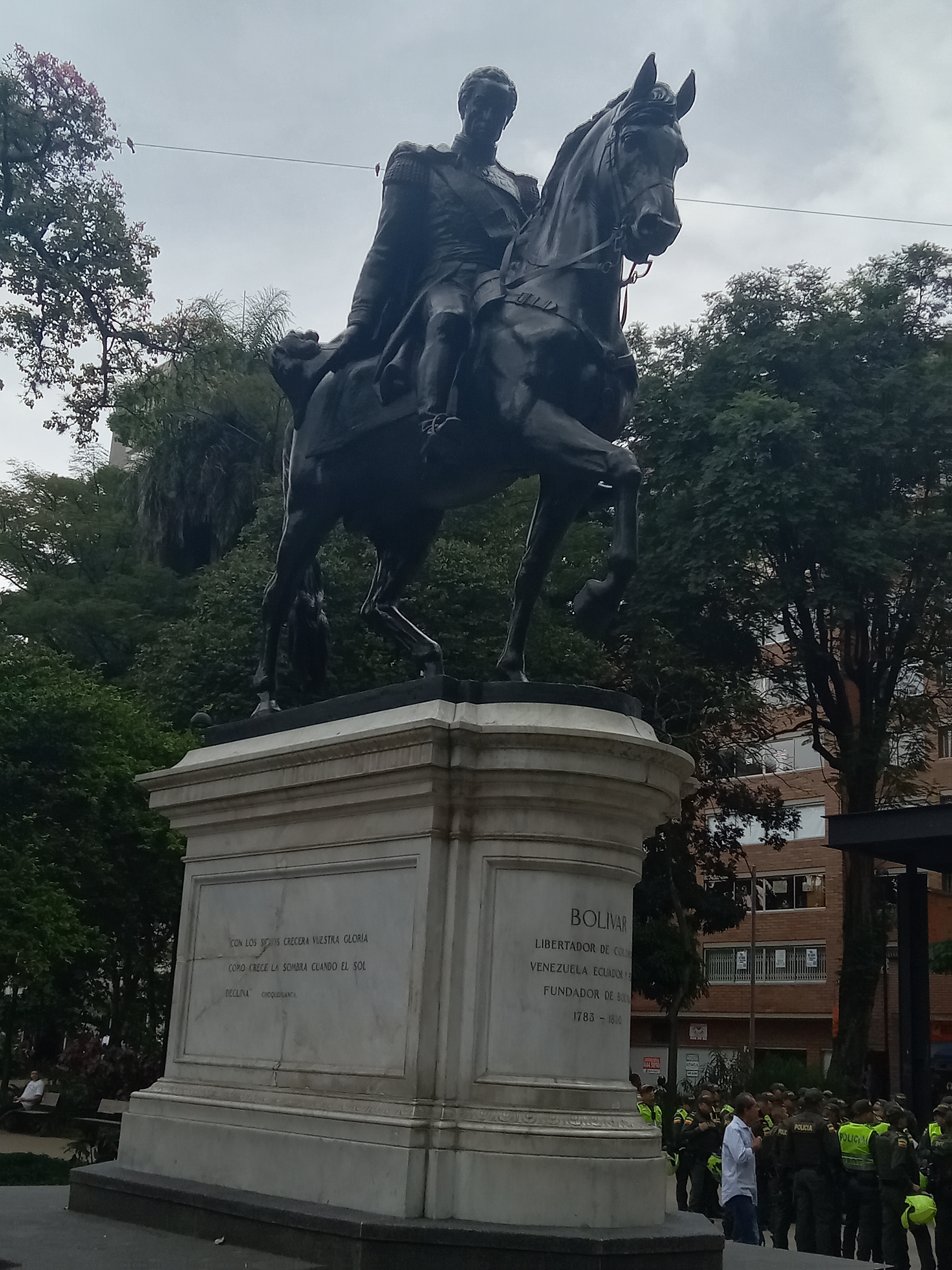
Independence from the Spanish came at the hands of Simon Bolivar and Francisco Santander in 1819, inspired by the recent freedom movements in America and France.  Their followers would go on to become the Conservatives and the Liberals, and the difference in their ideologies would lay the framework for the next two hundred years of unrest.  Three military coups would take place during that time, as well as two civil wars, the Thousand Days War, at the turn of the 20th century, and then La Violencia, in the 1940s and 50s, in which over three hundred thousand people were killed.

Shortly after, rebel groups began to spring up, the FARC, ELN, M-19, each believing that they were fighting for the rights of the poor and dispossessed.  Then in the 1980s, the situation grew even more complicated with the rise of the powerful drug cartels.  In 2016, a peace accord was signed between the government and rebel groups, but I’d been told that the struggle still goes on in remote villages, hidden away in the mountains, far from the urban areas.

With the war that was going on within me, Colombia seemed like the right place to be.  I would need to remind myself every day that life is never easy, that there’s always a fight going on at some level.  Nothing worth having was ever just handed over without some degree of resistance.

After mapping out a possible itinerary, both for my week in Medellin, and destinations to follow, I returned to the same square I’d been to the day before, Parque Berrio.  One group of musicians with amplifiers had a crowd of ten to twelve dancing couples swirling around them.  Venturing further, I discovered an enormous outdoor market beneath the Metro, where the energy was almost savage.  Junkies lay strewn all over the ground like corpses.

It started to cloud up and rain on my way back to the hostel, and just as I got to the door it really cut loose.  There was a hammock on a balcony overlooking the street that I sat down in, listening to the thunder, sounding like it was sliding down from the mountains, and watching the flashes of lightning.  What I was experiencing was more than just the elements.  It was the cannons of war, blowing a hole through my pain.  For the next fifteen minutes or so, I would be happy to sit there and just exist.

art is a war 9

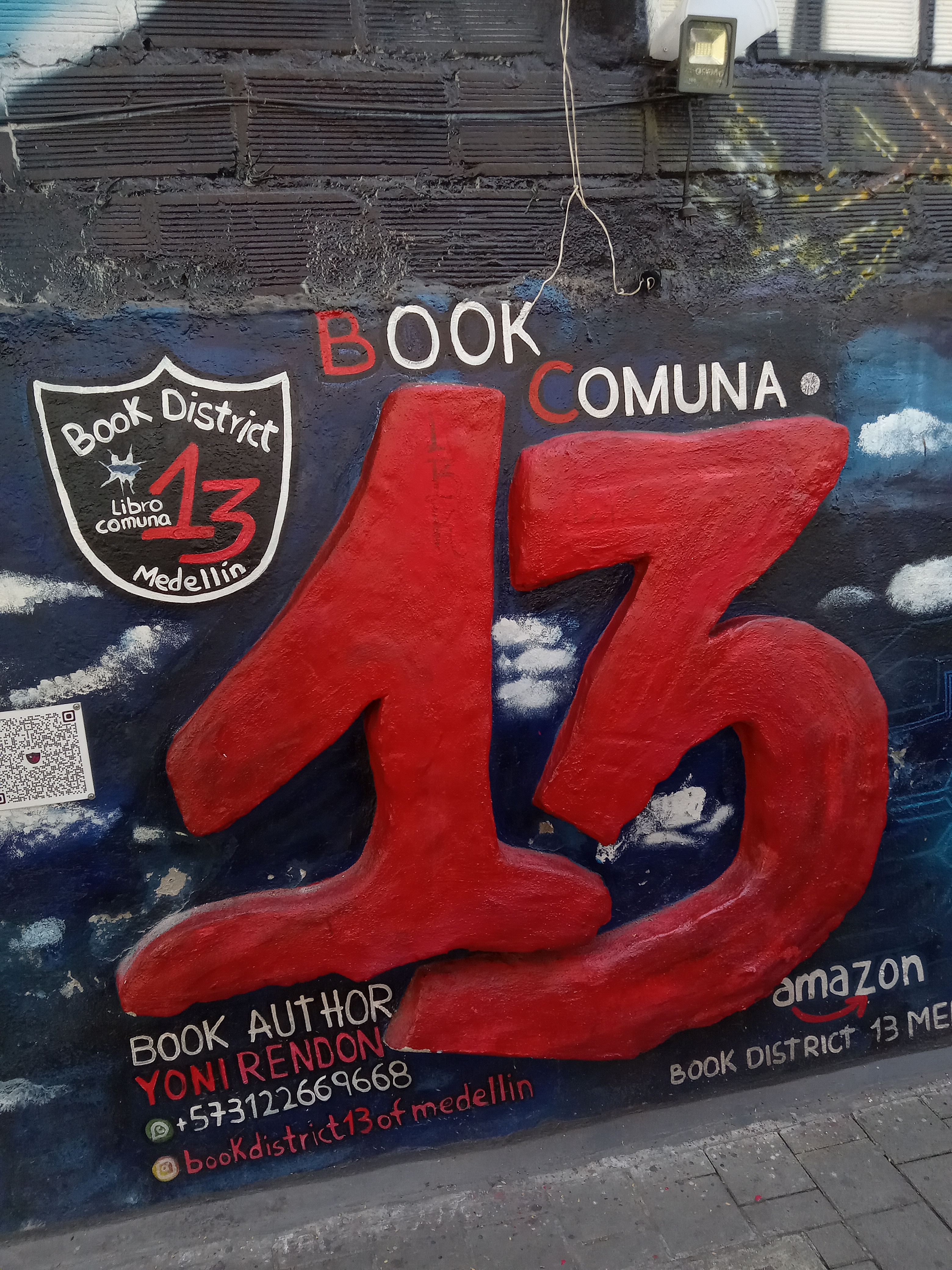
Almost everyone who visits Medellin ends up at Comuna 13 at some point.  Once one of the most dangerous ghettos in the world, a hideout for gangsters and guerillas, its fortune began to change in 2002, when the president at the time, Alvaro Uribi, launched a full-on assault on the neighborhood, bringing in 3,000 troops and helicopters.  Then in 2011, a series of escalators were installed, to help improve the mobility and morale of the residents.  That brought the children and artists out of the woodwork, and now the area is famous for its street art and festive atmosphere.

One of my roommates, an African now living in France, had taken a tour of Comuna 13, and admitted that he would’ve preferred to go it alone, but that it was difficult to get there on foot from the Metro station.  When I looked it up, I saw how this might be the case, but wrote down the directions, which included a dozen twists and turns.  A woman from the hostel had a Metro card she let me have, and I went to the corner store and put 30,000 pesos on it, which sounds like a lot, but only came to about six dollars. 

From Parque Berrio, I took the B train to San Javier, and got out with the directions in hand, only to find twenty or thirty guides standing around, trying to hustle up customers for a tour.  When I couldn’t even find the first street, I loitered around, eventually approaching a couple who were deciding rather to pay for a tour or not.  They were waiting for someone’s brother to arrive, who apparently spoke fluent English.  Rather than joining them when he finally showed up, I merely followed them, onto a bus that was parked around the corner.  Five minutes later and we were dropped off at the entrance to the commune.

Street art is my favorite kind of art, not the angry scrawl of graffiti, as much as the recent movement of murals, both beautifying and challenging public spaces.  In his Futurist Manifesto, the Italian poet Filippo Marinetti threatened to destroy all museums.  It’s a sentiment I can relate to, as I always believed that art belongs to everyone, not just those who can pay to see it.  It’s what attracted to me to folk and old blues music, as well, in that it was made in a very democratic manner, by people who had no ulterior motive outside of celebrating the moment they were living in.  In the absence of technical proficiency, all I’d ever been able to aim for was honesty, and I admire anyone who does the same, no matter how crude the outcome.  In recent years I’ve often lost myself in the living galleries of street art popping up around the world.  It is folk art done up on a high, magical plain, with a power that can’t be contained inside a building or a frame.

Ascending the stairs that led to Comuna 13, was like entering a fantasy world, populated by eagles, space embryos, burning jaguars, visionary elders, serpents, honeybees, DJs, and mystical children, and that was before I’d even reached the first elevator.  I continued on past thumping human hearts, electric roosters, dancing fruit, inflamed lovers, and creatures that had never existed before coming to life on these walls.  There were bars to stop at and meals to eat, but I was just walking.  Once I began passing from escalator to escalator, the ascent to the top was fast.  From there you could see miles of red rooftops, stretched out below.

I’d seen that tours to Comuna 13 also included cable cars, but those were separate, an actual part of the transit plan, as opposed to an amusement park attraction.  To get to them, I had to return to the Metro station, but then was able to use the same card I’d used for the train to get on a cable car and go swinging out above the streets.  A couple sat across from me, blocking most of the view.  That was OK.  Just to be that high, looking down at what I could see, was exhilarating.  Some of the houses below were only being propped up by shaky looking wooden stilts.  It seemed like the slightest tremor could cause whole neighborhoods to come crashing down.

art is a war 10

My Haunted Rock YouTube channel and WordPress blog have long been the elephant graveyards of my dreams.  It’s where they all go to die.  In theory it sounds like a good idea.  Travel off into the unknown with an instrument.  Don’t force anything.  Document the unexpected things you happen across.  Let the words come as they do.  Make field recordings that are low-fi, but authentic.  Mix them up with images from the journey.  Put them up on social media to deafening silence.  Drive the nail in the coffin by making an announcement on Facebook.  Repeat.

It was better in the days before the internet, when it was only records and magazines.  At least then I felt like I had a chance.  I’d read an interview with an artist and think I was kind of like them.  All I needed to do was get in touch with the right people.  By the time I got any attention for my work, and by that, I mean a very small amount of attention, it was right at the end of the print age, where sales were still driven by physical copies as opposed to downloads and streaming. 

I’d made a record with a few friends and had gotten a list of critics and radio stations from the mail-order distributor that had agreed to take on my project.  I sent a few hundred CDs to people on the list, and had been over the moon when I started getting some positive reviews.  What I was to discover, however, was that many of the critics who claimed to like the record and independent radio stations that were playing it, didn’t have a much bigger audience than I did, and that was none at all.  It felt good to get some affirmation, but nothing changed.  After a few weeks the small wave of attention passed and it was like it had never happened.

Since I couldn’t afford to make records that no one was buying, I decided to focus on poetry, since I could do it by myself.  I traveled around the world, only writing what came to me and then recording it live, on streets, buses, airplanes, trains, in hotel bathrooms, tombs, churches, anywhere I could find an ambient atmosphere.  The indifference to the videos I made out of these efforts almost bordered on hostility.  I concede, my work was rarely riveting, but didn’t anyone else out there feel the same way?

The answer perhaps is that everyone was too busy creating and sharing their own content, even if that was just selfies and memes, to care.  What is gained by likes, outside of an ego-stroke.  It becomes an exchange.  You like their post so they’ll like yours back.  You post a selfie and everybody likes it.  You put up a four minutes song and no one bothers to respond.

What was the point then?  What was I now trying to accomplish by creating two galleries of images and words?  I guess I was trying to prove to myself that I’d done what I set out to do.  As a young man, I was always telling everyone my plan was to ramble, that I’d need at least twenty-five or thirty years under my belt before I might have something to say.  It had always been about having real experiences, adventures as you will, that might have made for difficult times, but later made for great stories.  No one had cared about my mission statement back then.  Did it matter what they thought about it now?

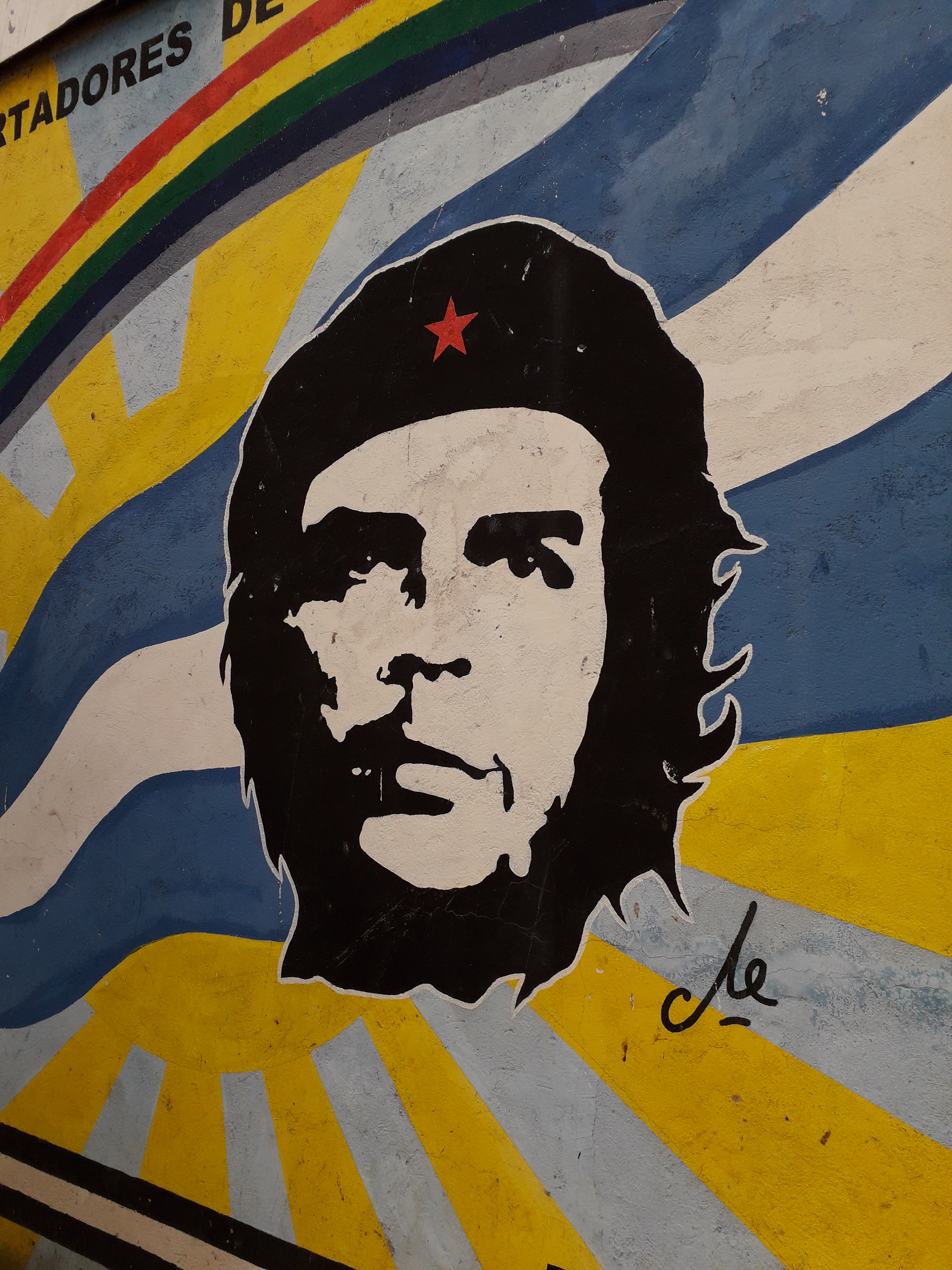
I often think about the last days of Che Guevara.  Everyone loves the picture of the young Che in his black beret.  When he was finally captured in Bolivia, however, only managing to attract a few followers for his latest revolution, he was bedraggled and delusional.  They shot him like a dog and paraded his body around for the press.  How many people would read his Man and Socialism in Cuba manifesto if it appeared on Facebook?  Probably not very many.  How many would like the picture of him in the black beret?  There would be too many heart emojis to count.