Category Archives: Travels

art is a war 25

When I arrived at the hostel in Mompox on the back of a motorcycle it was dark and raining.  A few minutes later and I may have been locked out for the night.  It looked like they were getting ready to shut down.  The young guy working there took me to the room I’d be staying in.  It was the size of a large closet and quartered into four sections.  My top bunk was in the far corner, away from the light and the fan.  I was so tired I just climbed up and laid down in all my clothes.  Nothing could be done about it until the morning.

Mompox was founded in 1537 as an important port on the Magdalena River, and was the first city in Colombia to gain its independence from Spain.  They had their own version of Patrick Henry’s give me liberty or give me death.  Be free or die.  Simon Bolivar spent a lot of time in Mompox, recruiting soldiers and gearing up for his military campaigns.  A rock beside the river, the Piedra de Bolivar, records all his comings and goings.

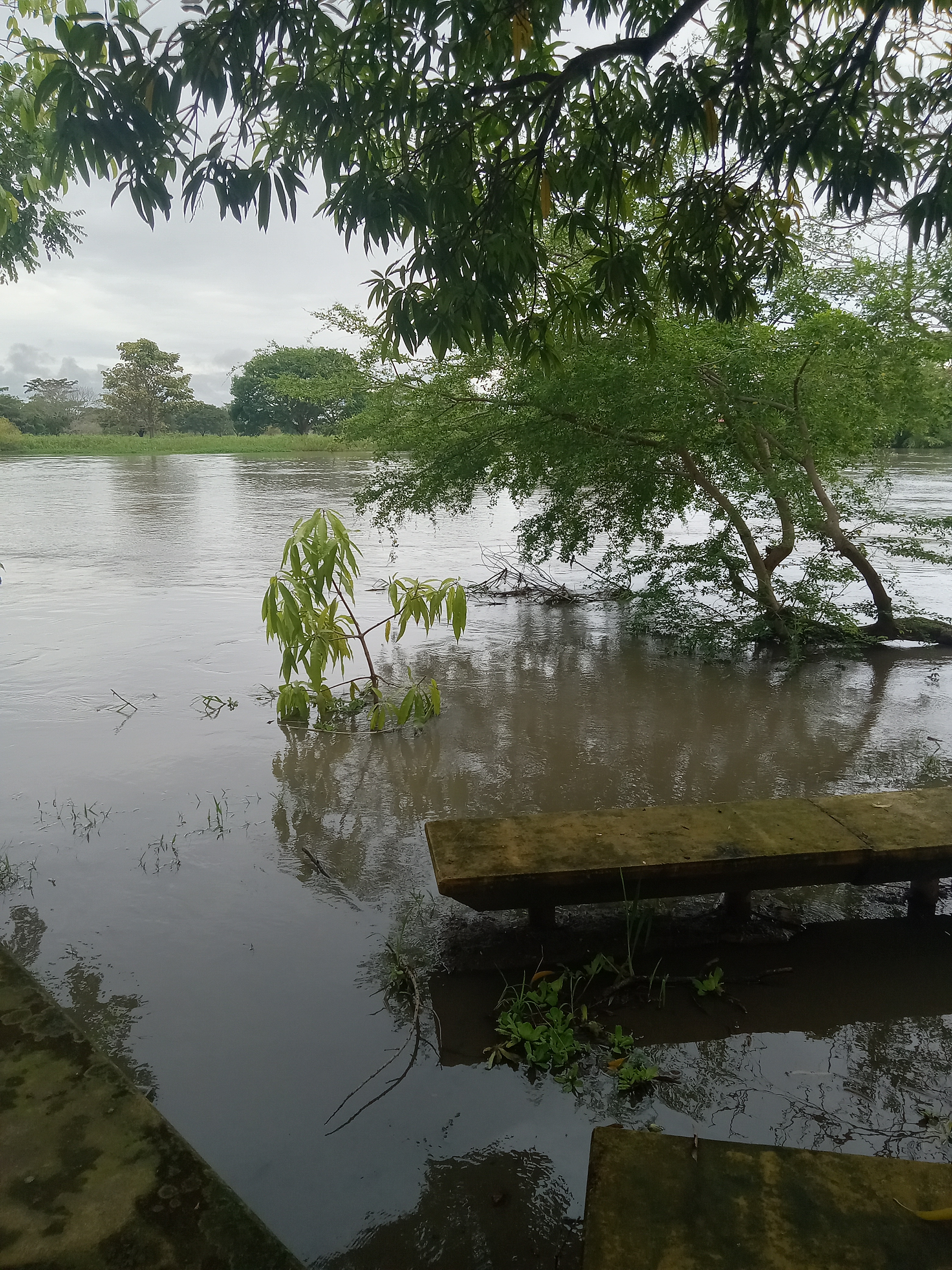
The next morning, I went out to investigate.  Due to the heavy rains, the river had invaded the banks, swamping benches and trees that were normally part of a park.  It stretched for a quarter mile across and was moving swiftly, carrying branches and clumps of grass and vegetation that were as large as islands.  I followed the walkway that ran beside it, towards the cathedral and center of town.  At a small café I stopped for breakfast, only scrambled eggs and bland arepas, that went down like Styrofoam.   It was miserably humid and the depression I’d been battling all of my life, coupled with wild desperation, returned to crush my heart with dread.

When I reached the Plaza de la Immaculada Concepcion de Maria, the cathedral was open, so I took my hat off and went inside to pay a visit.  The primary altar was reserved for Mary, dressed in blue and gold, attendant angels on both sides of her and flowers at her feet.  In one of the side chapels was her son, carrying his cross, weighted down by all the sin of the world.  Blood was running down his face from the crown of thorns that had been jammed down over his skull.  It looked like he was ready to collapse.

A few blocks from the cathedral I came across another monument to suffering, the house of the poet Calendario Obeso.  He’d been a mulatto, the son of a white hacienda owner and black maid, and his poems reflect the struggles of the black community at the time and the discrimination he faced.  After falling in love with a white woman and failing to win her over with his poetry, he shot himself in the chest and died at the age of 35.  Blown off in life, celebrated in death.  At least he’d escaped the indignity of having to use his poems to fish for compliments on Facebook.

That afternoon there was a festival that took place outside of the cathedral beside the hostel.  It started off with children celebrating their heritage, dressed up in costumes from the different departments of Colombia and singing and dancing to traditional music.  After the sun went down, they taped off the square and it became a dance for adults that they were charging a thousand pesos to get into.  The speakers they’d brought in for it were massive. 

Sitting in the hostel, trying to get my song and poem gallery project back on track, the whole building shook.  I’d discovered that I could once again upload images to the media library and then insert them into the posts, but now knew I didn’t have enough storage space for the complete project.  I’d matched images for 260 poems and 180 songs, so was almost there, but it was clear that the format of my website was far from user-friendly. 

On my laptop, you could just scroll down and see the pictures and words, one after the other, but when I looked up the site on my phone, all it listed was the titles of the posts.  You had to click on each one to open it.  Then I noticed that the menu, with the about section and contact information was frozen and wouldn’t open at all.  There was no way to see who I was or get in touch with me.  The whole thing was just a piece of crap.

The dance in the cathedral square went on until the morning.  There was a young British couple in the next bunk and a woman from the Netherlands who was volunteering at the hostel right below me.  The idea that anyone was going to get any sleep that night was a farce.  The room was as loud as a nightclub.  It was like being trapped on a merry-go-round that you’d gotten sick on.  Every time you thought it was over and started to climb down, the digital beat could kick back in and drag you back onboard for another spin.
art is a war 26

Mompox was a great place to reread 100 Years of Solitude.  I was glad I had a pdf copy of it on my laptop.  The storytelling of Gabriel Garcia Marquez seemed to fit the flowing of the Magdalena River right outside my door.  I needed a distraction.  It was all I could do not to throw myself in the river, so heavy was the oppression weighing on my heart.  These were characters who lived, died, and suffered in their time, as well.  The patriarch of the Buendia family spent the last years of his life chained to a tree, driven mad by his quest for the unobtainable.  Children are born with pig tails.  A trail of butterflies follows the memory of a mechanic.  A woman is taken up into the sky while taking down the laundry.  These are just the facts.

In the birthplace of magical realism, I was attempting to create two galleries of my life’s work, one for my songs and one for my poems.  There were not that many of them, but there were enough.  I had matched most of them with pictures from my travels.  Now, however, I did not have enough storage for them on my website, after downgrading to the Premium plan with WordPress.  I’d gone from 200 gigabytes to 15 gigabytes, about the same as you get with a free Google account.  What was I even paying for?

I decided then to just post samples of what I was trying to do on my website.  I already had a best of playlist of twenty-two poems on YouTube, so I went ahead and created one for the songs.  This was drawing from four-hundred and fifty videos that didn’t have that many views combined.  Then I sat down and created the two sample galleries, focusing just on the pictures and the words, but providing links to the playlists in case someone cared to listen.  Instead of being able to show someone what I’d done, I was still stuck showing them what I wanted to do, but all the other songs and poem matches were there on an external drive, ready to be posted when the opportunity arose.

After that, I needed to buy a bus ticket to Bogota, so I went out in search of the bus station.  I’d been dropped off in the middle of night, seemingly in the middle of nowhere.  After asking around I tracked down the station on the other side of the cemetery and bought a ticket leaving in two days. 

Mompox was nice, but there wasn’t much to do.  I’d already walked from one end of it to the other a dozen times.  The humidity was stifling, and the fact that I’d barely slept the night before caused anxiety to surge through my chest.  It seemed like the perfect remedy to sit and meditate beside the river, but I couldn’t focus.  The whole time I’d been in Colombia, I’d never managed to make it past a few breath cycles before my mind would just drift off.  The depression was so bad I could taste it in my mouth, like metal.

If my financial situation was better, if I had a place that I considered home, I could probably handle it better, but I’d been living out of a suitcase for fourteen years, my only base in America being my mother’s yard.  It was a hard fall for someone who’d hoped to get across as a writer.  Not only had I not done that, I didn’t even have a community of other artists to commiserate with.  The truth is I’d come to Colombia to die.  All the joy and hope had been stripped from my life.  The good times were just a distant memory.

What I wanted to do was to throw myself into the river and make it look like an accident.  I’d never have a better opportunity.  The current was swift and merciless.  All I needed was to take ten steps forward and be swept away.  Still, I couldn’t bring myself to do it. 

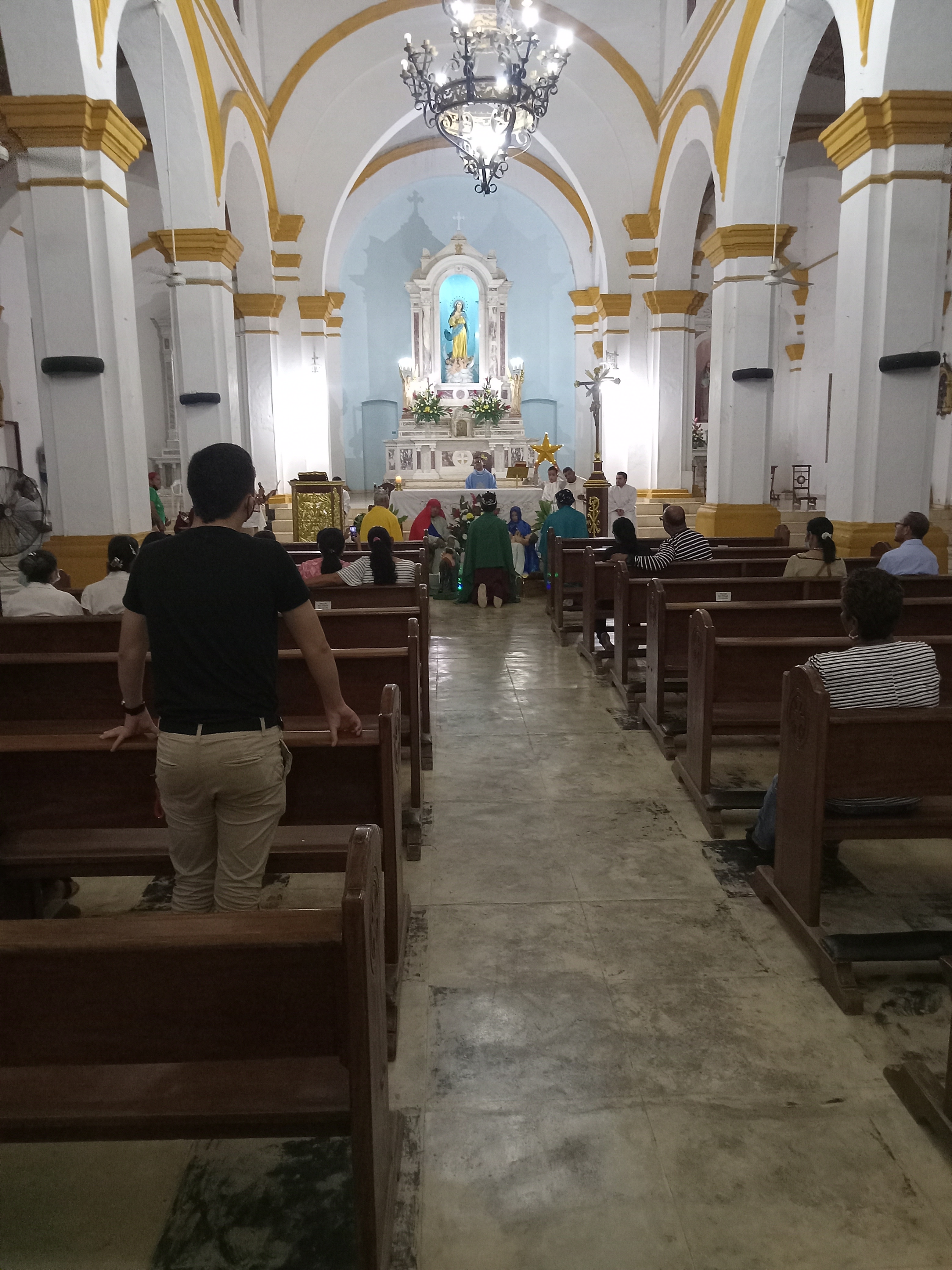
Towards evening I heard fireworks coming from the center of town and headed back towards the cathedral.  Outside of it was a man launching rockets that had the force of a small stick of dynamite.  I went into the church and saw it was a special occasion.  Some children were recreating the nativity scene.  Joseph and Mary sat up front.  Mary held a doll on her lap with an enormous head, the same size as a full-grown man.  Around them there were all the animals and angels. 

The three wise men were there as well, and I noticed that they’d been one child short, so an old man had stepped in for them, in a long, yellow robe, with a cloth around his head.  Seeing him up there, doing his best to play his part, actually made me smile.  Hope dies, but hope returns.  That was the gift he brought that night.  Perhaps, it was worth my while to stick around a little bit longer.  Death would come soon enough, no matter what I wished for.

art is a war 27

It was not my intention, or even desire, to go on a bird-watching tour, but I needed something to do.  Mompox has the reputation of being a colonial town where time has stood still, and that’s exactly how it felt.  I would wake up early, it would already be hot and humid, and then I’d go outside and the day would not end.  My chest was so tight with anxiety that I could barely breathe.

Someone at the hostel mentioned something about the tour, and I realized it would at least break up the day, so I bought a ticket.  Shortly before three, I walked down the riverwalk toward the double-decker boat for sunset tours.  On the opposite side of it was the narrow, wooden one used for bird-watching.  It had been raining when I pulled into Mompox, but sunny since.  Now, in the twenty minutes between arriving at the launch and the tour beginning, it clouded over and began to rain.

There were only seven of us onboard the boat.  I ended up in the front, sitting next to the guide.  She spent most of the time talking to the couple behind us.  It was raining so hard it was difficult to see the banks of the river, let alone one of the three hundred species of bird life that were allegedly in the vicinity.  There were a few white cranes, and what looked like a kingfisher, but what drew the most attention were the iguanas, stuck out on the branches in the dismal downpour, looking as forlorn as Gaugin’s Yellow Christ

We came to a small village and then started up a small channel, eventually making our own trail through the dense, aquatic plant life.  One man stood in the front with a pole, pointing out the best way to go, and using the pole to push us free on the times when the engine seized up.  It was beginning to feel like an adventure.  We stopped at a lagoon where half the other passengers began to change into swimsuits.  I hadn’t known swimming was an option, but couldn’t resist once I saw the others leaping over the side, and stripped down to my underwear, cautioning the guide to cover her eyes.

The water was warm, almost as if we were in the presence of a thermal spring.  As I floated on the surface, little fish began to nip at me.  I said something about it to a French woman and she looked alarmed.  There were supposed to be crocodiles in the river, but I hadn’t heard anything about piranhas.  The water was about ten feet deep.  Sinking all the way to the bottom, I could feel the black silt squish between my toes.

Something about the swim revived my spirits.  Heading back to Mompox at dusk, straight into the rain, felt like we were returning from a combat mission.  There were no real tales to tell, but a small battle had been won, by engaging with a group and being a good sport about the weather, rather than isolating on a bench somewhere, fixating on everything that was going wrong.

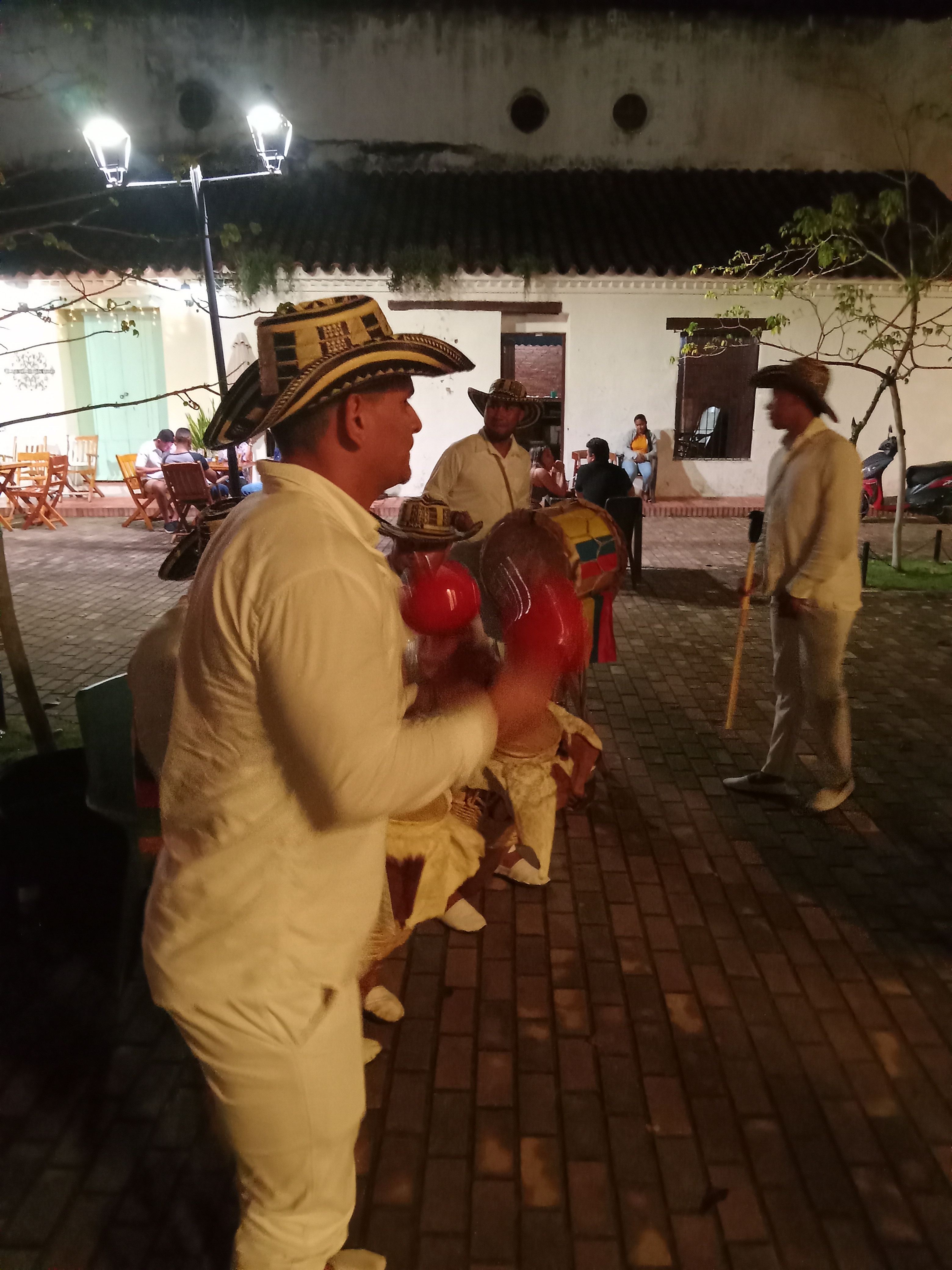
That night I was revising the sample galleries I’d just posted on my website, when outside the hostel there was a sudden commotion, the banging of drums, and what sounded like a flute.  I stepped outside and found that five musicians, a cumbia band, had appeared out of nowhere and were giving a performance beside the river.  Cumbia is a form of music that has its origins in Colombia, a combination of African drums and Indigenous wind instruments.  The five musicians were all dressed in white, wearing cane sombreros.  Three of them played drums, one shook the maracas, and the other played a long whistle with one hand.

A group of Colombians on a weekend outing had hired the band to perform and were dancing all around them.  I’d met one of them, Andre, that morning.  He’d already been tipsy, and by now was a roaring mess.  He recognized me and came running over to pull me into the dance circle, insisting I do the mambo with him.  I was in no position to deny him.  How often do you get to dance the mambo to a cumbia band beside the Magdalena River?   I’m not sure it was even the mambo we were doing.  The Tevas on Andre’s feet were slapping the pavement so hard he could’ve been a sixth member of the band.

art is a war 28

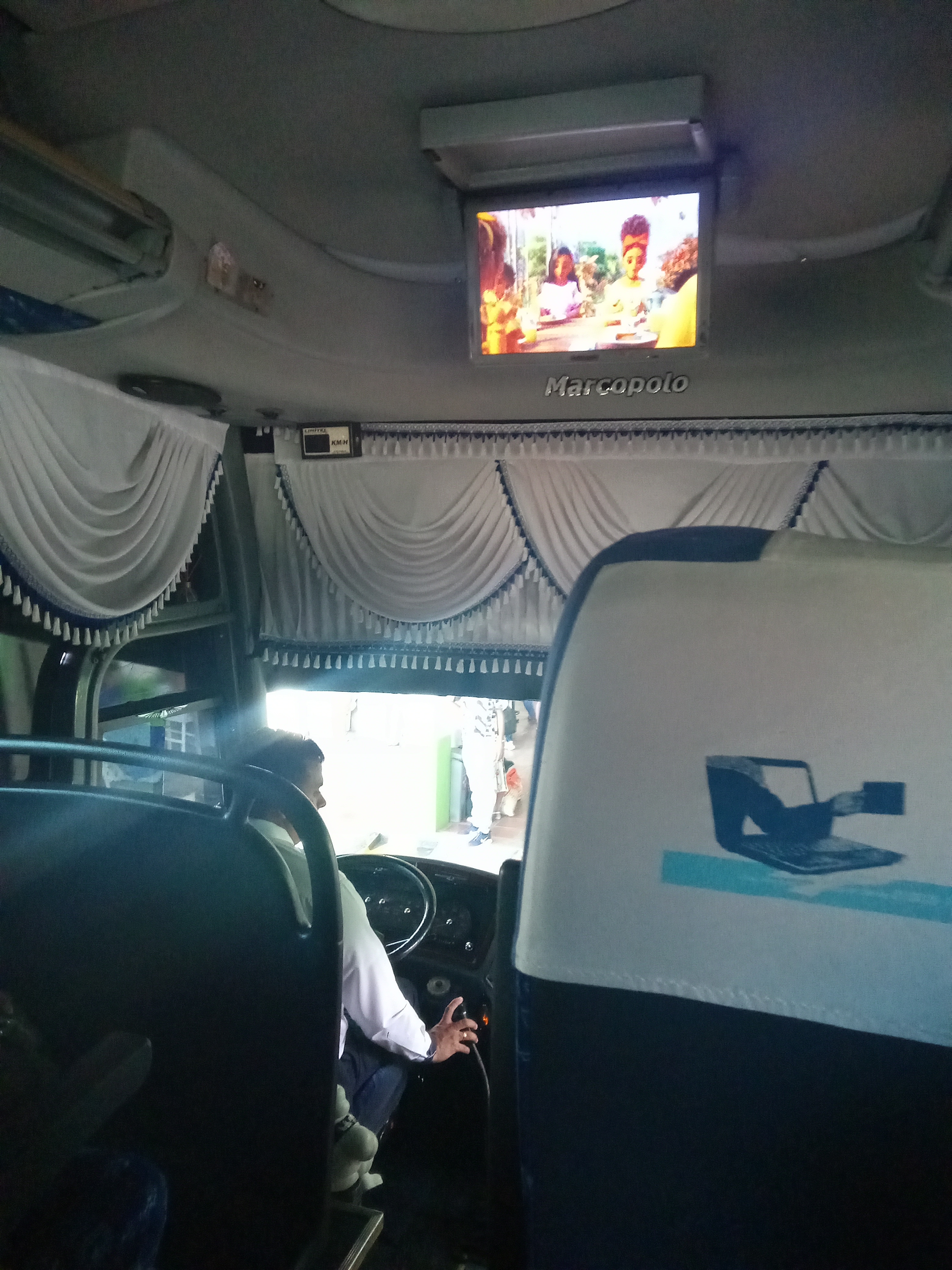
The bus to Bogota left at noon and was supposed to arrive around five in the morning.  There was a motorcycle rickshaw that I took to get to the station.  My seat was right up front, but wasn’t the window seat I’d requested.  Since no one was next to me, I took the window for the time being.  The countryside was flooded.  I watched fishermen bringing their boats right up alongside the road to unload their catches into cars.  Brahmin cattle looked marooned on tiny islands.  Hundreds of white cranes stood watch in the fields.

At the first station we came to, a woman stood over me to claim her seat.  Before I could slide over, she took a different one near the back.  Later, a girl with a teddy bear ended up in the seat.  She hugged the bear to her chest and looked out the window as the sun went down and the sky grew dark.

I’d asked if we were going to stop for dinner and was told yes, sometime around eight.  By eleven o’clock we still hadn’t stopped, and I was sorry now not to have invested in more snacks.  There was a new guy sitting next to me with his arms propped up on both arm rests.  I wanted to give him a little nudge.

Sometime after midnight, we stopped outside a small row of restaurants for ten minutes.  One of them had papas, the deep-fried mashed potato balls I’d gotten addicted to.  These ones tasted strange, however, as if they’d been stuffed with hairy leftovers. 

We arrived on the outskirts of Bogota sometime around five, and the guy next to me got off.  It was only then that I fell asleep, nodding in and out for the next two hours as we navigated our way through the worst traffic in the world.  Bogota is tied with Rio de Janeiro for having that distinction.  Since we’d be arriving at the bus station the same time as rush hour, I assumed that the conditions would be the same once I got a taxi, and was not disappointed.  The driver quoted me an astronomical sum for Colombia, but once we got underway, I saw that he was only making a few cents an hour as there were some long stretches where we didn’t move one inch.

The hostel I’d booked was in the Candelario, close to the historic district and universities.  When the driver got to the address I’d given him, the hostel was gone.  He shouted to a man across the street and then drove to a different location and dropped me off out front.  A man came out and said the hostel had moved again.  He told me to go two blocks and take a left.  I did and there was no hostel.  I asked a man in a bicycle rental shop if he knew the place.  He said to continue one more block.  It would be on my left.  Thank God, it was.

The hostel was cold when I walked in.  The woman at reception was sitting there in a winter coat and wool hat.  She showed me to my room.  I’d reserved a private for a week, so I could work on my galleries, but now, with the lack of storage on my website, I wasn’t sure how much work there was to do.  There were still about one hundred and fifty pieces of writing that I needed to find matching images for, and out of the matches I had made, about a third of them weren’t very strong.  We’d passed a lot of street art coming from the station to the hostel, and from what I’d seen of the neighborhood, it looked like a hotbed of it.  I figured I’d use the time to gather some new images and take stock of what I had.

The room I’d been assigned had three beds in it.  One of the walls was a window, with no curtain, that looked out on a stairway that ran upstairs.  The only electric outlet was next to the bed beside the window, so if I wanted to work, I had to do it there, almost in the open.  People coming down the stairs could gaze into my room, as if it were an exhibit at a zoo.  You’d see few animals demonstrating such strange behavior.  At the end of my rope, and with no resources left but a credit card, I was determined to keep working on my art.  A more logical response would’ve been to bang my head against the glass.

art is a war 29

One thing I’d wanted to do for a long time was attend an ayahuasca ceremony in the Amazon.  That had been my plan in 2019 when I’d traveled all the way up the Amazon River, from the mouth of it at Belem, Brazil, to Iquitos, Peru, which is the go-to place for such things.  Just getting up the river, on four separate boats, had taken so long that I’d arrived in Iquitos at the exact time my plane was supposed to be taking off, however, and had only made the flight because it had been delayed five hours.  It was disappointing, but I’d had to let it go.  One thing they say about ayahuasca is that it calls to you, so if it doesn’t happen, it wasn’t meant to be.

Ayahuasca had been the furthest thing from my mind when I’d spontaneously booked a flight from Miami to Colombia three weeks earlier, but I’d happened across an ad on the internet for a retreat that was taking place just outside of Medellin, and had looked into it.  It was twelve hundred dollars, so that automatically meant no, but had gotten me researching once more. 

I thought that I might have to fly to Leticia in the far corner of the country to find it.  I’d just been to the neighboring city of Tabatinga, in Brazil, on my Amazon trip, and didn’t feel like going all the way back, and had also heard from someone that I may need to have a yellow fever vaccination to be allowed on any flight to that region.  It seemed like a big hassle, but I still mentioned it to the manager of the hostel, and she’d promised to look into it for me.

My anxiety and depression had been at torturous levels for some time, and that was the main reason I was interested in ayahuasca, hearing that some people had been healed of these afflictions after attending a ceremony.  I’d tried everything, changing my diet, exercise, yoga, meditation, prayer, even taking antidepressants, which kept me awake for five days and raised my blood pressure to fatal heights, but nothing had stuck.  My feeling was always that if my situation wasn’t so bad, I’d probably feel better.  Undoubtedly, I would, but if there was a magic cure out there, I was ready to take a chance on it.

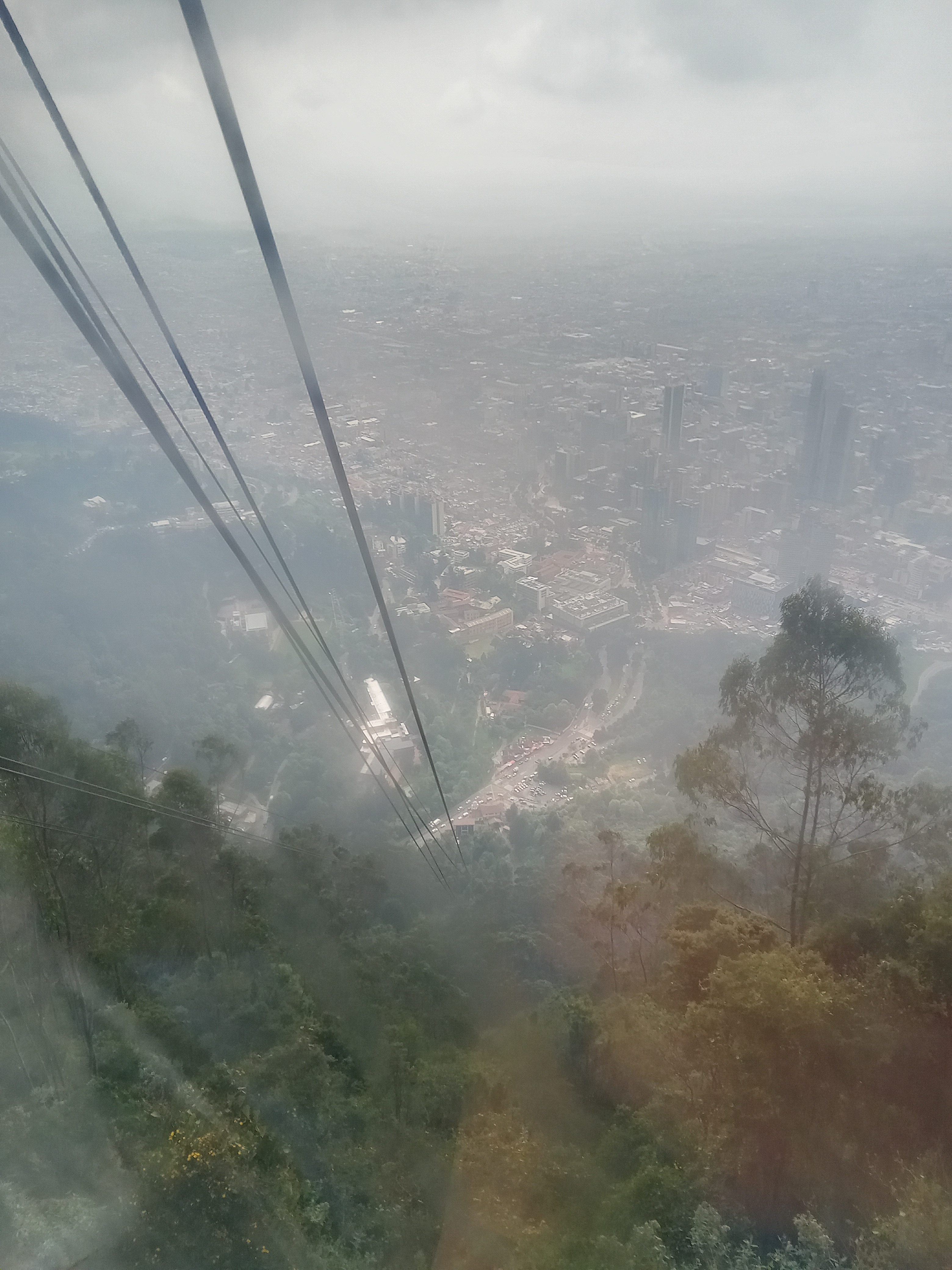
The hostel was not far from Monserrate, a mountain with a famous shrine on top of it, that of The Fallen Lord, that can be reached by both cable car and funicular, which is something like an uphill train.  I’d been there years earlier and thought it would be a good place to get oriented.  Just as I’d gotten sick traveling from the heights of Medellin down to Cartagena, now I was sick in reverse after traveling from Mompox to Bogota.  It was almost impossible to separate the headache from the depression.  My room was perpetually flooded with light, thanks to the large curtainless window that faced the stairs, so there was no way of resting during the day.  I decided to hike up to the base of the mountain.

There was so much street art lining Carrera 3 and surrounding Parque Germania, it felt like swimming through a dream.  I’d spotted many beautiful pieces from the back of the taxi and had hoped to return to them, but now I could see that the city was full of art.  I’d have my work cut out for me just keeping track of what was in front of me.  Following the signs and continuing uphill, I came to the ticket office for the Teleferico, or cable car.  There weren’t many visitors in line, as the sky was threatening rain.  I cursed myself for not bringing my umbrella, as I’d gotten in the habit of bringing it everywhere I went.  Rain can appear out of nowhere during the rainy season in Colombia.

When the cable car arrived, I got crammed against the back wall of it, looking down through blurry glass at the station we were leaving behind.  As soon as we got to the top, black clouds came over the mountain and it started to rain, not a warm, tropical shower, but giant cold drops of it, that hit you like hailstones, and left you drenched.  I had to dash to get to the church before it really cut loose. 

Passing though the side door of the church, I reached an outdoor market where the rain continued to pound on the tin roof like rifle shots.  Lightning flashed across the sky and the roar of the thunder was like that of an erupting volcano.  I was sorry not to have an umbrella, but not sorry to be up there in the middle of the storm.  The whole mountain shook.

Where were all my troubles now?  What had happened to my splitting headache?  For those few moments I was free.  You don’t need a church to have a religious experience, but in this case, having the Basilica of the Fallen Lord there, amidst the tempest, with its shrine to the battered and bloody Jesus, certainly didn’t hurt.  The suffering of all mankind was illuminated between the great rolling ocean waves of thunder.  Everyone suffers.  That was the message.  If I didn’t like what I was going though, I certainly wasn’t alone.

art is a war 30

There are both benefits and challenges to living an unscripted life.  While the challenges are too numerous to name, one of the benefits is the occasional rare surprise, that moment when you find yourself in a situation you’d never dreamed of.   Two days before flying to Colombia, I didn’t even know I’d be going there, and now I was in Bogota, trying to decide what to do about a return, since I’d given up my flight to Miami a few days ago.  Colombia is an inexpensive country.  If I stayed in a dorm, I could get by on ten dollars a day, in a private, maybe fifteen to twenty.

I looked into it and found it wasn’t much to fly directly to Los Angeles.  I figured I’d give myself another month and then fly back for Christmas.  What I really hoped was to die before then, but couldn’t count on it, so needed to buy a ticket while they were still affordable.  It was then that fate kicked in, as I happened to come across an article about Putumayo, a region of the Upper Amazon, between Colombia and Ecuador, where ayahuasca is found, along with many of the top taitas, or medicine folk, who oversee the ceremonies. 

It had already been my plan to visit San Agustin, which is just a few hours from Putumayo.  If I made it that far I’d be right on the border of Ecuador, so I looked into flights to Los Angeles from Quito, and found that they were the same price as those from Bogota.  Boom.  Just like that, I had an itinerary.  Bogota, Cali, Popoyan, San Agustin, and then Mocoa, the capital of Putumayo.  There was an ayahuasca retreat I’d seen advertised on the outskirts of Bogota, but my plan now was just to show up at the source and see what happened.  If I was being called, then the right doors would open.  If not, then I’d have to let it go.

I’d already gone through my entire library of travel pictures once, and had come up with over four hundred images I wanted to use for my song and poem galleries.  While in Bogota, I planned on looking for new images, as there were some pieces of writing I’d been unable to find a match for.  At some point I’d probably need to go through the entire library once more, but needed some time away from it.  Considering it was my entire life’s work, it didn’t seem like I’d produced much of value.

I’d also sent out another bunch of job inquiries, but had only heard back from two recruiters.  One wrote just to inform me that I was too old for a teaching position in Brunei.  Another one from China wanted to line up an interview, and asked if I’d be able to use the Voov platform, which I was unfamiliar with.  I went ahead and downloaded it, and then let her know I was available to do a test run.  She had a principal in Beijing she wanted to introduce me to, but wanted to make sure there weren’t any problems before scheduling an interview.

By now it had been four years since I’d last worked.  After a year and a half at an Air Force base in Saudi Arabia, I’d earned enough to travel for that long.  Right when I’d really needed to work again, I’d gotten an offer in Vietnam, but COVID had forced me back to the States, and nearly caused a mental breakdown.  I’d stayed in a pop-up camper in my mother’s backyard for the duration of the pandemic, but had been stripped of my identity in the process.  Now I was out on a desperate run, needing to find something fast, yet at the same time feeling that I’d already reached the end of the road.  It was a terrible place to be.

The hostel had a bar where all the other travelers sat drinking and sharing stories every night.  I was unable to join them, needing all of my resources just to survive.  One night they got a karaoke machine out and sang until three in the morning.  That used to be my specialty, sitting in bars, singing all night long.  Now I lay in bed with a pillow wrapped around my head, trying not to hate them.  The last thing I was going to do was go down to the bar and complain.  That would be the final nail in my coffin.  I punched the mattress and cursed the walls, but didn’t go down to the bar.

art is a war 31

The hostel I was staying at in Bogota was in a pretty convenient location.  It was just five blocks from the Plaza de Bolivar and surrounded by historic buildings and museums.  One day I attempted to see as many of them as I could.  My focus during the trip had been street art.  The experience so far had been immersive and full of discovery, but I was also interested in checking out some of the art that fits in buildings and frames.

The Plaza de Bolivar is where the National Capitol, Catedral Primada, and Palace of Justice are located.  One of the most infamous incidents in the war between the government and leftist rebels occurred in 1985 when M-19 guerillas invaded the Palace of Justice, taking 300 people hostage and eventually killing 12 of the Supreme Court Justices.  In total, almost a hundred people died, including five of the rebel leaders, and the building was left in flames.

Walking towards the Plaza on Calle 11, my first stop was at the MAMU, or Museo de Arte Miguel Urrutia, which adjoins the Botero Museum.  The first building I entered was given over to interactive exhibits, that combined physical objects, sculpture, and projected images and videos.  The theme, which had come up over and over again on my trip, was the country trying to come to grips with its violent history and the people and communities that have been uprooted over the years. 

The first room documented various massacres that had been committed during festival occasions, the centerpiece, being a large whip on a mechanical tripod.  Another room showed desolate images of a neighborhood that had been abandoned and then later deconstructed.  A third exhibit traced the madness of a minerologist who’d been sent to New Granada during the colonial era to oversee the extraction of gold from the land.  The last room I entered showed scenes from a movie, wrestlers in drag battling women from the Amazon.  I’m not quite sure what the point of the last exhibit was, but it was entertaining, to say the least.

The MAMU also has a permanent collection that I walked through next.  The images that once again got my attention were those featuring violence; an abstract of a disemboweled corpse, a fist clenching a dagger, a torso, like a mountain, with a river of blood running down it.  There were also black and white photos from the conflict.  Armed rebels looking down on Bogota from a hilltop.  Peasants waving sticks, their faces covered by bandanas.  A caravan of fighters on donkeys, making their way through the jungle.

The Botero Museum, itself, comes from the private collection of Fernando Botero, whose paintings and sculptures of oversized subjects can be found around the world.  I’d seen much of his work in the Botero Plaza of Medellin, and recognized similar pieces here.  In addition to his own work, the museum also houses works by other famous artists, such as Picasso, Dali, Chagall, Monet, Matisse, and Miro.  Artists have always been my heroes, but what I loved, more than the art they produced, is the way they lived.  Some of them, like Picasso, had great success in life, and I found hard to relate to.  The mad ones who suffered for their art and often went unheralded were my role models.  Van Gogh.  Gaugin.  All the Romantic Poets.  Syd Barret.  Nick Drake.  It seemed to me that they had made a religion out of their art, and fought, like the early Egyptian desert fathers, in their barren crawl-holes, for a firsthand encounter with the divine.

There were many museums to visit.  The Military Museum had a collection of guns, swords, and different period uniforms, as well as a courtyard with a helicopter, fighter plane, rocket launchers, a boat with mounted machine guns, a few missiles, and a statue of a soldier, crouched low to the ground, detonating an explosive. 

At the Colonial Museum there were traditional oil painting on the first floor, but the second featured some conceptual pieces, a man with a white Clorox jug for a face, a large peso with the front-piece being a child in a gas mask amidst an industrial wasteland, a third showing a tribesman, trapped in a burning jungle. 

By the time I made it to the Museum of Independence, I was beginning to suffer from museum burnout.  After appreciating a statue of two gentlemen in Victorian dress engaged in a fistfight, I could no longer pay attention. It was time to get back to the streets.

Carrera 7 is the main pedestrian thoroughfare that runs through Bogota.  It was Sunday, so it was crowded and there were many street performers lining the way.  One man had a large speaker behind his bike and was blaring salsa music, with a few old homeless men doing most of the dancing.  Another wiry shirtless man was walking on a pile of broken bottles while smoking a cigarette.  A boy with no hands was playing the piano with his feet.  A group of costumed characters were paying to pose for pictures.  Spiderman saw me aiming my camera in his direction and admonished me from a distance, waving his finger, no, no, no.

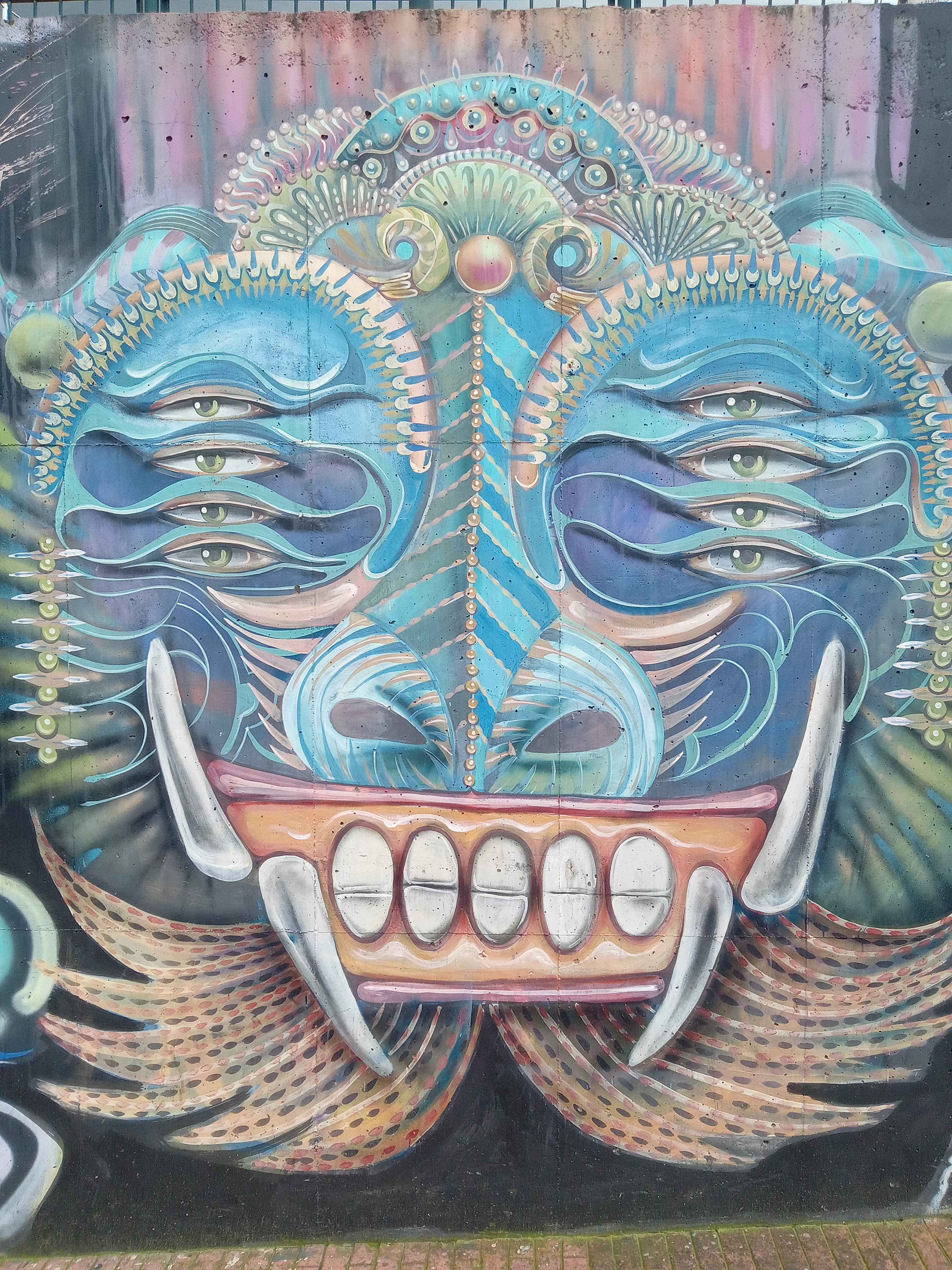
Later, I ended up in a popular student neighborhood where every building was adorned with murals.  There I witnessed a woman growing from vines, an elder made happy by a bowl of chicha, an Indigenous child, holding his heart in his hand, a gap-toothed rapper, smiling from beneath a baseball hat with a hornet on it, two nude women, swimming through a golden sea, parrots, hummingbirds, superheroes, meteor showers, and next to a basketball court, a series of fantastical beings that could only have been summoned from a psychedelic trip.  This was just a very small sample of the street art I encountered in Bogota, block after long block of it.

My conclusion?  I love art in all its manifold forms, but the most interesting art I’d seen on this trip, and in many of the trips I’d taken preceding it, had all been street art, done by anonymous artists, in most cases driven by a passion for creating alone.  Going to a museum can still be something of a chore.  You’ve paid to get in, so feel you have a duty to pay attention.  You can only keep it up so long.  At one point you find yourself walking faster and faster, almost groaning out loud when you find there’s a whole wing or floor left that you didn’t know about.  Street art is nothing like that.  It picks you up and carries you with it.  Seeing more of it only drives you on.  I can walk through streets that are covered with art all day, and never get bored.